
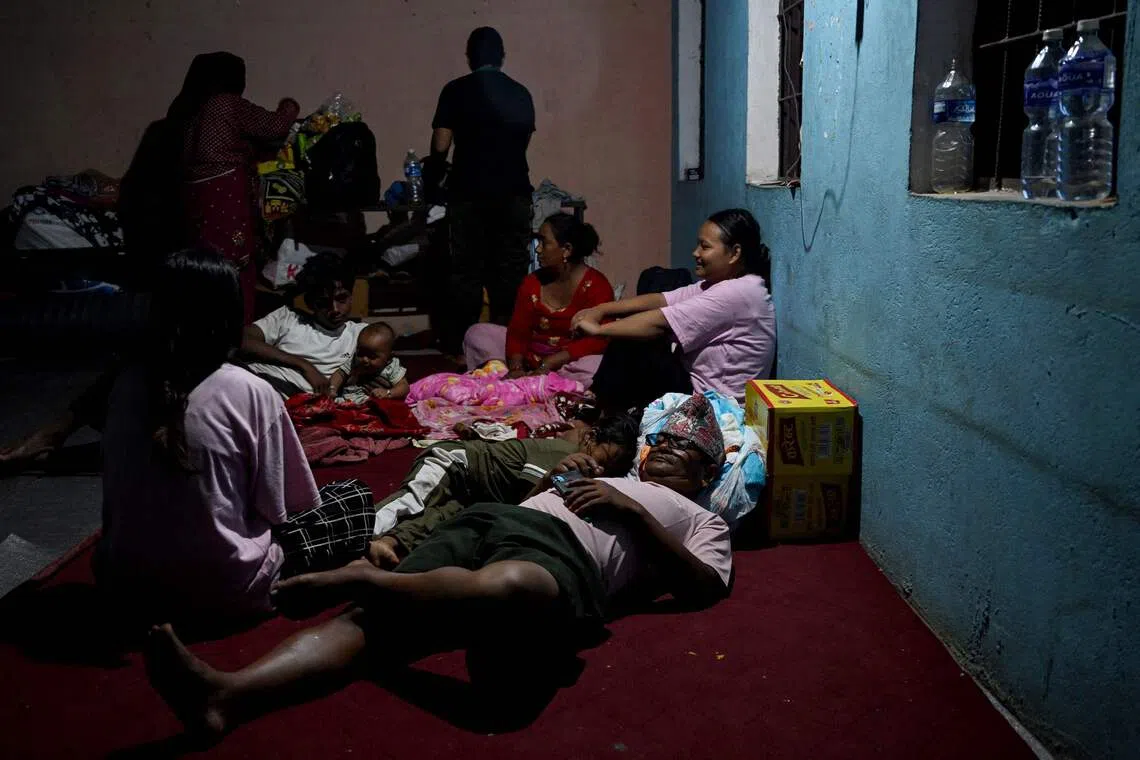
KATHMANDU – For Rekha Devi Gosain, surviving the flood was only the first ordeal.The Trishuli Bazaar resident lives with diabetes, high blood pressure and thyroid disease, conditions that require regular medication.When the flood swept away her home and four shops she owned, there was no time to save her medicine. Her vehicle, motorcycle and other belongings were also lost.Now she and her family are living in a displaced-persons camp near Trishuli Hospital. But the hospital does not have the medicine she needs.“My mother has to take her medicine regularly, but the hospital does not have them,” her son Raghubir said. “It has been three days since she was able to take them.”The family’s ordeal did not end there. Raghubir’s sister-in-law went into labour while sheltering at the camp. Trishuli Hospital could not handle the delivery, but the family had no road access to Kathmandu.After repeated appeals, she was airlifted on the morning of Aug 29 to the Paropakar Maternity and Women’s Hospital in Thapathali, Kathmandu, he said.The same shortage is affecting many other displaced people. Patients with chronic illnesses have gone many days without medicine after losing their homes and belongings.At Kolani, another displacement camp, Kopila Pariyar is caring for her 62-year-old mother, who has asthma and depends on regular medication.“My mother has asthma and needs two or three medicine, but we have not been able to get all of them,” she said.The family is also struggling to find basic necessities.“There is no drinking water in the camp and we cannot even buy bottled water. We have no money, no clothes and there is almost nothing to buy in the Kolani market,” Pariyar said.Her 16-year-old brother Abinash and 43-year-old sister-in-law Shanti are among those missing after the flood.Doctors warn that people with chronic conditions should not be forced to stop taking essential medicine. Yet Trishuli Hospital itself is running short.Hospital pharmacist Maheshwar Yadav said medicine commonly prescribed for hypertension, including atenolol and losartan, were unavailable.“Our hospital insurance programme is also not operating because there is no internet, and we are running out of medicine,” Yadav said.Rikesh Rana, information officer at Trishuli Hospital, said many displaced people sheltering nearby have diabetes, high blood pressure and asthma but are unable to obtain the medicine they normally take.The shortages extend beyond drugs.The flood has cut the main sources of drinking water to the hospital and surrounding settlements.Residents and the hospital had previously drawn water from a canal serving the Trishuli hydropower project, but the flood destroyed the canal. A separate water pipeline bringing supplies through Tupche was also washed away.With both systems gone, displaced people and local residents are being forced to use whatever water they can find.Doctors fear the water shortage and poor sanitation could trigger a second disaster: disease outbreaks in crowded camps.Three displacement camps have been established in the Baghtaar area around Trishuli Hospital.About 1,000 people are staying at Bhairung Secondary School, the covered hall and Bethan Academy. Among them are pregnant women, new mothers and people needing medical care.Clean water and sanitation are in short supply, while poor drainage from toilets is adding to the concern.“With so many people living together in one place, there is a risk of disease spreading,” said Rajendra Lama, medical superintendent of Trishuli Hospital.“The lack of safe drinking water and proper toilets raises the possibility of an epidemic.”Displaced residents also complain that the food being provided at the camps is inadequate and lacks sufficient nutrition, a particular concern for pregnant women, new mothers and those who are ill.The destruction of every bridge in the area has also severed the hospital’s connection with the district headquarters, making it difficult to move patients in or out.Lama said helicopters are not always available when patients need urgent evacuation.“The bigger problem is bringing pregnant women to the hospital and taking them home,” he said. “If we need to refer a patient, there is no option other than evacuation by helicopter.”The hospital is now struggling to keep its own operations going.Essential medicine are running low. Cooking gas is unavailable. Ambulances are running short of diesel.And the security situation is deteriorating.Lama said only seven or eight police officers were currently deployed around the hospital and nearby areas, leaving residents and medical staff increasingly vulnerable.“Looting has started during the day itself. We need more police patrols and security,” he said.On Aug 28, four or five masked men arrived on motorcycles and reportedly drove away doctors who were carrying out an operation, Lama said. Looting has since begun at houses in the surrounding area.“There was looting in broad daylight on Friday,” he said.The disruption has also fuelled black-market activity, making it difficult to obtain basic goods, Lama said. THE KATHMANDU POST/ASIA NEWS NETWORK
Nepal flood survivors face a second crisis as medicine, water run short
Full Article
Original Source
Read the full article at Straitstimes →KhanList aggregates and links to publicly available news content. We do not host full articles from third-party sources. Always verify important information with original sources.