
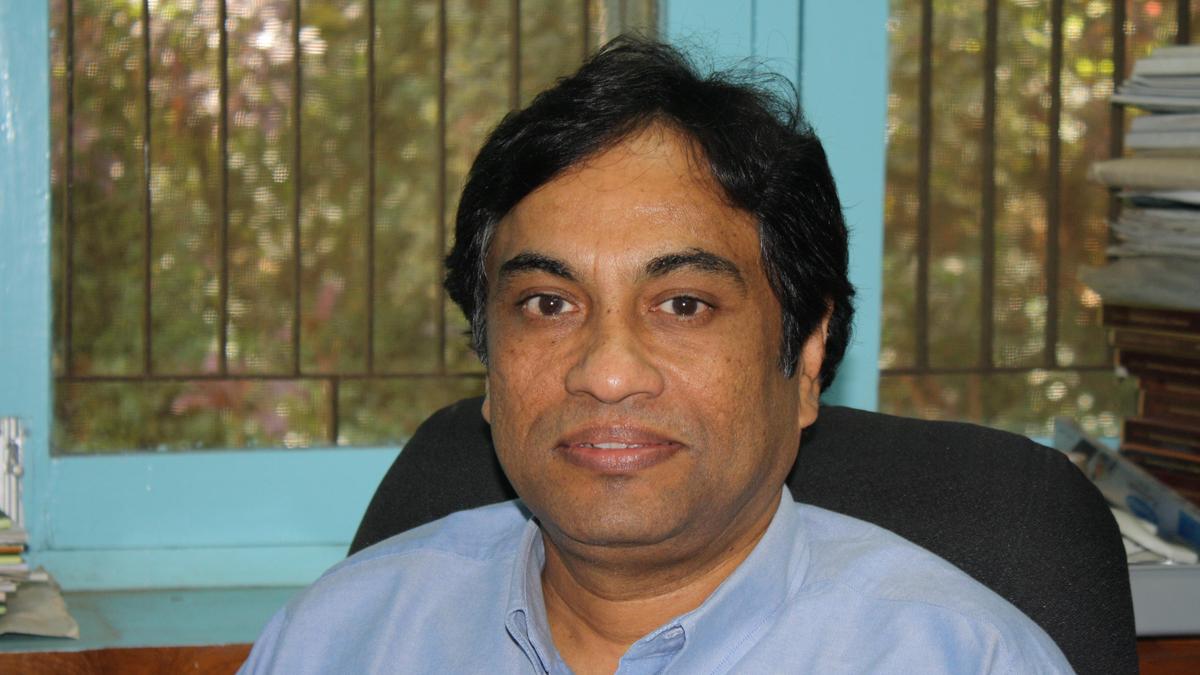
C.P. Rajendran. Photo: Special Arrangement The flash flood disaster in Nepal could serve as a reality check for governments that are driving a boom in dams, tunnels, highways, railways, and bridges across the Himalayas, warns C. P. Rajendran, geo-scientist and adjunct professor at the National Institute of Advanced Studies, Bengaluru.“The region already suffers from unstable slopes and reduced river efficiency, largely due to development projects carried out with little regard for ecological consequences,” he told The Hindu.What are the lessons to be learnt from the devastating tragedy triggered by the flash floods? The flash floods in Nepal is not an isolated phenomenon as it is comparable to previous regional disasters, such as the 2021 Chamoli disaster, the 2013 Kedarnath disaster and the 2021 Raini flood in Uttarakhand. The exact cause of the Nepal floods is still being investigated by scientists, though current evidence points to a massive glacier collapse and landslide high in the Himalayas. The glaciers worldwide are retreating — but in the Himalayas the rate of glacier retreat is an acceleration mode. In Himalayan mountains, rainfall patterns are shifting. The atmospheric freezing level is moving upward. Precipitation that once fell as dense snow is now reaching as rain, accelerating glacial melt. As temperatures rise as part of climate change, centuries-old permafrost — layers of frozen rock, soil, and ice on steep slopes—begins to thaw. As glaciers retreat, they leave behind deposits of rock, silt, and gravel, known as moraines. These debris barriers trap melt water behind them, forming proglacial lakes. Eventually, as water pressure builds against the moraine walls, triggering a catastrophic glacial lake outburst flood (GLOF), releasing massive waves downstream. But the devastation could serve as a reality check for governments that are driving a boom in dams, tunnels, highways, railways, and bridges across the Himalayas to tap the region’s vast hydropower potential and exploit its natural resources. And China is not alone in this push. India, and to a lesser extent Nepal, have also been on an infrastructure-building spree in recent years in one of the most seismically active and climate-vulnerable regions on Earth. The Himalayan environmental regime is edging toward collapse, undermined by unsustainable projects that compound the risks of floods, landslides, and glacial lake outbursts. On the short and long-term climatic threats faced by the Himalayas. Home to the largest store of snow and ice outside the Arctic and Antarctica, the Himalayas are known as the world’s “Third Pole.” Beyond immediate disaster risk, another major concern looms – diminishing water availability. These glaciers feed the major rivers that supply drinking water to billions of people in Nepal, India, Pakistan, and China. While glacial shrinkage may initially increase river flow due to accelerated melting, dry-season water supply could decrease dramatically. High‑resolution, continuous online measurements of key greenhouse gases in the Central Himalayas reveal that both environmental factors and human activities jointly impact gas levels in this sensitive ecosystem. A study led by the scientists at the Aryabhatta Research Institute of Observational Sciences (ARIES), found that natural processes and anthropogenic activities together shape the concentrations of carbon dioxide (CO₂), methane (CH₄), and carbon monoxide (CO) across the region. Long‑term trends indicate a steady rise in both CO₂ (2.66 ppm per year) and CH₄ (9.53 ppb per year). These rates are even higher than those recorded at Mauna Loa — a global background site — highlighting the growing influence of human emissions in the Himalayas. Numerous scientific studies confirm that soot — scientifically known as black carbon — is depositing heavily on Himalayan ice, significantly accelerating glacier melt. Over the past decade, these deposits have raised snow surface temperatures by several degrees, thereby intensifying the regional melting process. Tourism and associated vehicular traffic in the mountainous areas have been major contributing factors to this situation.The region already suffers from unstable slopes and reduced river efficiency, largely due to development projects carried out with little regard for ecological consequences. In addition, vehicle exhaust releases black carbon soot that settles on Himalayan ice, darkening the surface and accelerating glacial melt by absorbing more sunlight. What are the recommended actions to protect the Himalayas? The solutions include rapidly reducing greenhouse gas emissions, investing in early warning systems, and devising sustainable developmental models. Steps should be taken to declare critically affected areas as “ecologically sensitive zones” and enforce legal protections. We need to stop all unsustainable activities, restore natural forests, and increase green cover. Other measures include enforcing visitor caps and spatial zoning for tourism hotspots (e.g., Himalayan temples) to curb excessive waste and heavy traffic, prioritising the health of rivers and glaciers over hydroelectric power, wide roads, and unchecked tourism, stopping rapid deforestation and dumping muck in forest areas and along the riverbeds. On the need to step up flood resilience Although some engineering methods exist — such as the planned, controlled partial release (artificial lowering) of glacial lake water, many high-mountain glacial lakes are located in remote, steep, and dangerous terrain, which makes engineering interventions difficult and hazardous. It is important that steps should be taken to deploy solar‑powered automated sensors and cameras near high‑risk glacial lakes to detect sudden outbursts or flash floods, besides integrating satellite telemetry, weather radars, and GIS mapping to enable advance hazard forecasting and timely evacuation. Published - August 31, 2026 11:13 am IST
Nepal flash floods: A wake-up call against infrastructure building spree across Himalayas, warns geo-scientist C.P. Rajendran
Full Article
Original Source
Read the full article at Thehindu →KhanList aggregates and links to publicly available news content. We do not host full articles from third-party sources. Always verify important information with original sources.