
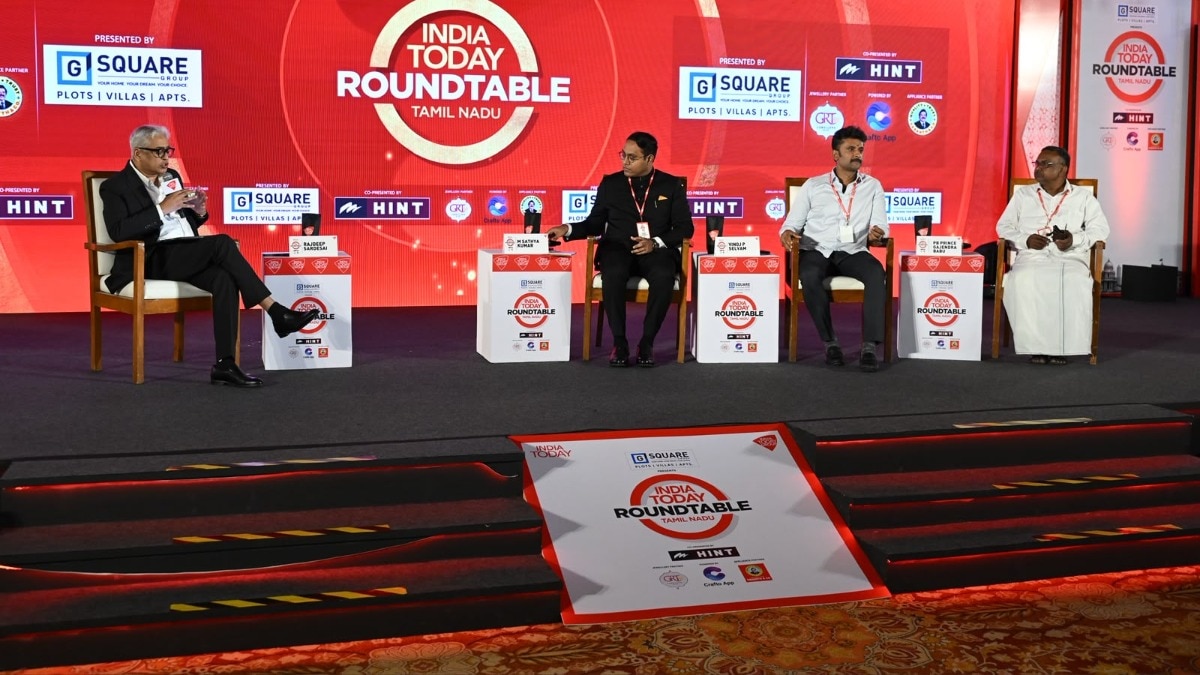
The India Today Tamil Nadu Roundtable saw a sharp debate over NEP 2020 and NEET, with speakers clashing over centralisation, Hindi, state autonomy, social justice, government schools, education funding and entrance examinations.Tamil Nadu vs Centre: NEP, NEET become flashpoints at India Today roundtable (Image: India Today Group) (From left to Right Rajdeep Sardesai, M. Sathya Kumar, Vinoj P. Selvam, and PB Prince Gajendra Babu)The National Education Policy (NEP) 2020 triggered a sharp political and policy debate at the India Today Tamil Nadu Roundtable, with speakers divided over the three-language formula, centralisation of education and the future of Tamil Nadu's education model.M Satyakumar, National Spokesperson and Senior Leader of TVK, argued that the NEP undermines Tamil Nadu's two-language policy and gives the Centre excessive control over education. He said opposition to the three-language formula was rooted in the state's concerns over autonomy and the possible entry of Hindi into the education system.Vinod Sharvam, State Secretary, BJP Tamil Nadu, defended the NEP, saying the policy was needed to modernise education and equip students with skills relevant to the changing world. He also questioned the opposition to Hindi, pointing out that TVK-run schools themselves teach three languages, including Hindi.DEBATE OVER CENTRALISATION AND SOCIAL JUSTICEThe discussion also focused on whether greater centralisation was necessary to ensure common standards across the country. Sharvam said the NEP would help standardise education while introducing vocational training and modern subjects at an early stage. Satyakumar, however, argued that greater central control could weaken states' role in education. He defended Tamil Nadu's existing model and said the state had achieved significant progress through its emphasis on social justice and scientific temper.Educationist PB Prince Gajendra Babu criticised the NEP from a social justice perspective. He argued that the policy fails to adequately address the constitutional framework of education and could disproportionately affect first-generation learners and socially and educationally backward communities.GOVERNMENT SCHOOLS AND EDUCATION INEQUALITY The panel also debated the widening gap between private and government schools. Gajendra Babu said the priority should be to strengthen government schools through better infrastructure, permanent teachers, adequate laboratory staff and improved learning facilities.He argued that strengthening public education would reduce dependence on private schools and help ensure equitable access to quality education.Sharvam, meanwhile, said the NEP could help improve government schools by bringing modern education, STEM and artificial intelligence-based learning to students across the state.NEET BECOMES ANOTHER FLASHPOINTThe debate later moved to Tamil Nadu's long-standing opposition to NEET. Sharvam said the state's position was based on constitutional concerns and suggested that NEET should first be moved to the Concurrent List and eventually to the State List.He highlighted Tamil Nadu's efforts to take STEM and AI education to government schools while maintaining its 69 per cent reservation policy.Gajendra Babu opposed the growing emphasis on entrance examinations and argued that medical admissions could instead be based on normalised Class 12 marks. He said higher secondary education should be strengthened rather than making entrance examinations more difficult.FUNDING, AUTONOMY AND THE ROAD AHEADThe panel also discussed Tamil Nadu's financial constraints, including its reported debt burden, and the challenge of funding quality education across all schools.Gajendra Babu stressed the need for permanent teachers, better infrastructure and adequate staffing, while critics of the state's education approach argued that political promises and outdated systems could limit reforms.The discussion also touched on the legal and constitutional history of NEET, including concerns over the role of regulatory bodies such as the National Testing Agency.The debate ultimately underlined a larger question: how can India balance national education standards with state autonomy, social justice and equal access to quality education?- EndsPublished On: Aug 17, 2026 18:05 IST
NEP vs Tamil Nadu: Sharp debate over Hindi, NEET and state autonomy
Full Article
Original Source
Read the full article at Indiatoday →KhanList aggregates and links to publicly available news content. We do not host full articles from third-party sources. Always verify important information with original sources.