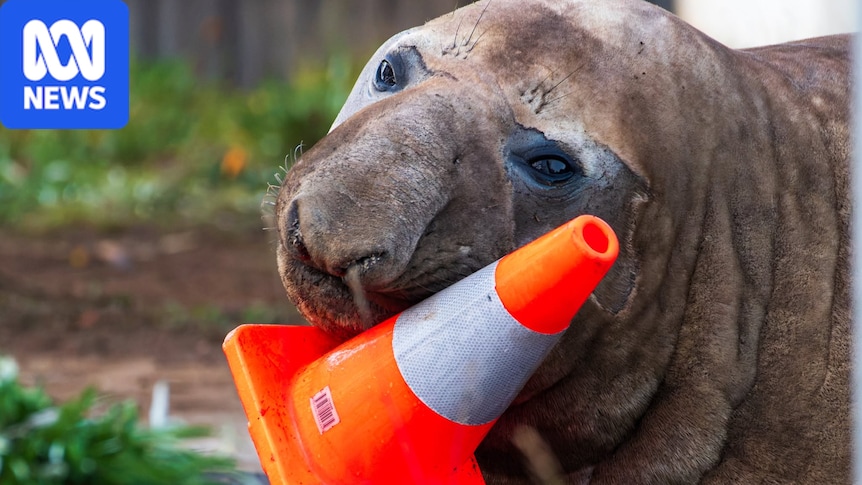
Neil the elephant seal has become a "wildlife icon", bringing immense joy to fans in Tasmania and around the world.But keeping the bollard-bashing, traffic cone-chewing social media star safe comes at a price.Following a right to information request, the Department of Natural Resources and Environment (NRE) has revealed its management costs over the past two years.In total, it has spent $45,674 during Neil's four "haul-outs", including the cost of engaging security personnel as required.However, NRE noted the figure did not include a significant portion of costs incurred during his most recent visit, because several invoices were yet to be received.Neil the seal pictured during his most recent visit to Seven Mile Beach in July. (Supplied: Sam Volker Photography)NRE said at least 523 staffing hours have been accrued during the four haul-outs.However, it said the figure did not include additional support from police or councils."While the full cost of this cross-agency response cannot be accurately quantified, it is estimated to amount to tens of thousands of dollars during each residency period," NRE said.Every day, Neil would attract hundreds of spectators, who had to be kept at a distance. (TikTok: Neiltheseal316)Traffic diversions and safety measures were put in place daily during Neil's visit. (ABC News: Ebony ten Broeke)People and their dogs were urged to stay well clear of Neil. (ABC News: Mitchell Woolnough)Damage bill includes sign, 10 bollards, part of fenceNeil was born on the Tasman Peninsula in 2020 and has been returning to the region to moult and rest ever since."As a recognised wildlife icon, Neil's presence regularly draws large numbers of visitors and onlookers, creating management challenges not typically associated with other seal haul-out events," NRE said.Neil the juvenile elephant seal, with his mother, in October 2020. (Supplied: Department of Natural Resources and Environment Tasmania)His most recent visit at Seven Mile Beach near Hobart attracted thousands of people each day, including interstate tourists who came to Tasmania just to see Neil.The Clarence City Council estimated its costs for traffic and crowd management, as well as repairs, totalled $31,540 over 15 nights.Most of council's costs were linked to staffing, with 131.5 standard hours and 144 overtime hours accrued.Mayor Brendan Blomeley said Neil had also notched up a "relatively small" damage bill."Neil's scratching up against public property meant one sign, 10 bollards and one section of fence will need to be replaced, equating to around $1,297.70 in materials," he said.During his visits, authorities have urged members of the public to stay at least 20 metres away from the seal."It's important to remember that while the damage bill is relatively small, Neil is a wild animal and the overexposure and constant public attention he received could have led to a more dramatic outcome," Cr Blomeley said."Wherever he decides to come ashore next, I hope he is given the space and time he needs."Authorities used vehicles to block Neil from exiting beach paths onto the road. (TikTok: Neiltheseal316)Neil would find a way to get back to his favourite resting spots on land. (Supplied)Even electrified fencing was not enough to stop Neil. (Supplied: Declan Coffey)Neil set to return bigger and more unpredictable than beforeNRE said it adopted a range of management measures whenever Neil hauled out near roads, residential areas and other public spaces."Depending on the circumstances, these can include deployment of wildlife biologists, engagement of security personnel, implementation of traffic management arrangements, temporary exclusion zones, and extensive community engagement activities."A significant communications effort is also required to promote safe viewing, discourage inappropriate interactions and build public understanding of how to behave around a large protected mammal."Tasmania's government says that as Neil continues to grow and "his movements and behaviour become less predictable", the costs to keep him and human spectators safe are expected to rise. (Supplied: Sam Volker Photography)Neil the seal is expected to grow much larger, as shown in this graphic depicting his 2026 size alongside that of a full-grown male elephant seal at 12 years old. (ABC News: Hamed Akrami)Neil is likely to return to the region later this year after spending several months feeding in the Southern Ocean.He is expected to be bigger each time he comes back, with adult elephant seals weighing close to 3,000 kilograms, close to three times his current weight.Neil is almost six years old and displaying the typical behaviour of an adolescent elephant seal, experts say. (Supplied: Sam Volker Photography)NRE said his size and unpredictable behaviour as an adult would present further challenges in the future."As Neil continues to mature, the risks associated with managing his interactions with people, vehicles and infrastructure are expected to increase," it said."Active management is required to protect Neil from disturbance, injury and harassment, while also safeguarding the community and minimising impacts on public and private infrastructure."Elephant seals are listed as endangered under Tasmania's Threatened Species Protection Act and are protected under Commonwealth legislation as a vulnerable species.Neil the seal pictured shortly before he returned to the sea in early July. (Facebook: NRE Tas)
Neil the seal's damage bill and management costs revealed
Full Article
Original Source
Read the full article at Abc →KhanList aggregates and links to publicly available news content. We do not host full articles from third-party sources. Always verify important information with original sources.