
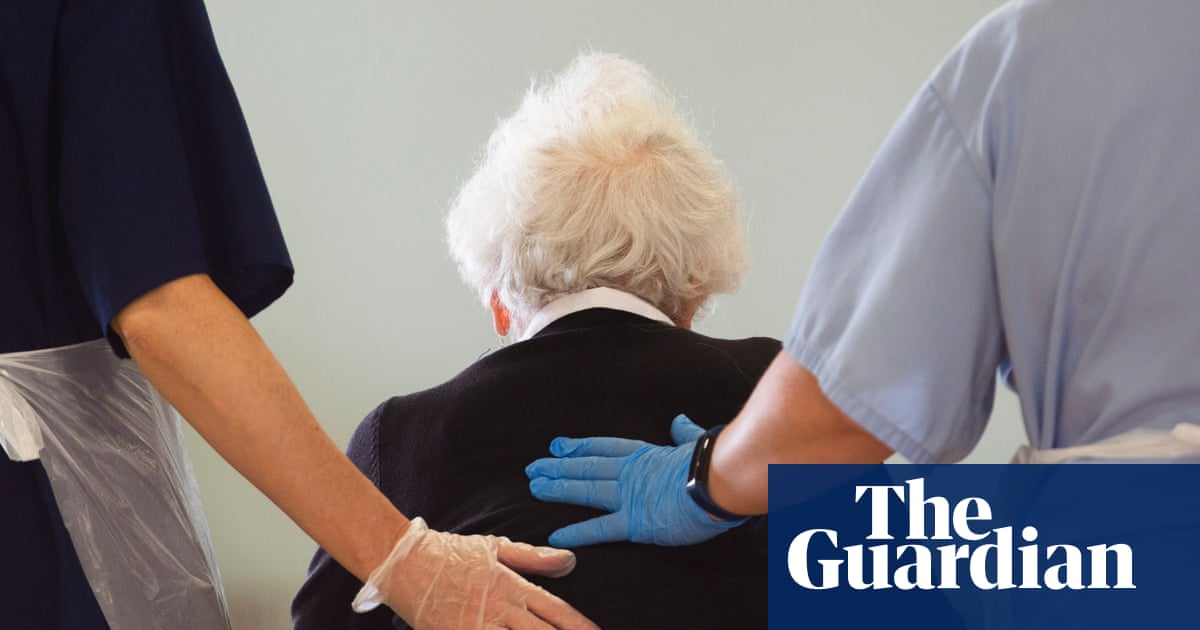
More than half a million of the most vulnerable people in England will be offered help from joint NHS and social care teams that will pave the way for the promised national care service, Yvette Cooper has announced.Elderly people, care home residents, those with dementia and people near the end of their lives will receive assistance from the new programme.By next April about 566,000 people – 1% of the population – will benefit from joined-up “neighbourhood support teams” providing personalised care.In a speech on Wednesday at the King’s Fund health thinktank, Cooper described the measure as a “downpayment” on the national care service promised by Andy Burnham to address the social care crisis.The service will be expanded and eventually cover about 2 million people with particular health needs, including parents and babies, and under-25s who are not in education, employment or training.Once fully operational, the major shift in key care services is expected to help relieve the pressure on overcrowded hospitals by cutting 4.3m bed days and reducing the number of people – mainly the frail elderly and those with dementia – who experience “corridor care”.“The most frail and vulnerable, 4% of the population, account for 70% of emergency bed days in hospital, even though for many of them, an extended hospital stay is not where they want to be,” Cooper said.The teams will be made up of GPs, district nurses, occupational therapists, geriatric consultants, physiotherapists, clinical pharmacists, mental health workers and social workers.Age UK welcomed the announcement as “fantastic news for older people, especially those living with frailty and in declining health”.The pledge to create the new teams is a major milestone in the government’s ambition to transform how the NHS works through “three big shifts”: from an analogue to digital service, from treatment to prevention of illness, and from hospital-based care to much more help being provided in community settings and people’s homes.The teams will identify the most vulnerable members of their local community and devise a plan for keeping them as well as possible, including providing care in their own home or care home for as long as possible.They will receive regular checks to assess their health, from teams who know them, to ensure they are receiving the right support. Patients and their families will also have access to a 24/7 helpline that will act as a single point of contact, though it is unclear when that will start.Everyone being helped by the joint teams of NHS and local council personnel will also have an individual care plan that makes clear what their needs are and who should be helping with them.The teams will review patients’ medicines, check they are having physiotherapy and that they have a care plan in place, for example.skip past newsletter promotionafter newsletter promotionCooper said the teams would provide a more proactive and personalised approach that would make care much easier to access while also reducing the strain on the NHS, which has been struggling to meet the growing demand for care from the ageing and increasingly sick population.Remote monitoring, “virtual ward” rounds and face-to-face visits to patients in their own homes in west Hertfordshire has led to people spending three fewer days in Watford general hospital, saved the local NHS £3.8m, and proved very popular with those cared for in that way.The health secretary cited the NHS founder Nye Bevan’s belief in local community services, not just hospitals, and the then Labour health secretary Barbara Castle’s ambition in 1976 to reduce dependence on hospitals and promote integration of health and social care, as well as Burnham’s attempt as health secretary in 2009-10 to reform social care.Sarah Woolnough, the King’s Fund’s chief executive, cautioned that while “bringing care closer to home has been an ambition for successive governments”, it had not happened – and may not happen now – because money had not been provided to enable the switch.Helen Morgan, the Liberal Democrats’ health spokesperson, said: “To bring hospitals back from the brink we need more care at home, but a phone number isn’t a care package. With no new money and nothing starting until April, this does little for the thousands of frail patients facing a winter stuck in hospital.”The creation of the new teams builds on Cooper’s announcement last week that GPs in England will receive £40m this winter to help give 300,000 vulnerable patients better care at home, to reduce their risk of ending up in hospital.
‘Neighbourhood support teams’ to pave way for national care service, Cooper announces
Full Article
Original Source
Read the full article at Theguardian →KhanList aggregates and links to publicly available news content. We do not host full articles from third-party sources. Always verify important information with original sources.