
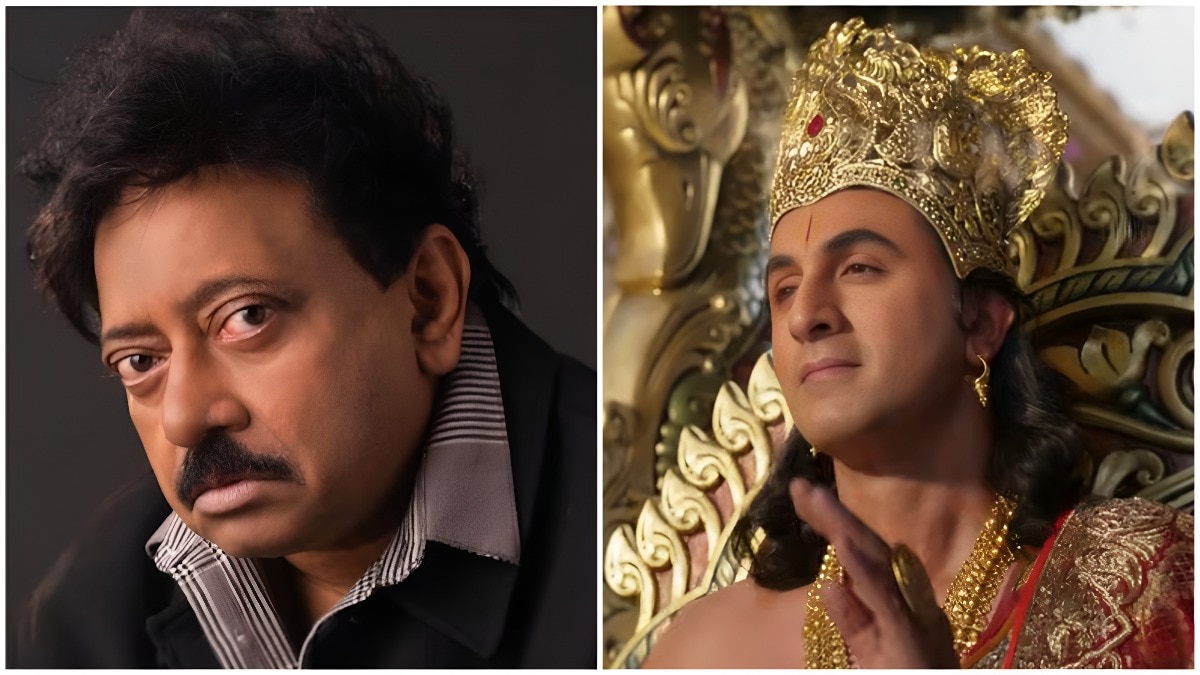
Director Ram Gopal Varma has shared his perspective on Director Nitesh Tiwari's mystical epic Ramayana: Rise of a Legend. He described the epic not merely as a traditional devotional film, but as an uncompromising "devotional force".In his X review, Varma offered an impassioned message to the creators, advising them to dismiss detractors entirely. He wrote, "All in all I want to say this to each and everyone of all the greats who collaborated to make this great film is to treat any and all negative critics of this film as barking street dogs against the elephantine effort you all put in to create this magnifique piece of WONDER (sic)."He pointed at the visual and narrative ambition driving the cinematic adaptation, based on sage Valmiki's Ramayan and bhakti poet Goswami Tulsidas's epic poem, Ramcharitmanas. The Rangeela director also critiqued the intense performances and visceral directorial choices that set it apart from conventional retelling.He wrote, "The #Ramayana is not a devotional film. It is a devotional force. The hero is not a blue god floating above the story. He is a man who has already seen the end of the world and still willfully chooses to walk into it (sic)." Focusing on the character arcs, Varma added, "The rise is not of a kingdom. It is of a mind that challenges weakness. Every frame carries the weight of someone who has burned the old rules and is now moving only by the logic of power. The violence is not spectacle. It is the clarity of consequences (sic)."The #Ramayana is not a devotional film. It is a devotional force.The hero is not a blue god floating above the story. He is a man who has already seen the end of the world and still willfully chooses to walk into it. The rise is not of a kingdom. It is of a mind that challenges weakness. Every frame carries the weight of someone who has burned the old rules and is now moving only by the logic of power . The violence is not spectacle. It is the clarity of consequences What separates this from every other cinematic telling is that In a time when most films are still wary to move , this one simply moves. It does not explain itself. That is why it hits harder than anything that has come before it. You do not leave the film having watched a story. You leave it after living an experience Ranbir In the sequence after Sita’s abduction, when he stands in the empty ashram and simply looks at the place where she was, the camera holds long enough to show that grief has already been converted into a arithmetic Yash does not play opposition. He plays the mind that has already accepted what it decided to destroy. In the long confrontation before the final night, when he speaks to Ram across the open ground with no army between them, he does not raise his voice. He simply states the price. The face never flinches. The body never shifts. @AnupamPkher in Jatayu’s interception of the pushpak is not an act of mere loyalty. Wings half broken, bloodied, he keeps on coming because the mind has not yet accepted what the body is telling it. When he falls, the camera stays on the face. There is no cry. There is only the last argument continuing behind the eyes after his wings have stopped. That is not sacrifice. That is a man who understood the only rule left is to continue until you cannot. All in all I want to say this to each and everyone of all the greats who collaborated to make this great film is to treat any and all negative critics of this film as barking street dogs against the elephantine effort you all put in to create this magnifique piece of WONDER— Ram Gopal Varma (@RGVzoomin) November 9, 2026The 64-year-old also emphasised a specific emotional beat following Sita’s abduction. He wrote, "In the sequence after Sita’s abduction, when he stands in the empty ashram and simply looks at the place where she was, the camera holds long enough to show that grief has already been converted into an arithmetic (sic)." Varma also shared his views on the formidable presence of Yash, while observing that the actor "does not play opposition," but instead embodies a "mind that has already accepted what it decided to destroy."The director highlighted a tense, army-free confrontation across open ground before the final night, noting that Yash’s character "does not raise his voice" and simply "states the price" while his "face never flinches" and his "body never shifts" (sic).Varma also praised veteran actor Anupam Kher’s poignant depiction of Jatayu, noting that the battle is "not an act of mere loyalty." He emphasised how the character keeps charging forward with "wings half broken, bloodied" because his "mind has not yet accepted what the body is telling it."The director observed that upon falling, "the camera stays on the face" with "no cry," leaving only "the last argument continuing behind the eyes," proving that "that is not sacrifice" but rather "a man who understood the only rule left is to continue until you cannot."Ramayana: Rise of a Legend features Ranbir Kapoor as Lord Rama, Sai Pallavi as Goddess Sita, Ravie Dubey as Lakshman, Yash as Ravana, Rakul Preet Singh as Supranakha, Lara Dutta as queen Kaikeyi and Arun Govil as king Dashrath.The makers recently released the film's post-credits scene alongside a Hanuman Chalisa music video, introducing Sunny Deol as Lord Hanuman.Ramayana: Rise of a Legend theatrically released on November 5, 2026.- Ends
Negative critics are barking dogs: RGV reviews Ramayana, calls it a devotional force
Full Article
Original Source
Read the full article at Indiatoday →KhanList aggregates and links to publicly available news content. We do not host full articles from third-party sources. Always verify important information with original sources.