
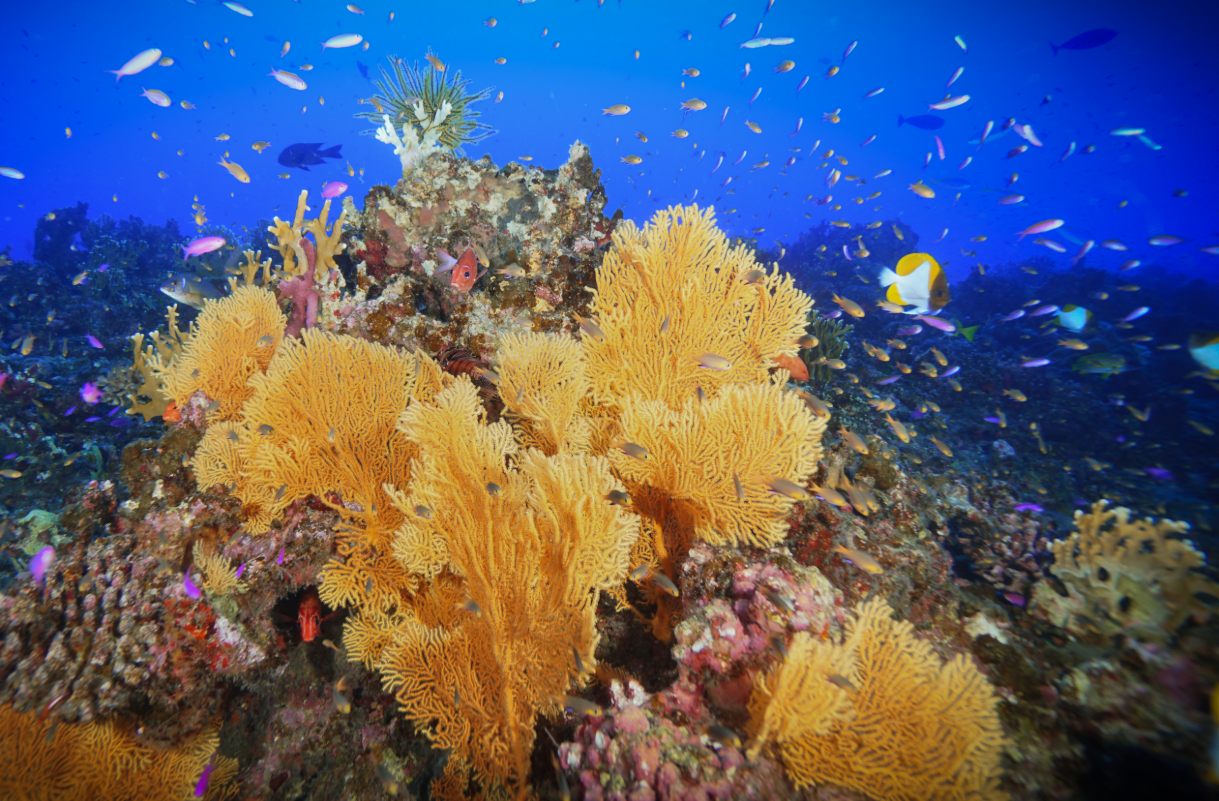
Nearly every shallow-water coral reef ecosystem on Earth is at high risk of ecological collapse by 2075, according to the first coral reef assessment of the IUCN Red List of Ecosystems (RLE). The RLE is a scientific framework for assessing the risk of ecosystem collapse. More than 250 experts assessed shallow water coral reef ecosystems across 127 tropical and subtropical ecoregions worldwide including the Great Barrier Reef in Australia and the Coral Triangle of Southeast Asia. The Oct. 22 report concluded that 24% of coral reefs are already critically endangered. When scientist include projected heat stress from climate change, they found 96% will be critically endangered in the next 50 years. One coral reef ecosystem, the Western Galapagos Islands, has collapsed already, the assessment found. The assessment identified heat stress from climate change as the single most consistent threat driving coral reef decline worldwide. Heat stress causes coral bleaching, a process in which corals expel the symbiotic algae living in their tissue. Algae provide most of the coral’s food via photosynthesis and prolonged bleaching events leave coral weakened, vulnerable to disease and lead to death. Coral reefs are crucial for marine biodiversity; they “cover less than 1% of the ocean floor,” but support approximately 25% of marine life. In an email to Mongabay Marcos Valderrábano, programme manager for the RLE at IUCN, said that if climate projections are accurate, most corals will suffer repeated severe bleaching, resulting in a less biodiverse ecosystem as corals are replaced by algae and turf. Despite the bleak predictions, the assessment says that there is still time to head off complete ecological collapse of corals. “The biggest lever is cutting emissions and demanding urgent climate action,” Valderrábano said. He added that it’s important to improve coral health overall, so they are better able to recover after heat waves. “This includes reducing pollution in coral reefs, demanding the protection of remaining corals, and choosing sustainably caught seafood, because parrotfish and grouper overfishing makes coral reef recovery harder.” “None of this replaces emissions cuts, and we shouldn’t pretend that it does,” Valderrábano said. The stakes are high, according to Sarah Bedolfe, a senior marine scientist with the NGO Oceana. “If coral reefs collapse, we won’t just lose one of the most extraordinary ecosystems on Earth; we risk losing food, livelihoods, and a lifeline for coastal communities around the world,” Bedolfe, who was not part of the assessment, told Mongabay in an email. “We are already watching reefs decline before our eyes, but their fate isn’t sealed. Governments can relieve pressure on reefs now by tackling overfishing and pollution, while urgently reducing the greenhouse gas emissions driving ocean warming,” Bedolfe said. Banner image: Sea fans surrounded by reef fish on a coral reef off the southwest coast of Pagan. Image courtesy of Andrew Gray/NOAA Fisheries via Wikimedia Commons (free to use). Credits Topics
Nearly all the world’s coral reefs are at risk of collapse within 50 years, IUCN warns
Full Article
Original Source
Read the full article at News →KhanList aggregates and links to publicly available news content. We do not host full articles from third-party sources. Always verify important information with original sources.