
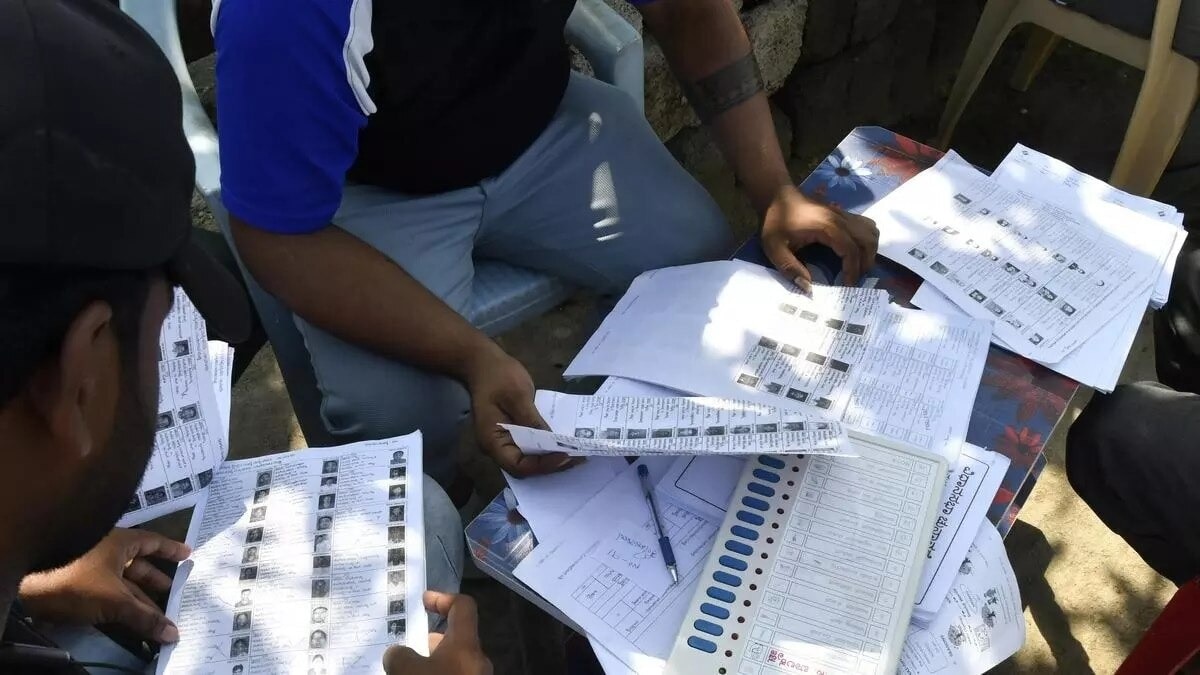
Overall, more than 47 lakh of Delhi's 1.45 crore voters, roughly one in three, are set to be excluded from the draft rolls after being classified as "uncollectable" under the exercise.The door-to-door verification exercise began on June 30 and concluded on August 17. (Representative image)More than 30 per cent of voters in 47 of Delhi’s 70 Assembly constituencies are likely to be left out of the draft electoral rolls to be published on August 24, according to constituency-wise data released by the Delhi poll body as part of the ongoing Special Intensive Revision (SIR).The data shows significant variation across constituencies, with the proportion of voters facing exclusion ranging from around 20 per cent to nearly 50 per cent. In several minority-dominated constituencies, between 20 and 40 per cent of voters are likely to be left out of the draft rolls.Overall, more than 47 lakh of Delhi’s 1.45 crore voters, roughly one in three, are set to be excluded from the draft rolls after being classified as “uncollectable” under the exercise. This includes voters whose enumeration forms were not submitted, as well as those marked absent, shifted, dead or duplicate.The door-to-door verification exercise began on June 30 and concluded on August 17. Booth-level officers distributed enumeration forms to voters during the exercise, with more than 67 per cent of the forms subsequently submitted and digitised through the Election Commission’s SIR mobile application. Only two constituencies, Rohini, with 83.43 per cent digitisation, and Shakur Basti, with 81.26 per cent, crossed the 80 per cent mark. This means roughly one in five voters in these constituencies is likely to be left out of the draft rolls.At the other end, Tughlakabad recorded the lowest digitisation rate at 52.15 per cent, putting nearly 48 per cent of its voters at risk of exclusion from the draft rolls. Several affluent constituencies also recorded relatively high levels of voters facing exclusion. New Delhi had 41.76 per cent, RK Puram 44.46 per cent, Malviya Nagar 38.64 per cent and Greater Kailash 35 per cent of voters marked for exclusion.South and southeast Delhi also recorded some of the lowest digitisation rates, including Kasturba Nagar at 55.97 per cent, RK Puram at 55.54 per cent and Okhla at 54.67 per cent.The pattern, however, does not follow a straightforward economic or demographic divide. Constituencies with unauthorised colonies, resettlement areas and dense low-income settlements recorded relatively higher digitisation in several cases. Kirari recorded 68.98 per cent, Sultan Pur Majra 68.93 per cent and Karawal Nagar 67.19 per cent.Mangol Puri, Uttam Nagar and Seelampur recorded digitisation rates above 76 per cent, while Bawana, Madipur, Narela and Matiala were in the 75-76 per cent range.Among minority-dominated constituencies, Okhla stood out with around 45 per cent of voters marked as uncollectable. Other such constituencies recorded comparatively lower exclusion rates, including Seelampur at 23.37 per cent, Matia Mahal at 24.5 per cent, Babarpur at 27 per cent, Mustafabad at 28 per cent, Ballimaran at 32.65 per cent and Chandni Chowk at 38.98 per cent.Overall, 13 constituencies are expected to see 40-50 per cent of voters excluded from the draft rolls, while 34 constituencies are likely to have 30-40 per cent exclusion. Another 21 constituencies are expected to see 20-30 per cent of voters left out.The constituency-wise figures show that the impact cuts across Delhi’s affluent neighbourhoods, unauthorised colonies, resettlement areas and JJ clusters rather than following a clear socioeconomic pattern.Voters marked absent or shifted will get an opportunity to file claims and objections after the draft rolls are published on August 24. The claims and objections window will remain open until September 23, while poll officials will dispose of the applications between August 24 and October 22.The final electoral rolls for Delhi are scheduled to be published on October 27.Among the 22 constituencies won by the Aam Aadmi Party in the 2025 Assembly election, Seelampur recorded the highest digitisation rate at 76.63 per cent, followed by Tilak Nagar at 76.59 per cent, Matia Mahal at 75.50 per cent and Gokalpur at 74.24 per cent. Tughlakabad had the lowest digitisation among AAP-held seats at 52.15 per cent.- EndsPublished By: India Today Web Desk Published On: Aug 18, 2026 19:36 IST
Nearly 1 in 3 voters could be deleted in Delhi's draft SIR roll of electors
Full Article
Original Source
Read the full article at Indiatoday →KhanList aggregates and links to publicly available news content. We do not host full articles from third-party sources. Always verify important information with original sources.