
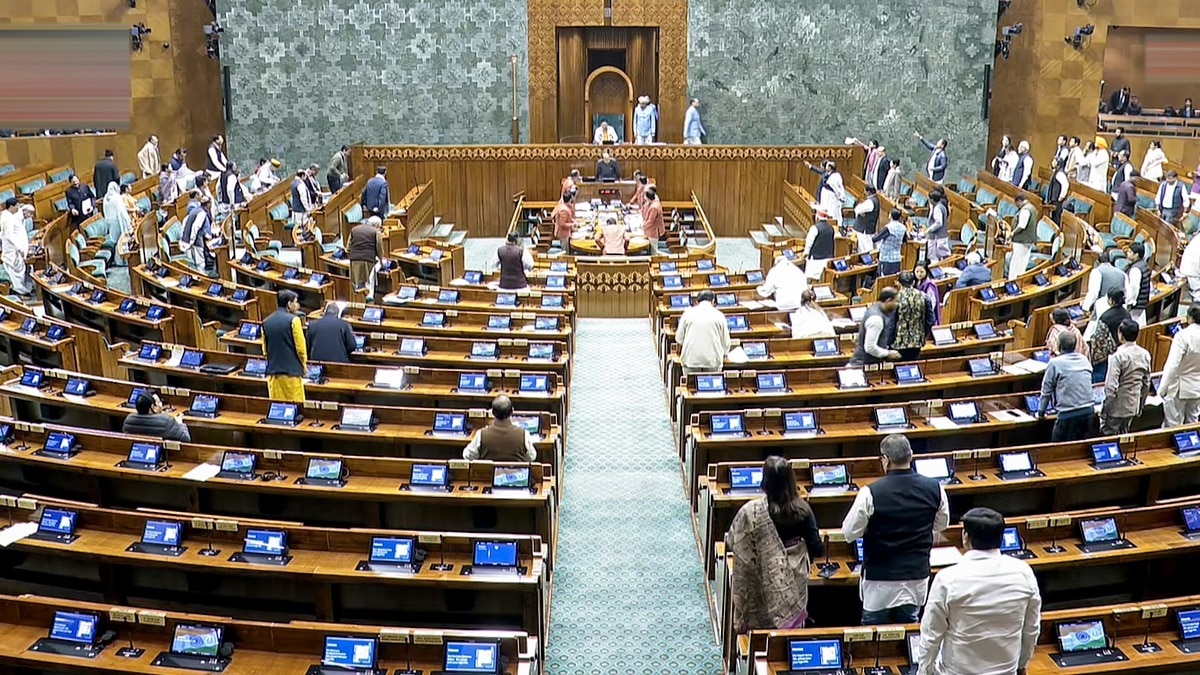
The BJP-led government expects 371 Lok Sabha MPs to back its revised constitutional amendment on delimitation and women’s reservation when the House takes up the three-Bill package on Monday, top government sources said.The tally includes BJP allies and other parties the Centre expects to back the proposal. If 540 MPs vote, the amendment would need 360 votes to pass, giving the government an 11-vote cushion on the sources’ estimate.A constitutional amendment needs a majority of the total membership of each House and at least two-thirds of those present and voting. The Rajya Sabha must clear it separately.CENTRE REJECTS RAHUL’S CLAIMS ON CECRahul Gandhi said on Saturday that Chief Election Commissioner Gyanesh Kumar would sit on the proposed Delimitation Commission and choose its third member. He argued that the panel’s composition would give the BJP a free hand to redraw constituencies in its favour. Government sources called his claims about the commission “blatant lies”. Under the revised Bill, the Centre would appoint a serving or retired Supreme Court judge to chair the commission. The CEC could take the second seat himself or nominate another Election Commissioner to fill that same seat.The third seat would ordinarily go to the State Election Commissioner concerned by virtue of office. The Bill broadly retains the structure set out in the Delimitation Act, 2002. Five MLAs and up to five Lok Sabha MPs from each state would assist the commission as associate members. The respective Speakers would nominate them, taking the composition of each House into account. Associate members would have no vote.REDRAW COULD TAKE UP TO TWO AND A HALF YEARSThe commission would redraw Lok Sabha and Assembly constituencies in the same exercise. It would publish draft boundaries, consider objections and hold public hearings. Government sources said the commission rarely needs to vote and estimated that the exercise could take two to two and a half years.The sources cited Articles 81 and 82 of the Constitution to argue that boundaries need to be redrawn periodically to reflect population changes. They pointed to Assam’s 2023 delimitation, its first in 47 years, and Jammu and Kashmir’s 2022 exercise as examples of redraws held after long gaps.The sources said geography and transport links would play a role, citing parts of Assam, Odisha and West Bengal where people rely on boats to get around. They also referred to the National Register of Citizens and concerns over illegal immigration as part of the backdrop to the Assam exercise.The commission’s final orders would take on the force of law once published in the Gazette and would then be tabled in the Lok Sabha and the legislatures concerned. In a 2024 ruling under the existing law, the Supreme Court held that courts can review delimitation orders on limited constitutional grounds.Section 3(4) would task the Election Commission with drawing Assembly constituencies in Pakistan-occupied areas of Jammu and Kashmir if those areas cease to be under Pakistan’s occupation.WHAT THE 50 PER CENT SEAT HIKE WOULD MEANThe package proposes increasing the number of Lok Sabha seats allotted to each state and Union territory by 50 per cent. That would broadly preserve their existing shares of the House, which are largely based on the 1971 Census.Assembly seats would also rise by 50 per cent. The new seat allocations and boundaries would stay in place until 2051. Government sources said the Rajya Sabha’s strength and the distribution of its seats among states would stay as they are.The sources said the Centre had assured parties during the April talks that seats would rise by 50 per cent and that Home Minister Amit Shah had offered to put the proportional increase in writing within an hour.They said the Centre had held extensive talks with the Congress and that spelling out the increase in the revised Bill helped address concerns raised by the DMK and the NCP (SP).HOW THE WOMEN’S QUOTA WOULD WORKGovernment sources expect the number of seats reserved for Scheduled Castes and Scheduled Tribes to rise by about 50 per cent. The commission would determine the final numbers using the latest published Census figures.The one-third women’s quota would take effect after the first delimitation under the proposed amendment. The commission would identify which seats to reserve for women, including within the SC and ST quotas.The Centre says waiting for fresh Census figures would delay the rollout beyond the 2029 Lok Sabha elections.- Ends
NDA will get 370+ votes, CEC won't head delimitation panel: Govt sources
Full Article
Original Source
Read the full article at Indiatoday →KhanList aggregates and links to publicly available news content. We do not host full articles from third-party sources. Always verify important information with original sources.