
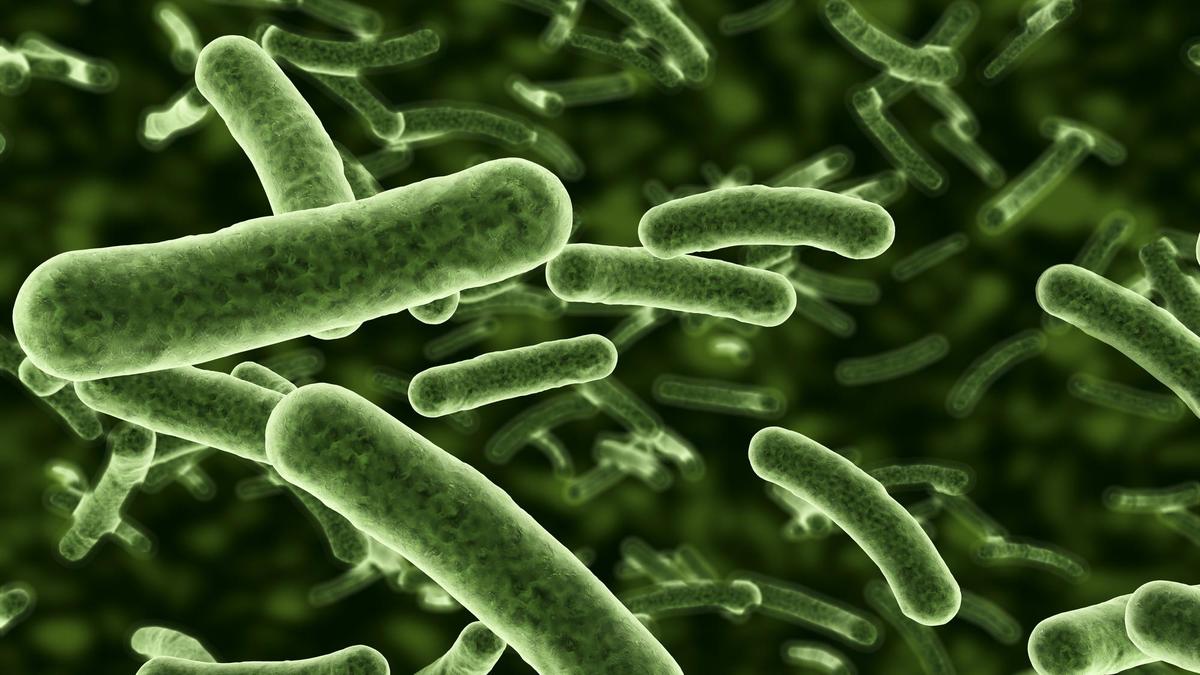
The material can be used to image bacteria at depths not possible before, and its stiffness can be tuned to mimic different bacterial habitats in nature. Researchers at the National Centre for Biological Sciences (NCBS), Tata Institute of Fundamental Research, have developed a transparent porous material that lets scientists image bacteria as they grow, swim, migrate as groups and get transported by flowing water deep inside three-dimensional spaces, even at the single-cell level.According to the researchers, this could help reveal how speed and direction of flow influence where bacteria attach and form biofilms, how different species colonise porous environments, and how microplastics settle in sand and sediment. The material could also open new avenues of research in bioreactor design, the cleanup of contaminated soil and microbially enhanced oil recovery.The work, led by Nandhu Krishna Babu under the guidance of Tapomoy Bhattacharjee, has been published in Small Methods, a journal.Difficult to study in natural settingsMost bacteria in nature live in crowded, maze-like spaces, such as the gaps between soil grains, sediment particles and rock pores, where water and nutrients can move only through narrow channels. Studying them in these settings was difficult because real soil and sand are opaque, and existing transparent substitutes used to mimic the soil fall short, the authors noted.“Popular soft hydrogels, for instance, let nutrients seep through the grains themselves, unlike real sand grains, which nutrients cannot penetrate. Stacked glass beads, often used to mimic sand, can only be imaged with the help of chemical additives that can harm the bacteria. Transparent resins and minerals have also been used as soil mimics, but they either allow individual bacteria to be imaged only at shallow depths or require laborious processing to become transparent,” read a statement from the NCBS.The invisible sandbedThe team turned to a fluorocarbon oil that bends light exactly as water does, making it practically invisible in water. They broke the oil into micron-sized droplets coated with bovine serum albumin, a harmless protein that keeps the droplets from merging. Since the oil is heavier than water, the droplets settle into a tightly packed, clear bed whose pores are filled with a regular bacterial growth broth.The material can be used to image bacteria at depths not possible before, and its stiffness can be tuned to mimic different bacterial habitats in nature. Importantly, the material shows self-healing properties. Any deformation made to the material is reversed once the applied pressure is removed. This means bacteria can be mixed into it or even 3D-printed within it without leaving any permanent mark on the material.Better performanceThe team observed that within the pore spaces of the oil-based porous material, bacteria tend to migrate longer distances than in conventional hydrogel material. When they 3D-printed a ring of dense E. coli and watched the cells migrate outward in search of nutrients, the bacterial wave travelled much faster in their oil-based material than in the hydrogel-based one.Since the material holds its shape under flow, much like water percolating through sand, the researchers could pump bacteria-laden broth continuously through it. They could directly image bacteria getting trapped in the pore spaces, forming clusters and progressively clogging the channels — the earliest steps thought to lead to biofilm formation. The material is also built to last. After an experiment, it can be recovered, sterilised and reused, making it a more sustainable choice for a lab. Published - November 09, 2026 08:00 pm IST
NCBS researchers develop transparent material that enables imaging of bacteria deep inside 3D spaces
Full Article
Original Source
Read the full article at Thehindu →KhanList aggregates and links to publicly available news content. We do not host full articles from third-party sources. Always verify important information with original sources.