
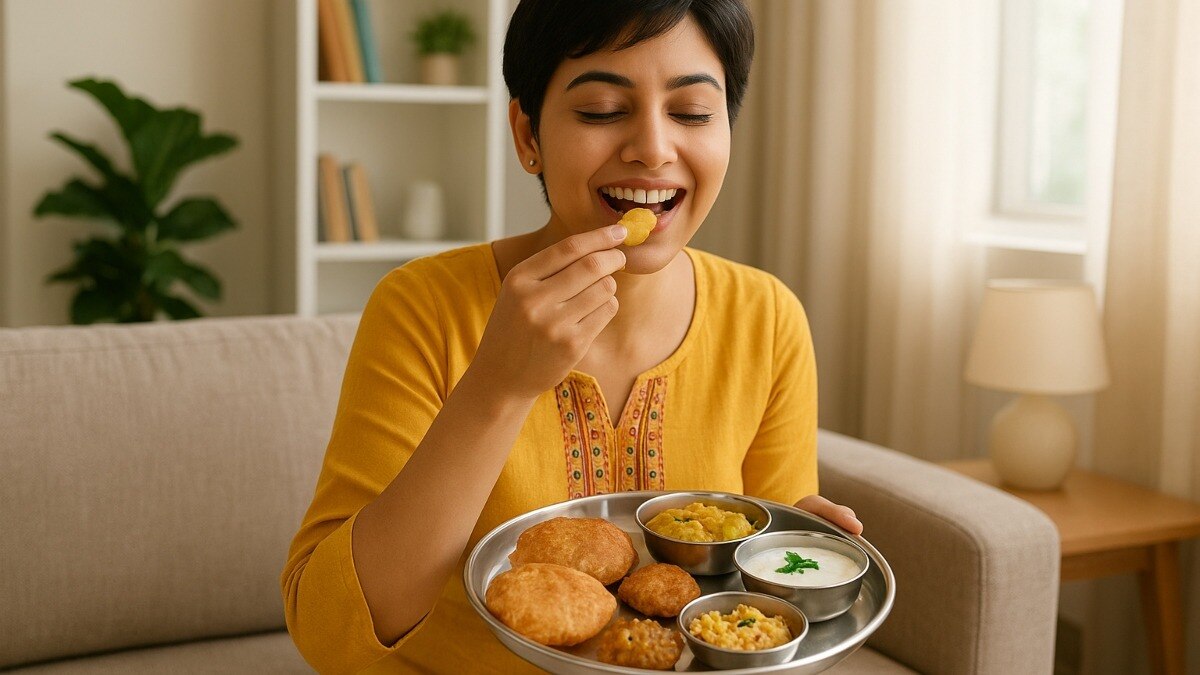
Navratri is a time for devotion, fasting, family gatherings and festive celebrations. From preparing traditional fasting foods at home to dressing up for dandiya nights, the nine-day festival brings several opportunities to enjoy food and spend time with loved ones. However, with fasting during the day and festive meals in the evening, maintaining regular eating habits can become difficult.For many people, fasting may involve eating fruits, dairy products and specific grains, while celebrations often include sweets, fried snacks and other festive favourites. Long gaps between meals, irregular eating schedules and frequent snacking can also make it harder to recognise hunger and fullness. As a result, some people may feel tired during the day or find themselves eating more than they intended in the evening.However, enjoying Navratri does not mean giving up favourite foods or following strict dietary rules. Making thoughtful choices, eating at regular intervals when permitted by one's fasting practices and paying attention to hunger cues can help people enjoy the festivities while supporting their nutritional needs.Ritika Samaddar, Regional Head of Dietetics at Max Healthcare, Delhi, shares five nutrition tips to help people balance fasting, feasting and celebrations during Navratri. 1. PRIORITISE NUTRITION WHILE FASTINGFasting does not have to mean going through the day without adequate nourishment. Depending on individual fasting practices, people can include a variety of permitted foods, such as fruits, vegetables and dairy products, to make their meals more balanced.Relying on only one or two fasting staples may limit dietary variety. Nuts can also be a convenient option between meals or before heading out for an evening of celebrations. Almonds, for instance, contain protein, fibre, vitamin E and magnesium, making them a useful addition to a varied diet. Planning meals can also help people avoid feeling excessively hungry later in the day. The aim should be to make the most of the foods permitted during the fast rather than simply eating less.2. ENJOY FESTIVE FAVOURITES WITHOUT GUILTMithai, traditional snacks and festive meals are an important part of Navratri for many families. Avoiding every favourite food is not necessary to maintain balanced eating habits.Instead, pay attention to portion sizes and eat slowly. Taking time to enjoy each bite can help people recognise when they feel satisfied. It is also useful to distinguish between genuine hunger and eating simply because food is available.One indulgent meal does not have to determine what the rest of the day looks like. Rather than compensating by skipping meals later, people can return to their usual eating routine. A flexible approach can make festive eating more enjoyable and sustainable.3. DO NOT SKIP MEALS BEFORE DANDIYA NIGHTEating very little throughout the day to make room for a large meal in the evening may seem like a convenient strategy, but it can leave people feeling extremely hungry by the time celebrations begin.Long gaps between meals may encourage people to eat quickly or consume more food than they intended when they finally sit down to eat. This can be particularly relevant during Navratri, when dandiya nights and social gatherings may extend late into the evening.When fasting practices permit, try to maintain reasonably spaced meals and have a nourishing meal or snack before leaving home. This can help support energy levels and make it easier to enjoy the celebrations without arriving at the venue feeling ravenous.4. BE MINDFUL OF FREQUENT SNACKINGOvereating does not always happen during a main meal. Small portions of mithai, namkeen and other snacks eaten while chatting with friends or waiting for an event to begin can add up throughout the evening.Eating while distracted may also make it harder to notice how much food has been consumed. Before reaching for another serving, pause briefly and consider whether you are hungry or eating out of habit.This does not mean avoiding snacks altogether. If you want another helping, you can enjoy it. The important thing is to make a conscious choice rather than eating automatically whenever food is available.5. MAKE SIMPLE AND PRACTICAL FOOD SWAPSSmall changes to festive meals can help people introduce variety without giving up traditional foods. When both options are available, choosing sabudana khichdi instead of deep-fried sabudana vada may reduce the amount of oil in the meal, depending on the recipe and preparation method.Similarly, fresh fruit can be an option when you want something sweet. However, there is no need to treat fruit and traditional sweets as competing choices. Both can fit into a varied diet, depending on individual nutritional needs and portion sizes.The key is to focus on practical choices rather than strict rules. People can enjoy their favourite Navratri dishes while also considering how meals are prepared and whether their overall diet includes enough variety.Navratri is a time to celebrate traditions, enjoy festive food and spend time with loved ones. By paying attention to nourishment, avoiding unnecessary meal skipping and making mindful food choices, people can enjoy the nine-day festival without turning eating into a source of stress.- Ends
Navratri fasting and feasting: 5 nutritionist approved tips to avoid overeating
Full Article
Original Source
Read the full article at Indiatoday →KhanList aggregates and links to publicly available news content. We do not host full articles from third-party sources. Always verify important information with original sources.