
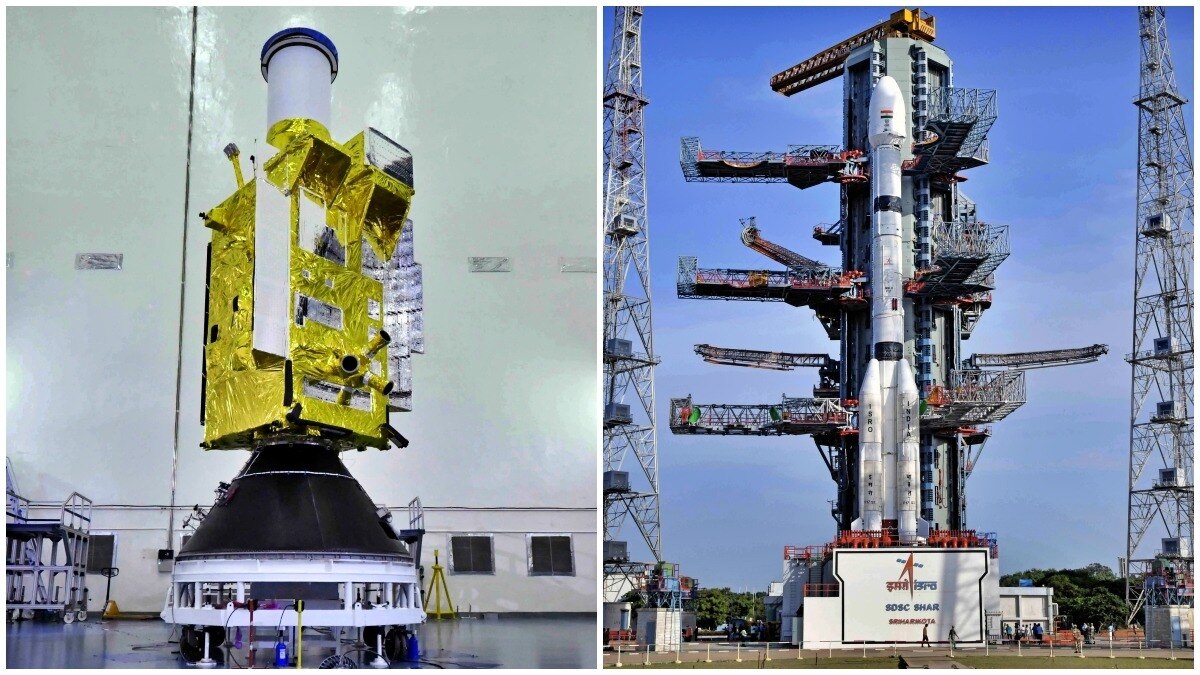
Isro is set to launch GSLV-F17 with the EOS-05 Earth observation satellite from Sriharikota tonight. The mission could end an eight-month launch gap and revive India's geosynchronous imaging push.Isro's Gisat-1 will launch aboard the GSLV-F17 mission. (Photo: Isro)The Indian Space Research Organisation (Isro) is set to return to the launch pad after a prolonged hiatus, with its GSLV-F17 rocket scheduled to lift off in the early hours of Friday carrying the EOS-05 Earth observation satellite, also known as GISAT-1A.The mission is scheduled for launch at 2:55 am IST on September 4 from the Second Launch Pad at the Satish Dhawan Space Centre in Sriharikota.GSLV-F17 will be the 19th flight of India's Geosynchronous Satellite Launch Vehicle and is expected to end a launch drought of nearly eight months for the country's space programme.The rocket has infamously earned the nickname naughty boy at Isro after a series of unpredictable performances during its early years. The rocket's development was marked by repeated setbacks, with six of its first 18 flights failing to achieve full mission success. GSLV-F17 carrying EOS-05 was moved from the Vehicle Assembly Building (VAB) to the Umbilical Tower (UT) on 28th August 2026 at Satish Dhawan Space Centre, SHAR, Sriharikota, as preparations continue for the scheduled launch on:04 Sept 2026 | 02:55 AM ISTLivestreaming pic.twitter.com/4nW2MUgeYh— ISRO (@isro) September 1, 2026 The mission is particularly significant because EOS-05 will become India's first-ever imaging satellite designed to operate from geosynchronous orbit.Unlike conventional Earth observation satellites in low-Earth orbit that can observe a region only during periodic passes, EOS-05 will eventually operate nearly 36,000 kilometres above Earth, allowing repeated and sustained observation of the same broad region. GSLV-F17 will not place the satellite directly into its final geosynchronous orbit.Instead, the rocket will inject EOS-05 into a Sub-Geosynchronous Transfer Orbit, or Sub-GTO. The satellite will then use its own onboard propulsion system to gradually raise its orbit and reach its intended operational position.WATCH GSLV-F17 LAUNCH LIVE HERE The launch also represents a crucial second attempt to establish India's geosynchronous imaging capability.The earlier GISAT mission, launched aboard GSLV-F10 in August 2021, was unsuccessful after an anomaly in the rocket's cryogenic upper stage prevented the satellite from reaching orbit.For Isro, the stakes are therefore higher than those of a routine Earth observation mission. A successful launch would not only restore India's launch momentum after months without a mission, but also demonstrate a new capability in persistent space-based observation.EOS-05 is expected to support applications ranging from weather monitoring and disaster management to environmental observation, agriculture and the tracking of cyclones, floods and forest fires. Its ability to repeatedly observe the Indian subcontinent and surrounding regions could significantly strengthen India's Earth observation infrastructure.As the countdown progresses at Sriharikota, all eyes will now be on the early-morning liftoff.For Isro, GSLV-F17 is more than the next mission on the launch manifest, it is an opportunity to end the launch drought and open a new chapter in India's space-based imaging capabilities.- EndsPublished By: Sibu Kumar TripathiPublished On: Sep 3, 2026 11:24 IST
'Naughty boy' GSLV gives Isro chance to end 8-month launch drought tonight
Full Article
Original Source
Read the full article at Indiatoday →KhanList aggregates and links to publicly available news content. We do not host full articles from third-party sources. Always verify important information with original sources.