
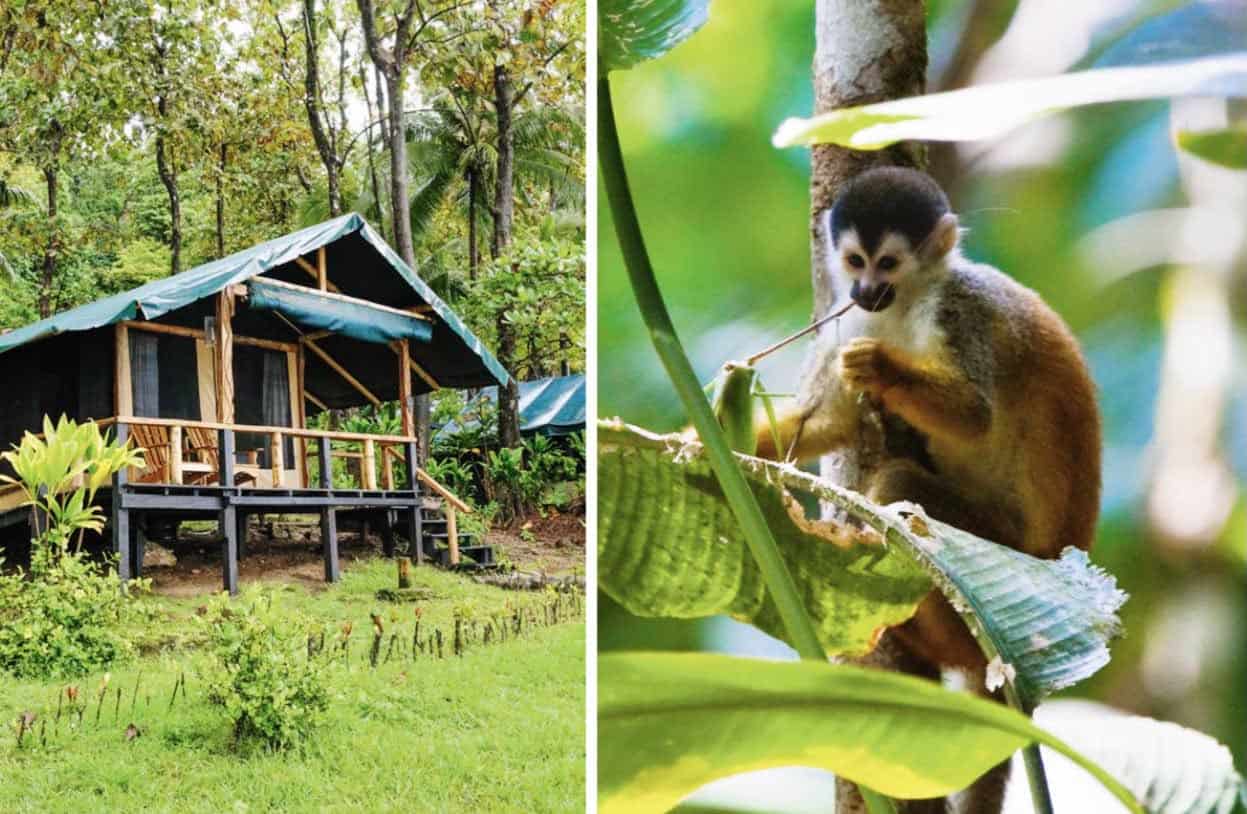
National Geographic Traveler’s German edition has given Costa Rica eleven pages in its September issue, describing Costa Rica as a treasure of nature and taking readers on a route that runs from the Pacuare River to the Osa Peninsula. The photographs reaching German newsstands this month include hummingbirds, beaches, forest canopy, a sloth and rafters on whitewater. The written feature follows a journey through the Nairi Awari Indigenous Territory, San Gerardo de Dota and Los Quetzales National Park before moving south to Carate Beach, Corcovado National Park and the Gulf of Nicoya. The Costa Rican Tourism Institute (ICT) said the article is the product of a partnership with National Geographic Germany. Under that agreement, Costa Rica covered airfare, lodging and production costs for the assignment. As of Saturday, the institute did not have figures available on how much it spent on those items. The ICT said that in exchange, Costa Rica appeared in a publication where the equivalent advertising space would have cost €207,900, or about ₡109 million. That works out to roughly $240,000 at today’s exchange rate. Marcos Borges, executive president of the ICT, said partnerships of this kind let Costa Rica put its attractions in front of thousands of potential travelers and encourage them to turn what they see on the page into a trip. The magazine printed 35,000 copies for distribution across Europe and the feature will also run in National Geographic’s digital edition. Journalist Amelia Duggan wrote the piece, which is structured as a first-person account of her time here. Her framing is that Costa Rica’s natural wealth is not something to be looked at from a distance but something to be walked into and taken in through all five senses. The article also spends time on conservation, on seeing wildlife in its own habitat, and on how easily a single trip can cross between sharply different ecosystems. According to the ICT, the report presents Costa Rica as a country that has built the protection of its natural heritage and its sustainability commitments into the tourism product itself, reinforcing a reputation the institute describes as global leadership in sustainable travel. Beyond landscapes and wildlife, the feature argues that understanding Costa Rica means spending time in local communities and engaging with its culture, food and people. Pura vida is presented as shorthand for that identity, and as a way of valuing simple, unpolished experiences over packaged ones. Germany remains one of Costa Rica’s more important European source markets. Between January and August 2026, it received 50,000 German visitors by air, part of the roughly 300,000 European arrivals by air over the same stretch. Placements like this one sit at the center of how Costa Rica competes for attention abroad, and they carry a cost the public underwrites. The value of the exposure will be measured against those European arrival numbers over the coming season, and the price paid for it is a figure the ICT has said it will need to look up.
National Geographic Germany Devotes 11 Pages to Costa Rica
Full Article
Original Source
Read the full article at Ticotimes →KhanList aggregates and links to publicly available news content. We do not host full articles from third-party sources. Always verify important information with original sources.