
On Friday evening, hundreds of creatives shaping the daytime space will gather at Los Angeles’ Hollywood Palladium for the 53rd annual Daytime Emmy Awards. But beyond soap opera stars and below-the-line staff, the awards show will have a notable presence from creators who paved their way on YouTube.While mainstream Hollywood has just begun entangling itself with the creator economy — Kareem Rahma’s Emmy nom for YouTube series “SubwayTakes” this year marked a milestone for creators — the daytime Emmys have been open to recognizing digital voices for two decades, with the show first presenting an award to a YouTube program in 2006, just over a year after YouTube launched. “It’s something that we have always been welcoming to,” National Academy of Television Arts and Sciences (NATAS) president Adam Sharp told TheWrap. “We have always taken a position that the NATAS-awarded Emmys were platform agnostic; that we were judging based on the format and the content, and not necessarily the platform that you were distributed on.” In fact, Sharp sees the advent of streaming as a positive development for the DIY and home improvement space, noting “A lot of the creators … are developing programming that you historically would have turned to daytime television.” “I think that demonstrates that there is a strong audience hunger for the content that has long had a home on daytime, but people’s schedules have changed. People’s viewing habits have changed,” Sharp said. “The device people turn to is no longer perhaps that TV on the kitchen counter, but the device they have in their hand.” That’s not to say there isn’t still a hunger for traditional daytime programming and soap operas; they’ve just adapted to new viewing models. “Most programs are no longer viewing their productions as these single episodic events where you shoot your episode, put it on the air, and and that’s it,” Sharp said. “Most of these programs recognize that they are a multi-platform brand … and that the 30 minutes or one hour they may engage with that audience on a linear platform, is only one part of the story and one part of that relationship.” That means daytime productions are now investing in what Sharp calls “shoulder content,” which might including producing supplementary, vertical content on TikTok or even just giving fans a direct line to engage with the stars on social media. “Maintaining that intimate relationship with with the audience … I think is where the creator economy has had a strong suit, and where the traditional economy has has learned from that,” he said. While long-running daytime series have been tasked at building that aspect into their pipeline, Sharp credited CBS’ “Beyond the Gates,” which launched in 2025, as “the first digital native soap opera,” which he said “allowed them to go from zero to 60 quite quickly.” For Sharp, the success of “Beyond the Gates” finally puts to bed the saying that “daytime is dead.” “I don’t think the audience ever lost interest in the format,” he said, noting that ratings decline in the daytime slot is more reflective of “broader social and technology trends” rather than a lost appetite in the genre itself. “When you look at the bigger binge hits on streaming platforms, they steal a lot of the tentpole fingerprints of the daytime drama format of serialized storytelling — the cliffhanger of one episode into the the next … those tend to be the the secret sauce that are driving a lot of the hits of the streaming golden age.” And that’s not even mentioning microdramas, which also embrace the dramatic cliffhangers that lure in viewers. “Beyond the Gate” Season 2 cast (Credit: CBS) Following a wealthy Black family in the suburbs of Washington, D.C., Sharp also praised “Beyond the Gates” with challenging “stereotypical expectations of what the audience looked like and what they expected the soap to look like,” recognizing an underserved community. “From where I sit, the daytime Emmys have rightfully been criticized over the years for a relatively low number of Black actors and actresses nominated in the performing categories. That has historically not been for lack of want by the Academy, it has simply been for lack of casting on the soaps and lack of roles there,” Sharp said. “As evidenced by this year’s nominations, with ‘Beyond the Gates’ creating that platform and telling those stories and casting those performers, the Emmy voters recognized those performances enthusiastically.” The Daytime Emmys come as the NATAS and the Television Academy (ATAS) are in the midst of discussing a reunification after splitting in 1977 due to tension among the branches. News of the talks broke in July, and Sharp noted that while there’s no specific timeline for a decision, discussions are going “positively.” “At a time when most in our industry are having to wear multiple hats, that there is an increasing expectation that to work in our field, you have to be a polymath and touch several different sectors of of the space … you’re a producer and an editor. You’re a writer and a actor,” He said. “To have two different academies carrying the Emmy mark and representing this community with arbitrary lines … grew increasingly nonsensical, and it’s increasingly tough out there for our members.” The idea of the potential reunification is that the academies can better serve their memberships through a “single unified community,” and “it is that single member-focused spirit that is driving the conversation right now, and I think driving it in a very positive direction.” Those discussions likely became a tad more complex when the TV Academy inked an exclusive deal with Amazon’s Prime Video to bring the Emmys to the streamer through 2033. While the deal is solely for the primetime telecast, should the reunification go through, Sharp noted the the team would “want to look at what other opportunities there are to bring the full portfolio of any genres to the platform,” adding that Prime Video already interacts with NATAS due to their presence across sports, documentary and children’s programming. “It is a platform that is by definition expansive and touches every vertical, every genre, and I think that can only present positive opportunity to hold a mirror up to the entire scope of the community we we represent,” Sharp said. Even if the reunification deal doesn’t go through, Sharp said NATAS is “open” to conversations with other distributors for the awards show, which the organization self-streams after parting ways with CBS in 2024. The news, documentary, and sports ceremonies launched on YouTube this spring, and Sharp notes that “experiment” was a success. “I think we’ll continue there for the time being, but certainly, if if a partner came along, we would entertain that,” he said. And as the primetime Emmys face scrutiny over switching up the show to attract more viewers, Sharp notes self-producing and distributing the show means there’s not a network to answer too. But, as producers, the goal is still to keep things fresh. “You still have an audience in the room and an audience at home that is going to give you feedback and comments that you’re trying to serve, and as producers who love TV ourselves, we don’t want to get bored,” he said. “I think one advantage of producing half a dozen or more ceremonies a year across our genres is that we have a little bit of room to experiment. No two of our shows are exactly alike.” The Daytime Emmys will stream on YouTube, the Emmys website and the Emmys app.
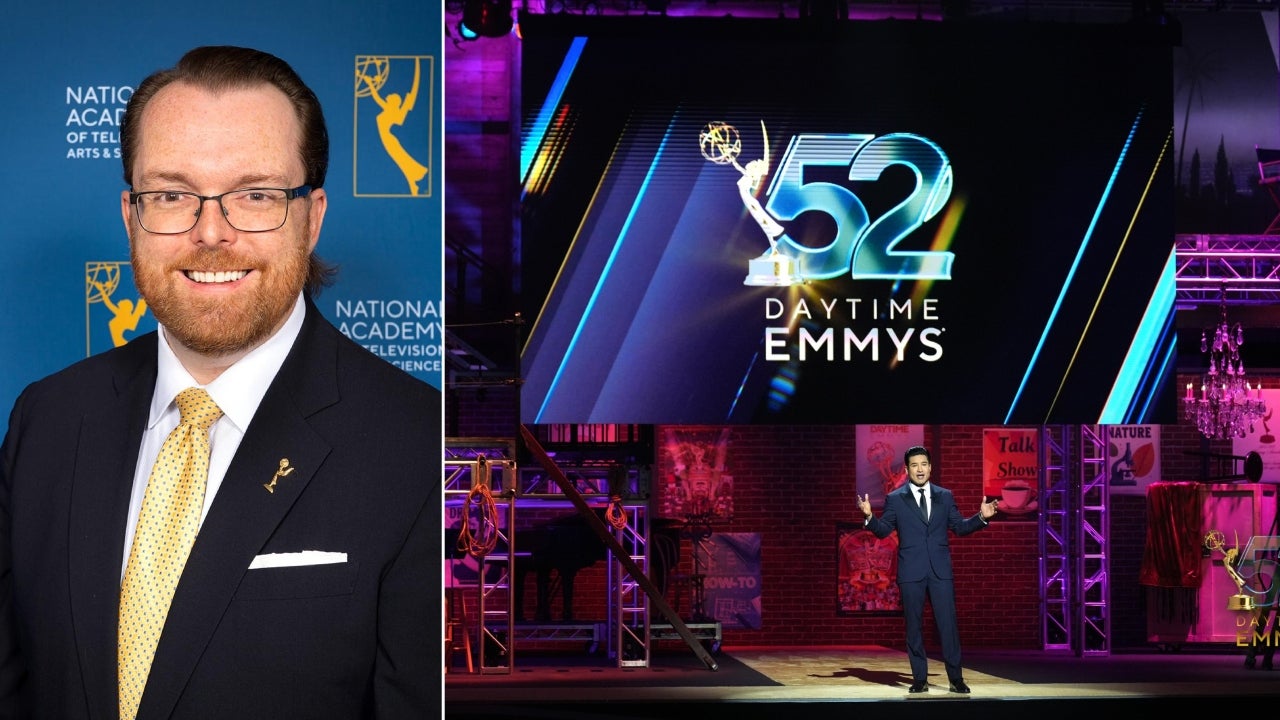
NATAS President Adam Sharp Sounds Off on Daytime’s Resurgence and Those Talks to Merge Back With the TV Academy
Full Article
Original Source
Read the full article at Thewrap →KhanList aggregates and links to publicly available news content. We do not host full articles from third-party sources. Always verify important information with original sources.