
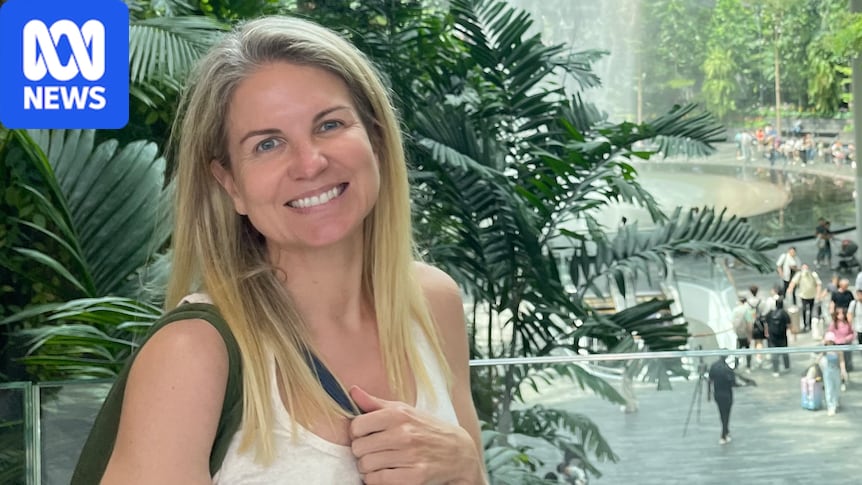
Natalie was in her late 30s when she started IVF treatment after surgery for endometriosis.The now 48-year-old says she was "extremely optimistic but also completely naive" about how the difficult journey might be."When I reflect upon it, it would've been great to have had that discussion up-front [with the clinic], but it wasn't something that we talked about," Natalie, from Anglesea in Victoria, says."We sort of just didn't understand that, sometimes, especially as you age, you often need more than just one cycle."It was the start of a decade-long IVF journey for Natalie and her husband as they tried desperately to fulfil their dream of becoming parents.Natalie says the journey hasn't just taken a toll physically and emotionally, but the financial burden has been profound.Yumi Stynes, host of ABC podcast Ladies, We Need to Talk, explored what the true cost of IVF is for couples and where the line is when it comes to stopping treatment.'We've spent hundreds of thousands of dollars'After her first IVF cycle failed, Natalie and her husband took a year off treatment to think about their goals."It's not just a physical process, it's a mental process, and it's an emotional process," she says."And [we were] figuring out, 'What is it that we want to do?'"Ultimately Natalie and her husband decided to keep trying and got to the egg collection and transfer stage multiple times.Natalie has spent a decade trying to conceive with IVF. (Supplied)"We actually ran into a lovely couple, and they had like a two-week-old baby in their arms and they were like, 'We've done 10 rounds of IVF and it's cost us over a couple of hundred thousand dollars … don't worry about the money, just do it,'" Natalie says.Natalie says she's had about 25 unsuccessful IVF cycles over 10 years."It's got be over $200,000 [that we've spent]," she says."We've used our savings and we've had some support from family, and we've accessed super as well."We've got friends who have bought houses and investments … we don't have a property."Natalie says among the expenses were "add-ons" she'd chosen to try during her treatment, including acupuncture and platelet rich plasma infusions.Sarah Lensen, a senior research fellow in the Department of Obstetrics, Gynaecology and Newborn Health at the University of Melbourne, says add-ons are supplementary treatments marketed to "help" women conceive during IVF.She says between 80 and 90 per cent of patients use one or more of these treatments in their cycles."What makes me nervous is that patients are paying a lot of money … [and] they need to know that there's not good evidence that it's going to help them," Dr Lensen says.'It was all about saving for IVF'Bridget was referred to a private IVF clinic four years ago after she was diagnosed with endometriosis and unexplained infertility.She says her husband wanted to stop treatment after their first cycle resulted in no viable embryos."He was pretty irritated after that first round and the results we got for the money and effort we put into it," says Bridget, who is in her 30s."It was fairly soon after I did raise that conversation of, 'How much are we willing to do?'"They decided to do two more cycles. Over two years, Bridget and her husband saved money to cover the up-front fees, which were between $12,000 and $15,000."It was a significant hit to the finances, and I suppose not having money for more fun things to put aside for a holiday or saving for a house deposit," she says."Instead, it was all about IVF."Like Natalie, Bridget paid for supplementary treatments that are not included in a standard IVF protocol, as well outlaying for counselling to help provide emotional support.After her third and final egg retrieval, Bridget decided she was done with IVF, regardless of whether it worked."We had at that point expensed about $25,000 out of pocket," she says."So that was a point where we had to stop and go, 'What is our cut-off to stop putting so much of our financial and emotional and mental resources into this process when it's feeling decreasingly likely that this is going to work out for us?'"'It's OK to decide you've had enough'Bridget and her husband met with the fertility specialist to discuss what more IVF might look like."Our specialist wasn't willing to put any numbers to that in terms of if we do more rounds, there'll be this percentage chance of success," she says."So, it felt a bit like just throwing darts in the dark and hoping one of them would hit."She says making the decision to stop IVF felt like "freedom"."It's still such a tough space for people to feel like they get the permission to say, 'I've had enough, and I want to stop'," she says."It is absolutely for each person to decide and it's completely OK to say you have had enough."Sarah Lensen says there is financial and emotional strain attached to IVF. (Supplied: Sarah Lensen)Dr Lensen says IVF clinics are commercial companies that "make money the more IVF cycles they perform"."[They] maybe don't always speak to the fact that most of the time IVF doesn't work, and actually it's going cost you a lot of money and heartbreak and there's a lot of financial and emotional strain attached to it."Natalie and her husband are not prepared to call it quits just yet despite the emotional and financial toll."It is a decision that we will have to make, and I'd say it'll be soon," she says."I do have friends that have chosen not to have children and their lives look amazing."This is general information only. For detailed personal advice, you should see a qualified medical practitioner who knows your medical history.
Natalie spent more than $200k on IVF and didn't get her baby
Full Article
Original Source
Read the full article at Abc →KhanList aggregates and links to publicly available news content. We do not host full articles from third-party sources. Always verify important information with original sources.