
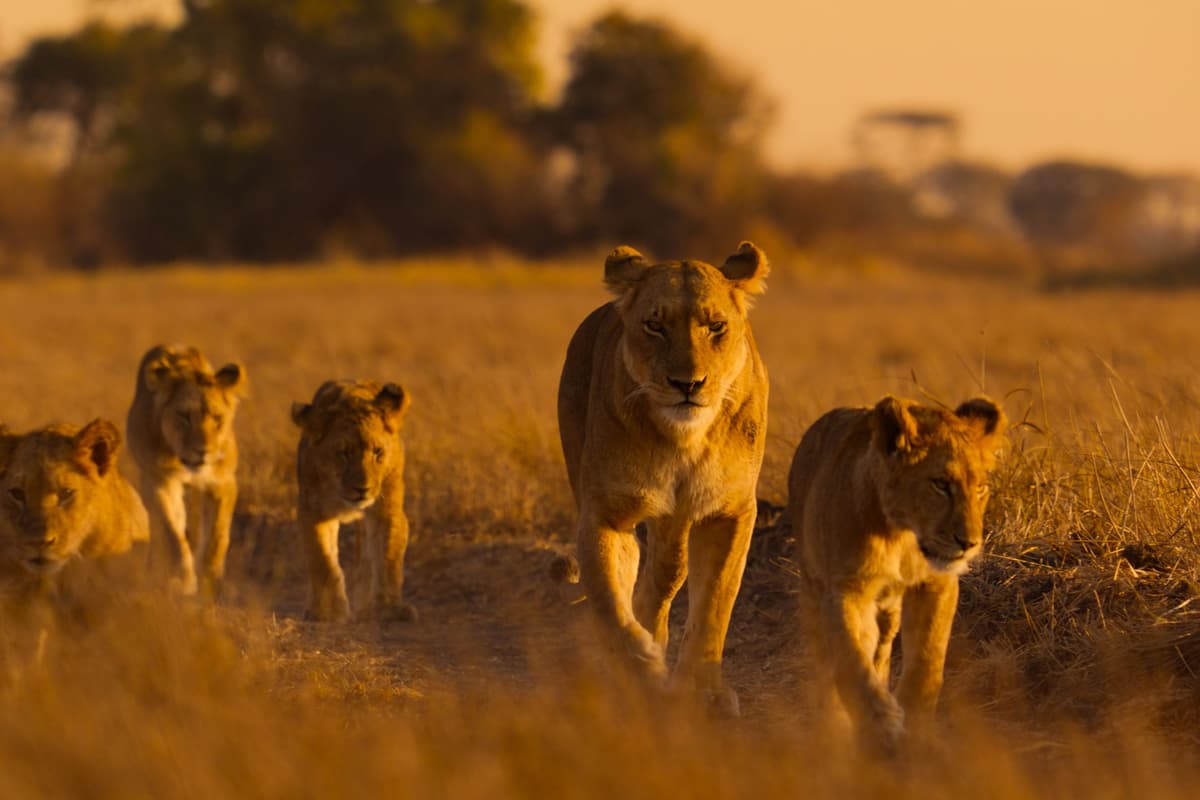
A National Geographic scientist has warned that “we’re at the end” of the road when it comes to wildlife loss across the African continent.Dr Steve Boyes, founder of the Wild Bird Trust and leader of the Okavango Wilderness Project, says Africa has lost 80% of its wildlife.The South African conservation biologist is one of several contributors to a new seven-part documentary series, narrated and produced by Oscar nominee Wunmi Mosaku.Wunmi Mosaku winning best supporting actress at the 2026 Bafta film awards (Ian West/PA)PA ArchiveAfrica: Earth’s Wild Home is the first in a new National Geographic documentary franchise exploring the planet continent by continent at a time when the natural world is changing faster than ever.The series introduces new species, previously unseen animal behaviours and dramatic stories of resilience and survival.Home to the world’s largest hot desert, its deepest river and vast savannas, Africa is brought to life through a journey into the continent’s most remote and unexplored reaches, meeting the animals and conservationists that call it home.“We’ve lost 75–80% of all wildlife on the continent and it’s pretty much the same globally,” Dr Boyes told the Press Association.“These are the wildebeest, lions and elephants that used to be standing around. They’re not there any more. They’re inside protected areas. And this series just shows you, in ultra-HD, crystal-clear detail, what remains.”Dr. Steve Boyes is a South African conservation biologist and National Geographic Explorer (National Geographic)Speaking about the series, he said it is the closest many viewers at home will get to seeing these animals up close.“I’ve never seen anything like this. We’re just so lucky in this generation to be able to see wildlife as if you’re there, sitting in your own living room,” he explained.“And what I love about the series is that it’s also saying: we’re right at the end, people. We need policies that support the people on the ground who are trying to protect these opportunities for us.Read More“I mean, 90% of the people watching this will never have the chance to go on safari. But shows like this, series like this, help us care enough about it to do something about it. Even though we know we may never go and sit in that safari vehicle next to sleeping lions or watch wild dogs hunt.”Dr Boyes, who is also undertaking a river project called the Great Spine of Africa, emphasised the urgent need for climate resilience and water security across the continent.“We’re projected to have two-and-a-half billion people by 2050,” he said.“One in every two babies born in 2050 will be an African. And how do we prepare for that? India has gone through its rural-to-urban migration. China went through it. Africa’s going through it now. We’re going through our baby boom and our rural-to-urban migration.“We’re just about to become consumers, and, you know, that’s why we were so hurried in our work.“We need to understand how to protect Africa’s rivers and how to have water security in an Africa with two-and-a-half billion Africans.”Africa Earth’s Wild Home will be available on Disney+ and National Geographic in the UK from Saturday, October 3.
Nat Geo scientist warns of rapid decline in African wildlife in new documentary
Full Article
Original Source
Read the full article at Standard →KhanList aggregates and links to publicly available news content. We do not host full articles from third-party sources. Always verify important information with original sources.