
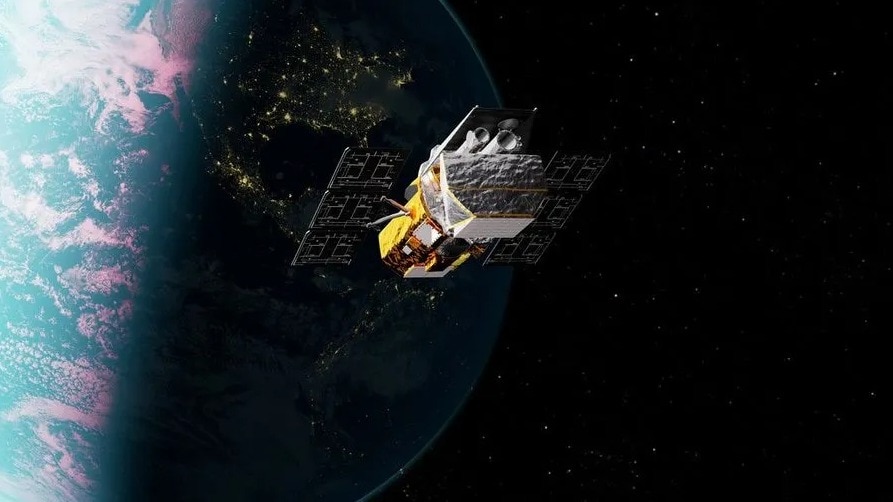
Nasa’s attempt to save its ageing Neil Gehrels Swift Observatory has failed, leaving the 21-year-old space telescope on course for a fiery return through Earth’s atmosphere later this year.Nasa and Katalyst Space Technologies announced on August 19 that the Link spacecraft will no longer attempt to capture Swift and raise it into a higher orbit.An ongoing problem with Link’s ability to control and orient itself in space, called attitude control, eventually made the rescue attempt impossible.Once its robotic arms are attached to Swift, LINK can begin to slowly push Swift upward. Over the course of a few months, LINK will attempt to return Swift close to its original launch altitude. Then, LINK will detach, leaving Swift in its new orbit. pic.twitter.com/rs9ES8W3uQ— NASA Universe (@NASAUniverse) July 6, 2026Swift’s re-entry is expected later in 2026, with Nasa saying it will continue to lose altitude because of atmospheric drag. The falling observatory's exact re-entry date is yet to be determined.A FAILED RESCUE MISSIONSwift’s orbit has been steadily declining, but unusually strong solar activity recently heated and expanded Earth’s upper atmosphere, increasing the drag acting on the observatory and speeding up its descent. Nasa had therefore put Swift's science operations largely on hold in February 2026 to reduce drag while it prepared for a rescue. The Link spacecraft built by space startup Katalyst Space is seen. (Photo: Reuters) Nasa awarded Katalyst Space a $30-million contract in September 2025 to build and launch Link in less than a year.The spacecraft finally reached orbit on July 3, 2026, to try and rescue one of Nasa's most successful creations.Link initially made progress; it established contact after launch and passed early checks.But later in July, things went south. An artist's concept of the Swift Observatory sent to rescue the falling telescope. (Photo: Nasa) Two of the spacecraft's three reaction wheels became inoperable and its cold-gas thruster system also lost some functionality, causing the spacecraft to spin and communications to become sporadic.Engineers managed to slow the spin from about 9 degrees per second to 1.47 degrees per second by early August.A software update then restored attitude-control capability using Link’s remaining systems, allowing the team to continue trying to approach Swift.But the fixes were not enough to make rescuing Swift possible. WHAT WILL HAPPEN TO SWIFT NOW?Link will now attempt to conduct rendezvous and proximity operations around Swift.The goal is now to gather data and demonstrate techniques that could improve future robotic satellite-servicing missions.Swift launched on November 20, 2004, and was built to study gamma-ray bursts, which are incredibly powerful cosmic explosions, as well as other rapidly changing objects and events.Its three instruments observe the universe in gamma rays, X-rays, ultraviolet and visible light. An artist's concept of the Link spacecraft docking with Swift Observatory. (Photo: X) Swift became particularly valuable because it could rapidly turn towards a newly detected gamma-ray burst and study its fading afterglow.After more than two decades of watching some of the Universe’s most violent events, Swift’s journey is now approaching its final chapter.But this last chapter will have to do less with discovery and more with descent back to its home.- EndsPublished On: Aug 21, 2026 12:24 IST
Nasa's Swift telescope to crash on Earth after failed rescue mission
Full Article
Original Source
Read the full article at Indiatoday →KhanList aggregates and links to publicly available news content. We do not host full articles from third-party sources. Always verify important information with original sources.