
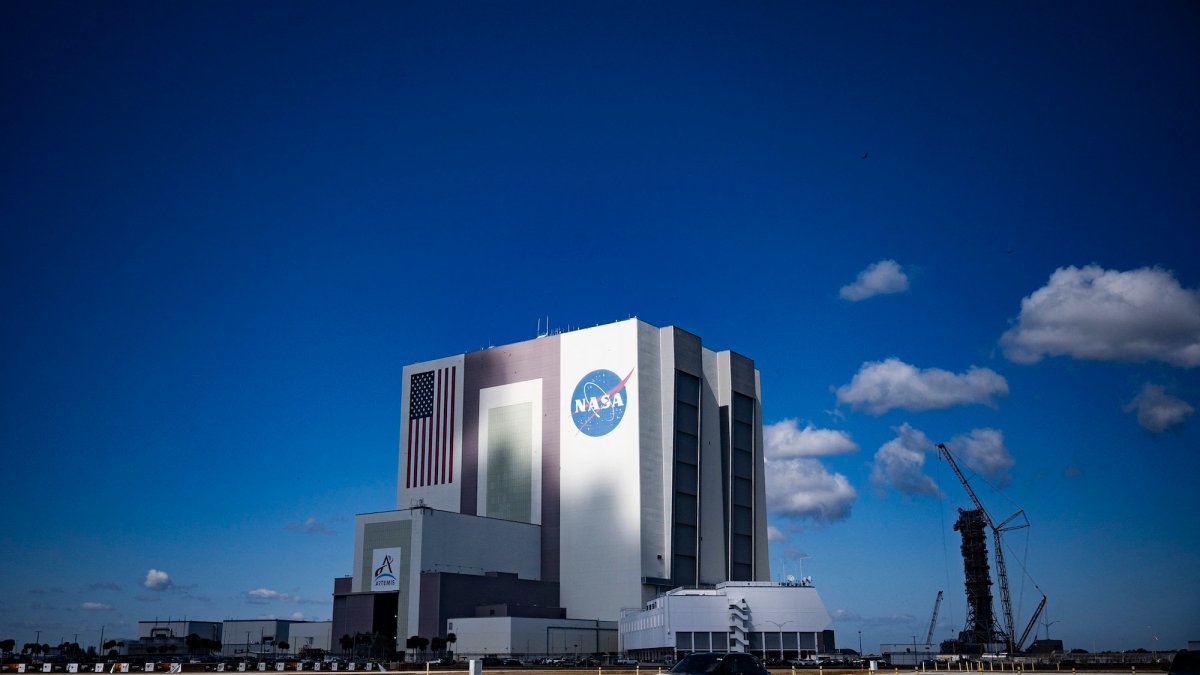
NASA’s Vehicle Assembly Building (VAB) on February 9, 2026, at Kennedy Space Center in Cape Canaveral, Florida. Credit: Jim Watson / AFP via Getty Images NASA has unveiled its next experimental aircraft, dubbed the X-70 Fractal. Well, “unveiled” may be a bit of a stretch. During this week’s UP.Summit at Kennedy Space Center in Florida, NASA administrator Jared Isaacman announced plans for the “crewed, high-performance platform” designed to boost maneuverability, flight control, and “other cutting-edge technologies in real flight.” Beyond that, you’re guess is probably about as good as anyone’s. Even X-70’s sole visual hint may mean nothing at all. The shadowy frame seen silhouetted by fog in NASA’s announcement is explicitly identified as AI “generated content.” This means even the rounded cockpit, splayed tail fins, and extended wings may ultimately not even show up in the final design. NASA aims to complete its first test flight of the X-70 within the next two years. Credit: NASA Despite a lack of photographs, NASA did provide some more concrete details about the X-70. The aircraft will have a 10,000 pound takeoff weight and will cruise at Mach .75 (about 570 miles per hour) at a maximum altitude of 45,000 feet. Its operational range is also expected to exceed 1,500 nautical miles (1,726 miles). “For decades, NASA Aeronautics has used X-planes to develop technologies that advance aviation,” NASA Research and Technology Mission Directorate director Laurie Grindle said in the agency’s announcement. “It’s exciting to bring on another X-plane to accelerate and drive aeronautics research.” NASA also emphasized the X-70’s modular construction, which will allow quick swaps of internal and external payloads. As The War Zone noted, these features are likely intended to facilitate tests of experimental autonomous deployments and drone technology. The X-70 may also feature “bleeding-edge” abilities like morphing wings and “air-burst” controls, which allow aircraft to precisely maneuver midflight solely through blasts of pressurized air. Isaacman said he expects the X-70 to complete its first flight within the next two years, although it’s always useful to take experimental aircraft timelines with a grain of salt. When NASA awarded Lockheed Martin the contract to develop its X-59 aircraft in 2016, the aim was to have a vehicle ready for testing by 2020. The actual X-59’s maiden flight ultimately took place on October 28, 2025. 2026 Popular Science Home of the Future Awards 39 products that will improve your everyday life.
NASA teases experimental X-70 ‘Fractal’ aircraft
Full Article
Original Source
Read the full article at Popsci →KhanList aggregates and links to publicly available news content. We do not host full articles from third-party sources. Always verify important information with original sources.