
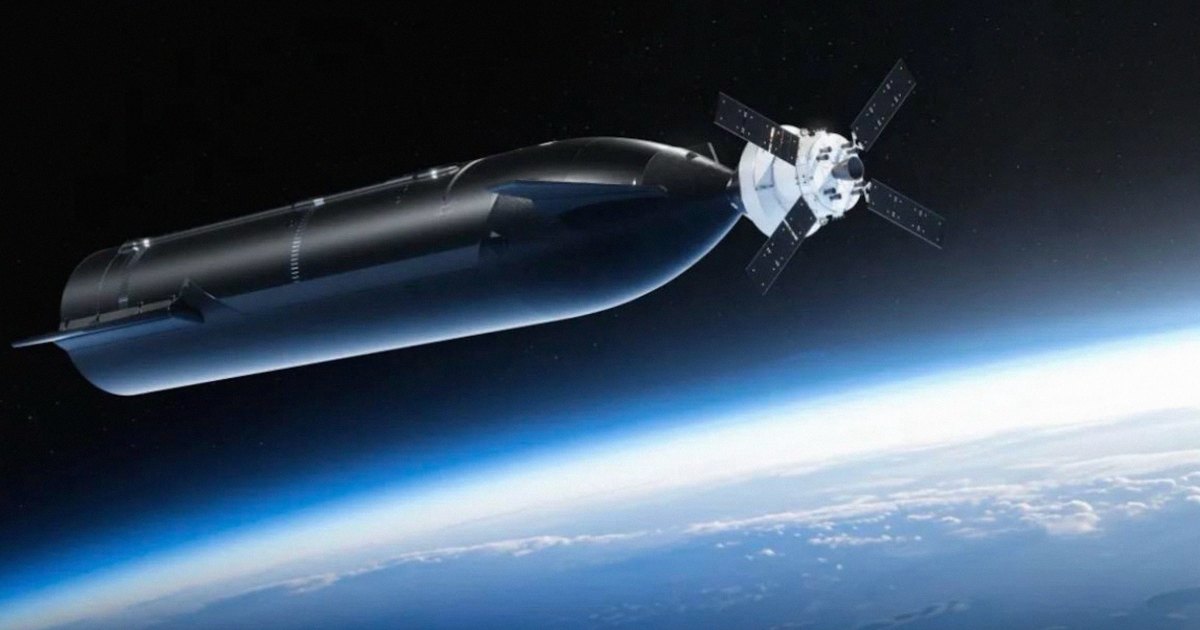
SpaceX NASA is gunning the engine so it can reach the Moon — and soon build a base there — at incredible speed. On Friday, the space agency’s administrator Jared Isaacman doubled down on its ambitious timeline to send astronauts to the Moon in just two years, which would be before the end of president Donald Trump’s term. In a lengthy speech at the Kennedy Space Center last week, Isaacman reaffirmed that the space agency is on track to launch Artemis 3 next summer, a mission that won’t send astronauts to the Moon but will have them practice docking their spacecraft with lunar landers made either by Elon Musk’s SpaceX or Jeff Bezos’ Blue Origin in Earth’s orbit. (The space agency still hasn’t finalized its decision on which vehicle it will be using for the landing, a major point of uncertainty.) Artemis IV, still slated for 2028 at the time of writing, is when the astronauts will fly to the Moon and land on it for the first time in over half a century, where they’ll spend a week on the surface conducting scientific missions. That is, if everything goes according to plan. Isaacman stressed, per the Associated Press, that NASA is now accelerating its pace by cutting down on meetings, “bureaucratic inertia, and endless deliberation.” It’s a striking comment to make, raising questions of if pursuing speed could be coming at the expense of thoroughness and safety. Isaacman, though, drew on NASA’s glorious past, saying that its strength won’t come from “tech industry pixie dust or some new management philosophy.” “It’s about our own history,” he continued. “It’s a playbook this agency knows really well, the same playbook that went from Apollo 7 splashdown to Apollo 11 in just nine months.” There’s no denying NASA’s legendary lunar history. From 1968 to 1974, its Apollo program landed on the Moon six separate times, a pace that seems unthinkable today. But never has any space agency attempted to build a Moon base, the next stage of its lunar ambitions after Artemis IV. Equally unprecedented is the planned base’s location near the Moon’s south pole, when all of the Apollo missions landed near the Moon’s equator. There’s also doubts over whether SpaceX’s Starship, one of the spacecraft that NASA has selected to carry out the Moon landing and be used in the docking exercise, will be ready in time. The world’s largest rocket recently accomplished its first orbit around the planet, but that flight, which was originally intended to have Starship fly around the Earth six times, was cut short because of an engine failure. SpaceX has yet to prove the rocket is safe enough for a proper mission, on top of other capabilities such as refueling in space. “It is incredibly ambitious,” NASA astronaut Frank Rubio, who was selected for the Artemis III mission, recently told the AP. “One thing I’ve always believed and learned is don’t bet against America.” More on spaceflight: 11-Foot Chunk of Chinese Rocket Crashes Down in Minnesota Cornfield
NASA Slams the Accelerator to Get to the Moon Before Trump’s Term Is Over
Full Article
Original Source
Read the full article at Futurism →KhanList aggregates and links to publicly available news content. We do not host full articles from third-party sources. Always verify important information with original sources.