
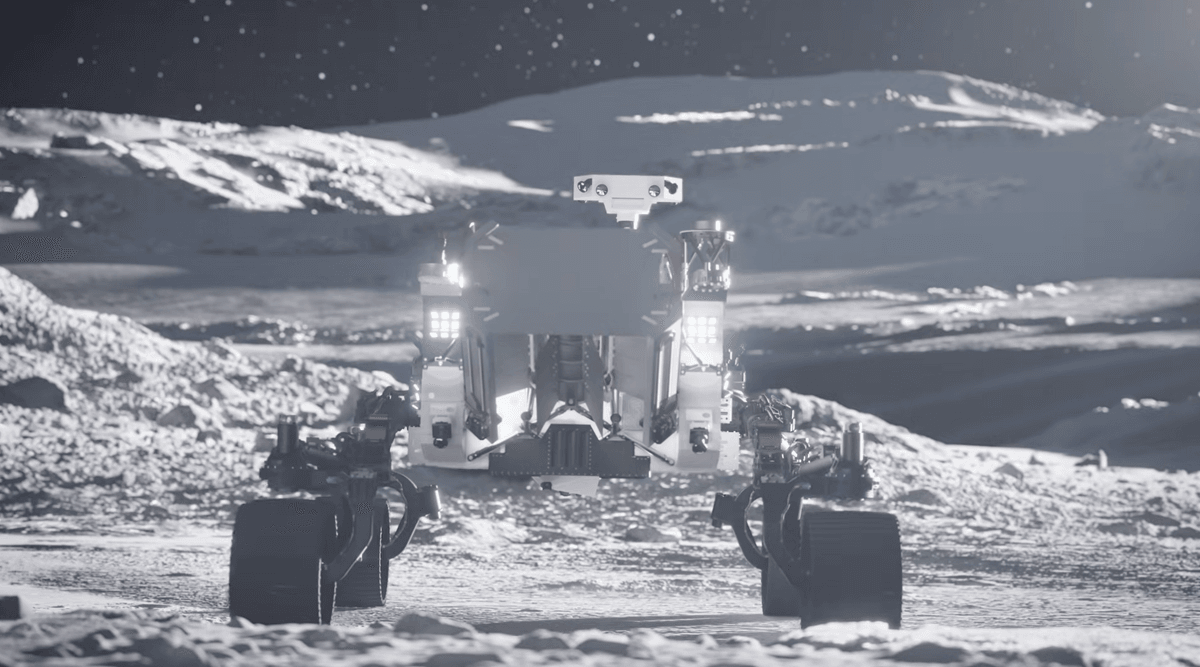
NASA officials on Saturday stressed that the agency is working to speed up testing and development of the hardware that will ensure human missions to the moon.The agency plans to have rovers and other infrastructure already waiting on the moon to greet any human crews when they do eventually arrive there. This is critical, NASA chief Jared Isaacman said at Saturday’s event: “the missions themselves will help us characterize an environment that we’ve really not visited in a very long time.”“Every piece of equipment we learn to operate there brings that enduring presence a little bit closer to reality,” he said.On supporting science journalismIf you're enjoying this article, consider supporting our award-winning journalism by subscribing. By purchasing a subscription you are helping to ensure the future of impactful stories about the discoveries and ideas shaping our world today.One of the biggest updates to that ambition is the decision to fly a rover, PROMISE (Polar Rover for Observation, Mapping and In-Situ Exploration), which is modeled after the Mars rovers Perseverance and Curiosity. Previously only proposed as a possibility by Isaacman, PROMISE will fly to the moon and land using a Blue Origin lander in late 2028 for a 18-month primary mission.“As the United States prepares to send humans back to the moon and onward to Mars. NASA Science is very busy getting ready to provide the ultimate interplanetary survival guide to help them on their way,” said Nicky Fox, NASA’s associate administrator for science.NASA plans to establish a permanent human presence on the moon in the next decade. First steps along that way are the Artemis missions, each of which is designed to return humans to the moon as soon as 2028. Earlier this year, four astronauts flew around the moon and back as part of Artemis II, going farther in space from Earth than any human has gone before.Next is Artemis III—currently slated for early 2027, the flight is designed to test two potential human landers for the moon. These are Blue Origin’s Blue Moon lander, and a version of SpaceX’s Starship; both spacecraft are still unproven as up for the job, an issue NASA’s Office of Inspector General has previously raised as a potential roadblock to the space agency’s moon ambitions. Artemis IV will be the first mission to put humans back on the moon in more than fifty years, in 2028.At the same event, Moon Base Program manager Carlos García-Galán said NASA and its industry partners have shifted the way they are thinking about moon missions to be a campaign, made up of lunar landers, rovers and other hardware, as well as scientific instruments.“From 2019 to the end of this year, we will have 22 task orders of landers that are going to go to the moon” as part of the Commercial Lunar Payload Services (CLPS) program, García-Galán said. Meanwhile, six new task orders have been awarded under the Venture Class Acquisition and Dedicated Rideshare Land Services (VADER), García-Galán added. These include awards for an orbital transfer vehicle that will take payloads to the moon’s surface and lunar orbit, and communications satellites by Intuitive Machines that will help set up communications, navigation and other digital infrastructure on the moon.There is also a plan to use a Blue Origin New Glenn rocket to help deliver “MoonFall” drones that will be deposited near the moon’s surface. These are designed to hop around the moon’s south pole and send data back to ground control prior to Artemis missions to deliver humans to that region, which is relatively unexplored.In the future, NASA may also tap Blue Origin’s Blue Ring spacecraft to help boost communication abilities at the moon, García-Galán said, but Blue Ring is very much still under development. SpaceX’s Starlink will also get involved, testing longer-range communications abilities, he said. “Eventually they could on-ramp into a commercial services contract in the future for Moon Base assets,” he added.NASA is also pushing a new CLPS program phase, García-Galán said—“CLPS 2.0.” These will include a next generation of landers the agency anticipates needing once humans have started to return to the moon regularly. These landers will need to carry heavier loads of as much as six metric tons, he said. Companies tapped to do this include Blue Origin, Lockheed Martin, SpaceX, Voyager, Intuitive Machines, Northrop Grumman and ispace US.“The increased science capabilities at Moon Base, though, are not just about the number of payloads we fly. It is about the quality of the payloads that we fly,” said Fox. She stressed that these science efforts, including the PROMISE rover, serve as ways to ensure humans can survive and thrive on the moon. The PROMISE mission will be led by project scientist James Keane, a planetary scientist at NASA’s Jet Propulsion Laboratory. The rover will have a drill and other instruments designed to study the lunar regolith and radiation, as well as observing the moon’s surface in ways similar to the Mars rovers, she added.“This mission will kind of serve as a scout for the Moon Base operations, whilst also prospecting for resources near the lunar south pole,” Fox said. “Promise is just the beginning as we continue to lead the world into a new era of paradigm-shifting science and human space exploration for generations to come.”This is a developing story and may be updated.
NASA reveals new lunar rover, PROMISE, to launch to moon in 2028
Full Article
Original Source
Read the full article at Scientificamerican →KhanList aggregates and links to publicly available news content. We do not host full articles from third-party sources. Always verify important information with original sources.