
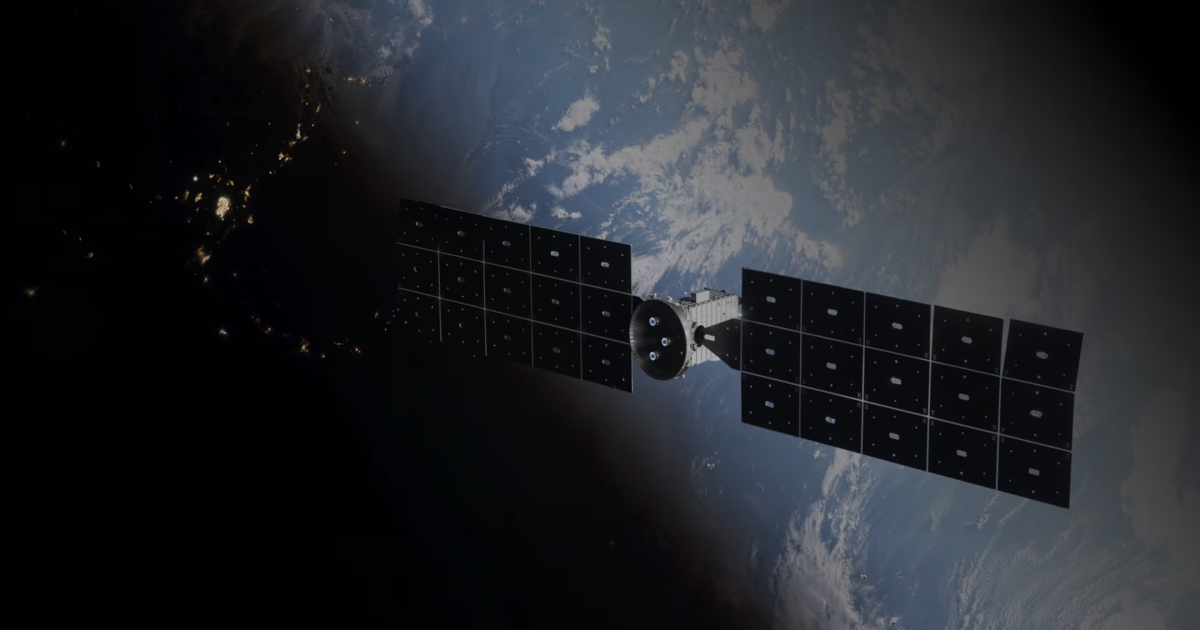
The LINK spacecraftKatalyst 1/2 The Swift space telescopeNASA 2/2 The LINK spacecraftKatalyst The mission to rescue NASA's Neil Gehrels Swift Observatory space telescope may be in need of some rescuing itself. Due to multiple malfunctions in the LINK spacecraft's attitude control system, space engineers have decided to abandon the boost attempt.On July 3, 2026, Northrop Grumman launched a Pegasus XL rocket from Kwajalein Atoll in the Pacific Ocean. Aboard was Katalyst Space's LINK spacecraft, tasked with a daring mission to save NASA's Swift telescope. Launched in 2004, Swift's orbit had decayed to the point where it was in danger of ending its career with a fiery plunge into Earth's atmosphere.To prevent this, the robotic LINK rescue craft was launched on a trajectory to catch up with Swift. The plan called for LINK to extend its robotic arms, capture the stricken satellite, and use its own thrusters to push Swift into a higher, safer orbit. The Swift space telescopeNASA While the mission relied on sophisticated robotics and autonomous systems, the plan fell by the wayside in late July when LINK entered an uncontrolled spin. Overheating electronics contributed to the failure of two of the craft's three reaction wheels, compounded by an unrelated malfunction in its thruster system.Engineers at Katalyst did what they could to stop the tumbling, but would only slow down the spin after recovering partial control of the satellite. Now, NASA and Katalyst have formally abandoned the rescue effort because of the continuing attitude control problems.LINK remains on course to perform rendezvous and proximity operations near Swift to demonstrate key autonomous capabilities for future satellite servicing missions, even though the orbit boost will not occur."NASA should be willing to move quickly and take smart risks when the potential return is worth it, and that is exactly what we did with this mission," said NASA Administrator Jared Isaacman. "This is not the outcome we were working toward, but it does not change why this mission was worth attempting. The team moved with extraordinary speed to give Swift a chance to carry out more science while advancing capabilities America will need for satellite servicing in the future. We are going to learn everything we can from LINK’s rendezvous attempt and put those lessons to work on the missions that follow."Source: NASA Tags David Szondy is a playwright, author and journalist based in Seattle, Washington. A retired field archaeologist and university lecturer, he has a background in the history of science, technology, and medicine with a particular emphasis on aerospace, military, and cybernetic subjects. In addition, he is the author of four award-winning plays, a novel, reviews, and a plethora of scholarly works ranging from industrial archaeology to law. David has worked as a feature writer for many international magazines and has been a feature writer for New Atlas since 2011.
NASA abandons orbit-boost attempt to rescue Swift space telescope
Full Article
Original Source
Read the full article at Newatlas →KhanList aggregates and links to publicly available news content. We do not host full articles from third-party sources. Always verify important information with original sources.