
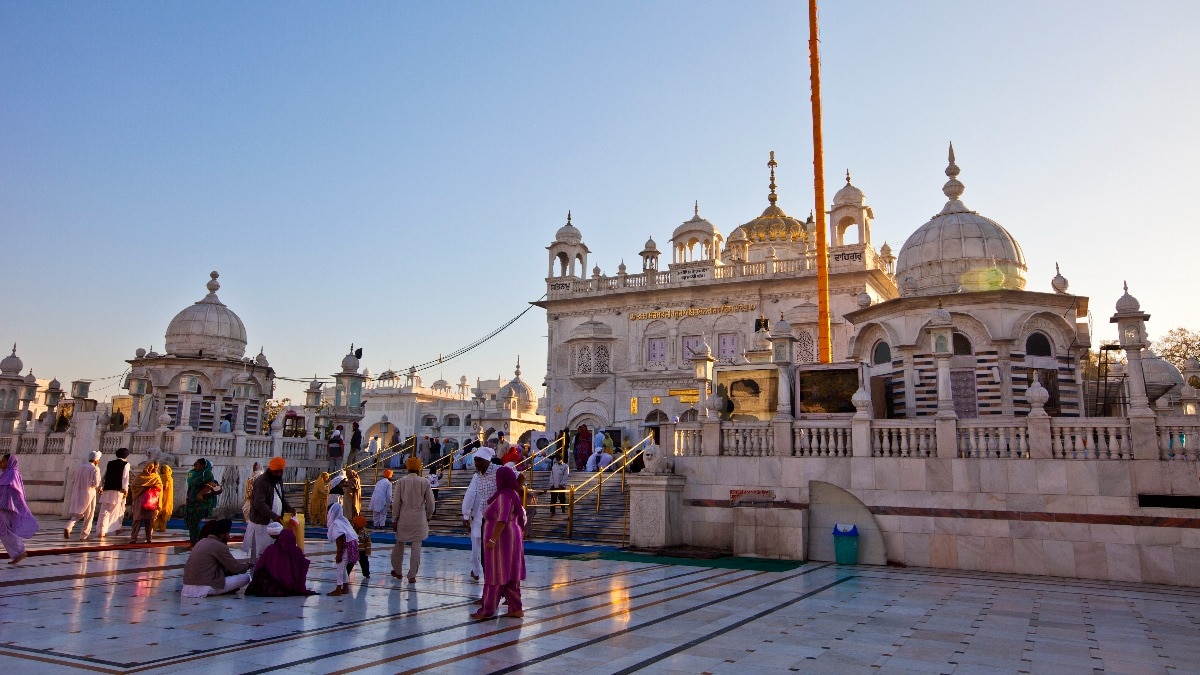
The attack on Sukhbir Singh Badal has drawn fresh attention to Nanded, one of Sikhism's holiest pilgrimage centres. The city is home to Takht Sachkhand Sri Hazur Sahib, one of the faith's five Takhts, where Guru Gobind Singh spent his final days and declared the Guru Granth Sahib the eternal Guru.After the attack on Sukhbir Singh Badal in Nanded, many people are asking why the city holds such importance in Sikhism. The answer lies in Takht Sachkhand Sri Hazur Sahib, one of Sikhism's five Takhts. (Photo: Getty Images | Pilgrims at a gurudwara, Hazur Sahib)The attack on Shiromani Akali Dal chief Sukhbir Singh Badal inside a gurdwara in Maharashtra's Nanded made national headlines on Wednesday.For millions of Sikhs, the city of Nanded on the banks of the Godavari is not simply home to another historic gurdwara; it holds special significance.It is where one of the most important chapters in Sikh history came to an end, and another began. More than three centuries ago, Guru Gobind Singh spent the final months of his life here. It was here that he made a decision that would shape Sikhism forever.That is why Nanded is home to Takht Sachkhand Sri Hazur Abchalnagar Sahib, one of Sikhism's five Takhts, or supreme seats of religious authority. Understanding why this place is sacred means travelling back to 1708.WHERE THE GURUSHIP CHANGED FOREVERIn the autumn of 1708, Guru Gobind Singh was living in Nanded after years of conflict, travel and the creation of the Khalsa. It was here that he declared there would be no human Guru after him.Instead, he bestowed eternal Guruship upon the Guru Granth Sahib, making the Sikh scripture the everlasting Guru of the faith.For Sikhs, this was not simply the closing chapter of the ten human Gurus. It marked the beginning of a new era.The shrine built at this sacred site became Takht Sachkhand Sri Hazur Abchalnagar Sahib, often called simply Hazur Sahib. Along with Amritsar's Akal Takht, it remains one of the highest institutions of Sikhism and draws pilgrims from across India and the world. Guru Gobind Singh (AI-generated image) WHAT IS A TAKHT?In Sikhism, authority is not centred on a single shrine.Instead, the faith recognises five Takhts, each connected with defining moments in Sikh history and each serving as one of the highest seats of religious and temporal authority.They are:Akal Takht Sahib, Amritsar, PunjabTakht Sri Kesgarh Sahib, Anandpur Sahib, PunjabTakht Sri Damdama Sahib, Talwandi Sabo, PunjabTakht Sri Patna Sahib, Patna, BiharTakht Sachkhand Sri Hazur Abchalnagar Sahib, Nanded, MaharashtraTogether, these five Takhts occupy a unique place in Sikh tradition, preserving the faith's history while continuing to guide the community on important religious matters. Pilgrims at a gurudwara, Hazur Sahib, Nanded, Maharashtra, India. (Photo: Getty Images) THE GURDWARA WHERE THE INCIDENT TOOK PLACEThursday's attack did not occur inside the main Hazur Sahib shrine itself.According to police, it took place at Gurdwara Mata Sahib Devan Ji, another revered historic gurdwara in Nanded associated with Mata Sahib Devan Ji, who is honoured in Sikh tradition as the spiritual mother of the Khalsa.The gurdwara forms part of Nanded's larger network of sacred sites linked to Guru Gobind Singh's final stay in the city. Thousands of pilgrims visit these shrines alongside Hazur Sahib during their pilgrimage.Understanding this distinction is important. The incident occurred at a historic gurdwara within Nanded's sacred Sikh landscape, while Takht Sachkhand Sri Hazur Sahib remains the city's Takht and one of Sikhism's five highest religious seats.A CITY THAT STILL DRAWS MILLIONSEvery year, devotees travel hundreds, sometimes thousands, of kilometres to reach Nanded.They come not simply to visit a place of worship, but to stand where Guru Gobind Singh spent his final days and where the Guru Granth Sahib became the eternal Guru of Sikhism.That is why Nanded occupies such a special place on the Sikh pilgrimage map.It is a city where history, faith and living tradition continue to meet more than 300 years after one of Sikhism's defining moments unfolded on the banks of the Godavari.- EndsPublished On: Aug 13, 2026 18:00 IST
Nanded's Sri Hazur Sahib: The sacred Sikh shrine where Sukhbir Badal was attacked
Full Article
Original Source
Read the full article at Indiatoday →KhanList aggregates and links to publicly available news content. We do not host full articles from third-party sources. Always verify important information with original sources.