
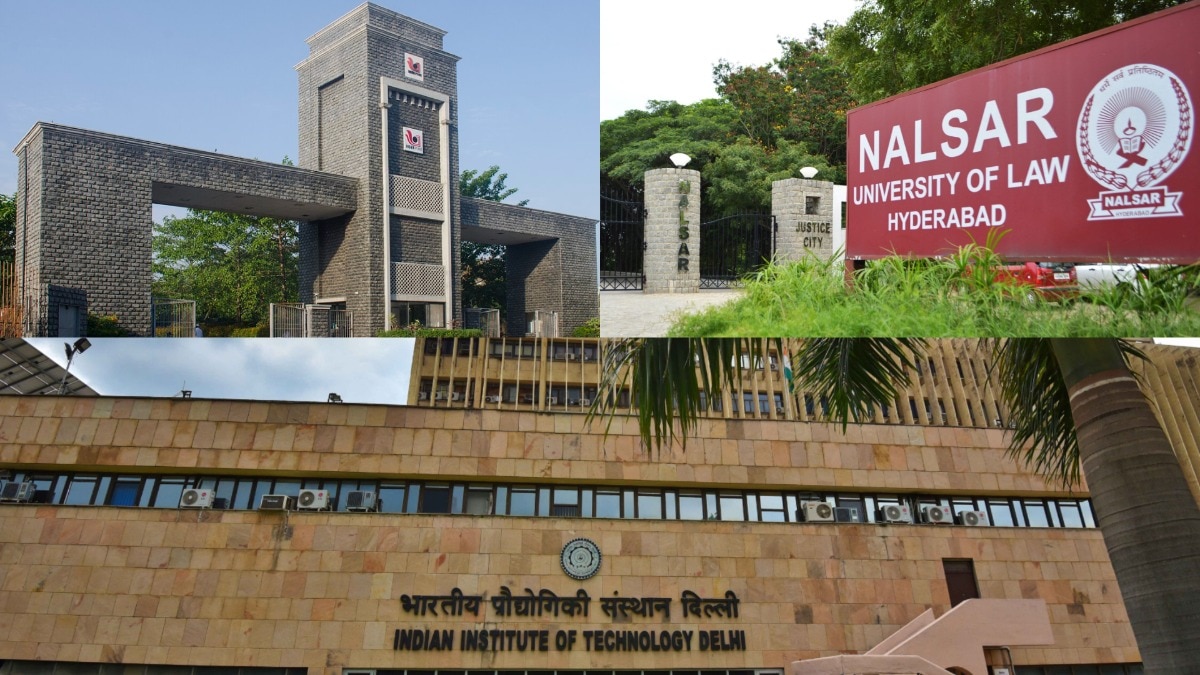
Student protests across NALSAR, NLSIU, IIT Delhi and IISER Pune have challenged administrative decisions and institutional conduct. The latest protests have not only triggered an expression of anger but also point to a demand for change—and, to some extent, offer a glimpse of a shifting national political landscape reminiscent of the campus movements that shaped Indian politics decades ago.It was August, and within weeks, student protests at some of India’s most selective institutions had moved from questions inside the classroom to emerging questions about the conduct in which the premiers of India had functioned so far.At Hyderabad’s NALSAR University of Law, where the first such incident erupted, over 400 students objected to the proposed presence of Chief Justice of India Surya Kant at the university’s convocation.This was the beginning of what later turned into a way of expressing and raising voices, which went missing after the 80s and 90s.At Bengaluru’s National Law School of India University, students and alumni subsequently raised objections to the proposed attendance of the CJI and Bar Council of India chairman Manan Kumar Mishra. At IIT Delhi, the death of a 31-year-old MSc Physics student led to several days of protests over the institute’s handling of student welfare and the inquiry into his death.At IISER Pune, students began an indefinite sit-in over the suspension of a student representative and a wider set of demands following the death of a student on campus. The issues are different. But taken together, they point to a question that goes beyond individual campuses: why are students at institutions where protests are relatively uncommon increasingly demanding a greater say in decisions that affect them?Hyderabad NALSAR UNIVERSITY OF LAWThe first major dispute emerged at NALSAR after students opposed the proposed invitation of CJI Surya Kant as chief guest for the university’s convocation.Around 450 students, according to reports, participated in the campaign. The objection was connected to the CJI’s role in proceedings surrounding recent student protests and concerns raised by students about his remarks and actions.NALSAR nevertheless extended the invitation.On August 13, the controversy took another turn when the Bar Council of India directed state bar councils not to enrol the university’s 2026 graduates as advocates until further notice. The BCI withdrew the order within hours and later announced that proceedings against the batch had been closed.The episode placed an issue of immediate consequence for law students, their enrolment as advocates, alongside questions about free expression and university autonomy.CJI Surya Kant subsequently clarified that he had never accepted NALSAR’s invitation and therefore had no plan to attend the ceremony.The episode did not end with the withdrawal of the BCI order. Hundreds of NALSAR alumni later criticised the manner in which the matter had been handled, while the university continued to prepare for its convocation.NLSIU BENGALURUThe NALSAR dispute soon found an echo at another leading law school.At NLSIU, 165 graduating students, 409 current students and 128 alumni signed a statement opposing the proposed attendance of CJI Surya Kant and BCI chairman Manan Kumar Mishra at the university’s convocation.They also demanded an apology from the BCI over its now-withdrawn action against the NALSAR batch.The matter subsequently affected NLSIU’s convocation itself. On August 27, the university announced that its 2026 convocation would not be held, citing “unavoidable circumstances”. Degrees will instead be conferred in absentia.For a law school, the episode carries significance beyond a ceremonial dispute. Students training to enter the legal profession were questioning the conduct of two institutions central to that profession, the Supreme Court and the Bar Council of India.IIT DELHIAt India's top institute, IIT Delhi, the trigger was different.Rishikesh Kumar, a 31-year-old MSc Physics student, died by suicide on August 22. The institute said he had previously received psychiatric support and had spent about a month receiving treatment at a specialised hospital. The Delhi Police registered an FIR for abetment of suicide against unknown persons.Students began protesting within days. Their demands included an independent inquiry, accountability from senior officials, changes in student-welfare mechanisms and compensation for Kumar’s family. Some also sought the resignation of senior officials responsible for student welfare, hostel management and the Physics Department.The institute initially constituted an external inquiry committee. After students objected to its composition, IIT Delhi agreed to reconstitute it, eventually appointing retired Delhi High Court judge Justice Mukta Gupta to head the panel.The protests continued. On August 27, hundreds of students marched towards the main gate in a late-night demonstration. The following day, IIT Delhi Director Rangan Banerjee warned that disciplinary action could follow conduct that disrupted residential, academic or other campus activities.The IIT Delhi episode has therefore become a debate about more than one student's death. It has brought mental-health support, academic pressure, student welfare and administrative accountability into focus.IISER PUNEAt IISER Pune, students began an indefinite sit-in on August 27.The immediate issue was the suspension of Student Council general secretary Raj Bagwe. The suspension, initially for one year and later reduced to six months, was linked to an earlier incident involving allegations of a “strip search” of students on campus. The current protest also followed the death of a student, although police have not publicly provided details on the cause of death.Students have raised a broader set of concerns, including mental-health support, academic pressure, student spaces, hostel and campus rules, and student representation. They have also sought assurances that participants in the protest will not face disciplinary action.The institute has sought dialogue with student representatives. Students, however, have called for an open-house meeting rather than a discussion limited to a small group of representatives.It would be premature to describe these events as one nationwide student movement. The causes are distinct, and the institutions have responded differently.What is common is the form of response: students are increasingly using collective representations, open letters, sit-ins and demonstrations to press administrations for answers.That matters because these institutions are not ordinary campuses. NALSAR and NLSIU train a significant share of the country’s future legal professionals. IIT Delhi and IISER Pune occupy important positions in India’s scientific and technological ecosystem.Decisions made on these campuses can therefore become part of wider debates about professional ethics, institutional governance and public accountability.India has seen university politics play a larger role before. Student movements in the 1970s and 1980s produced political leaders and became part of debates over democracy, representation and the role of the state.The Emergency, the Mandal Commission protests and later campus movements around corruption, reservations, citizenship and institutional autonomy each brought universities into national political conversations that gave many leaders to the national consciousness.- EndsPublished By: Rishab ChauhanPublished On: Aug 31, 2026 11:17 IST
NALSAR to IIT Delhi: India's top institutes are facing wave of student anger. Why?
Full Article
Original Source
Read the full article at Indiatoday →KhanList aggregates and links to publicly available news content. We do not host full articles from third-party sources. Always verify important information with original sources.