
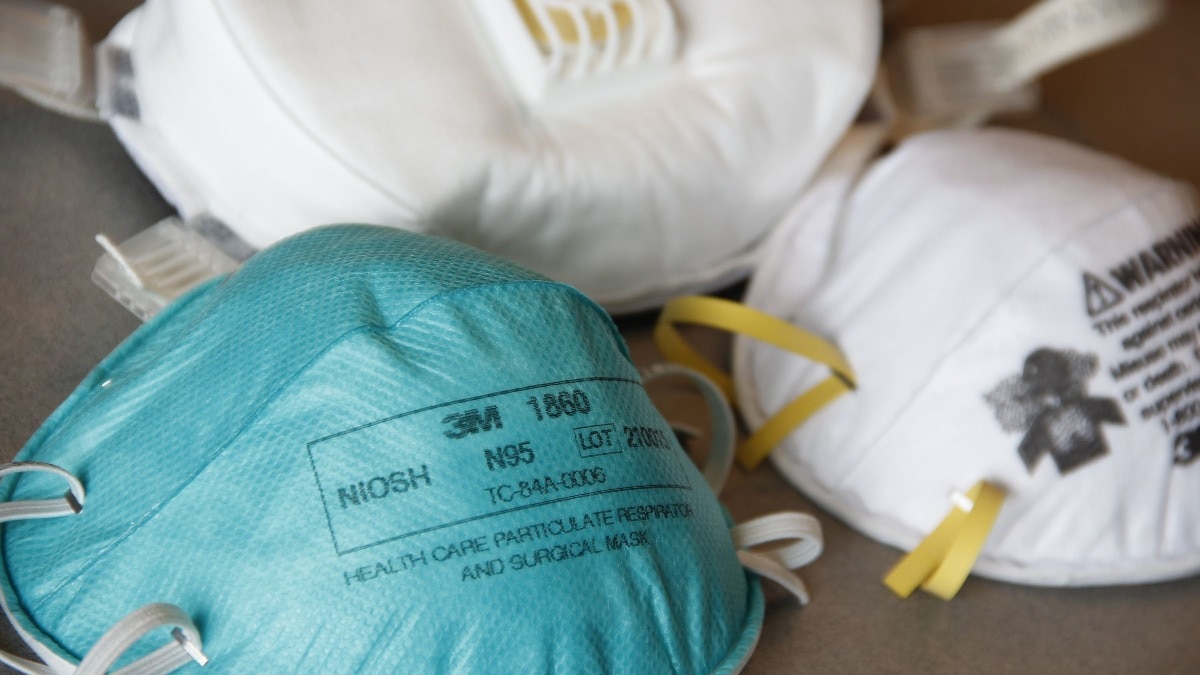
When air pollution levels rise, stepping outdoors can mean breathing in a mixture of dust, smoke and microscopic pollutants. In cities such as Delhi-NCR, where poor air quality can become a recurring concern, wearing a mask is one way to reduce exposure to harmful airborne particles.But with so many options available, choosing the right mask can be confusing. Should you opt for an N95 or spend more on an N99 mask? Does a higher filtration rating automatically mean better protection? And are cloth or surgical masks effective against pollution?The answer lies in understanding what these masks filter, how well they fit and how consistently you wear them.WHAT DO N95 AND N99 MASKS ACTUALLY MEAN?N95 and N99 are respirator classifications that indicate how efficiently a mask filters airborne particles under standard testing conditions. The letter 'N' means the respirator is not resistant to oil-based particles, while the numbers indicate its minimum filtration efficiency.N95 mask: Filters at least 95% of airborne particles during standardised testing N99 mask: Filters at least 99% of airborne particles during standardised testingBoth are designed to reduce exposure to airborne particles, including fine particulate matter. However, their actual protection depends heavily on how well the mask seals around your face.The filtration percentages are based on standardised laboratory testing, not a guarantee that the same percentage of all pollution entering your breathing zone will be blocked.WHICH IS BETTER FOR DELHI-NCR POLLUTION: N95 OR N99?For most people looking for protection against particulate air pollution, a properly certified and well-fitted N95 mask is a practical choice.An N99 offers higher particle filtration efficiency under standardised testing. However, that does not automatically make it the better option for everyone.Here is what you should consider:- For daily commuting: A well-fitting N95 can help reduce exposure to fine particles from traffic, dust and smoke.- For high-pollution days: Both N95 and N99 respirators can help filter fine particulate matter, provided they fit properly.- For prolonged outdoor exposure: Choose a respirator that provides a secure seal and that you can wear consistently.- For comfort: The best option is one that fits your face without gaps and allows you to breathe comfortably.The National Centre for Disease Control (NCDC) also identifies disposable N95 and N99 masks as useful options for short periods of exposure to air pollution, provided they fit properly and are used according to instructions.ARE CLOTH MASKS AND SURGICAL MASKS EFFECTIVE AGAINST AIR POLLUTION?Not all masks offer the same level of protection against air pollution.1. CLOTH MASKSOrdinary cloth masks may provide limited protection against larger particles but are not designed to filter fine particulate matter such as PM2.5 effectively.2. SURGICAL MASKSSurgical masks are primarily designed to provide a barrier against droplets. Their loose fit can allow polluted air to enter through gaps around the nose and cheeks.3. N95 AND N99 RESPIRATORSThese respirators are designed to filter fine airborne particles and form a closer seal around the face. They are generally more suitable for reducing exposure to particulate air pollution.Paper masks, handkerchiefs, scarves and ordinary cloth coverings are not considered effective alternatives to N95 or N99 respirators for severe air pollution, according to India's NCDC advisory.5 THINGS TO CHECK BEFORE BUYING AN N95 OR N99 MASKBuying a mask with a high filtration rating is not enough. You also need to ensure that it meets recognised standards and fits correctly.1. CHECK THE CERTIFICATIONLook for recognised certification and approval markings. For example, a NIOSH-approved N95 respirator should carry the NIOSH marking, the N95 classification and a TC approval number.2. ENSURE A PROPER FITThe mask should cover your nose and mouth completely, with no noticeable gaps around the cheeks, chin or nose.3. LOOK FOR ADJUSTABLE NOSE CLIPSA nose clip helps create a closer seal and reduces the chances of air escaping through gaps around the nose.4. CHECK THE STRAPSThe straps should hold the respirator securely in place without slipping when you talk, walk or move your head.5. AVOID DAMAGED OR WET MASKSReplace disposable respirators if they become wet, dirty, damaged or difficult to breathe through. Follow the manufacturer's instructions regarding reuse and disposal.The World Health Organization (WHO) also advises consumers to check whether respirators meet recognised standards rather than relying only on filtration claims printed on packaging.HOW TO WEAR AN N95 OR N99 MASK CORRECTLYEven a high-filtration respirator may offer limited protection if it is not worn properly. Follow these steps:- Wash or sanitise your hands before handling the mask.- Place the respirator over your nose, mouth and chin.- Secure the straps according to the manufacturer's instructions.- Adjust the nose clip to fit the shape of your nose.- Check for air leakage around the edges while breathing.- Avoid touching or repeatedly adjusting the front of the mask.- Do not pull the mask below your nose or chin while outdoors.A proper fit is essential because polluted air can enter through gaps rather than passing through the filter material.DO N95 AND N99 MASKS PROTECT AGAINST ALL AIR POLLUTANTS?No. This is one of the most important things to understand before choosing a mask.N95 and N99 respirators are designed to filter airborne particles, including PM2.5, dust, smoke particles and other fine particulate matter.However, they do not filter out harmful gases and vapours such as carbon monoxide, nitrogen dioxide, sulphur dioxide and ozone.This means that even when you wear a well-fitted N95 or N99 mask, you may still be exposed to gaseous air pollutants.Respirators should therefore be considered one part of an overall pollution-reduction strategy, not complete protection against everything present in polluted air.WHICH MASK SHOULD YOU CHOOSE?If you are choosing between an N95 and N99 mask for everyday exposure to air pollution, a properly certified, well-fitted N95 is a practical option for most people.An N99 offers a higher filtration rating, but the difference in real-world protection also depends on facial fit, product quality and consistent use.Remember that wearing a mask does not make it completely safe to spend prolonged periods outdoors when pollution levels are severe. Check the Air Quality Index (AQI), reduce outdoor activities when air quality deteriorates and keep indoor air as clean as possible.The best mask is not necessarily the one with the highest number on its packaging. It is the one that meets recognised standards, fits your face properly and is worn correctly.- Ends
N95 vs N99 masks: Which is better for Delhi-NCR air pollution?
Full Article
Original Source
Read the full article at Indiatoday →KhanList aggregates and links to publicly available news content. We do not host full articles from third-party sources. Always verify important information with original sources.