
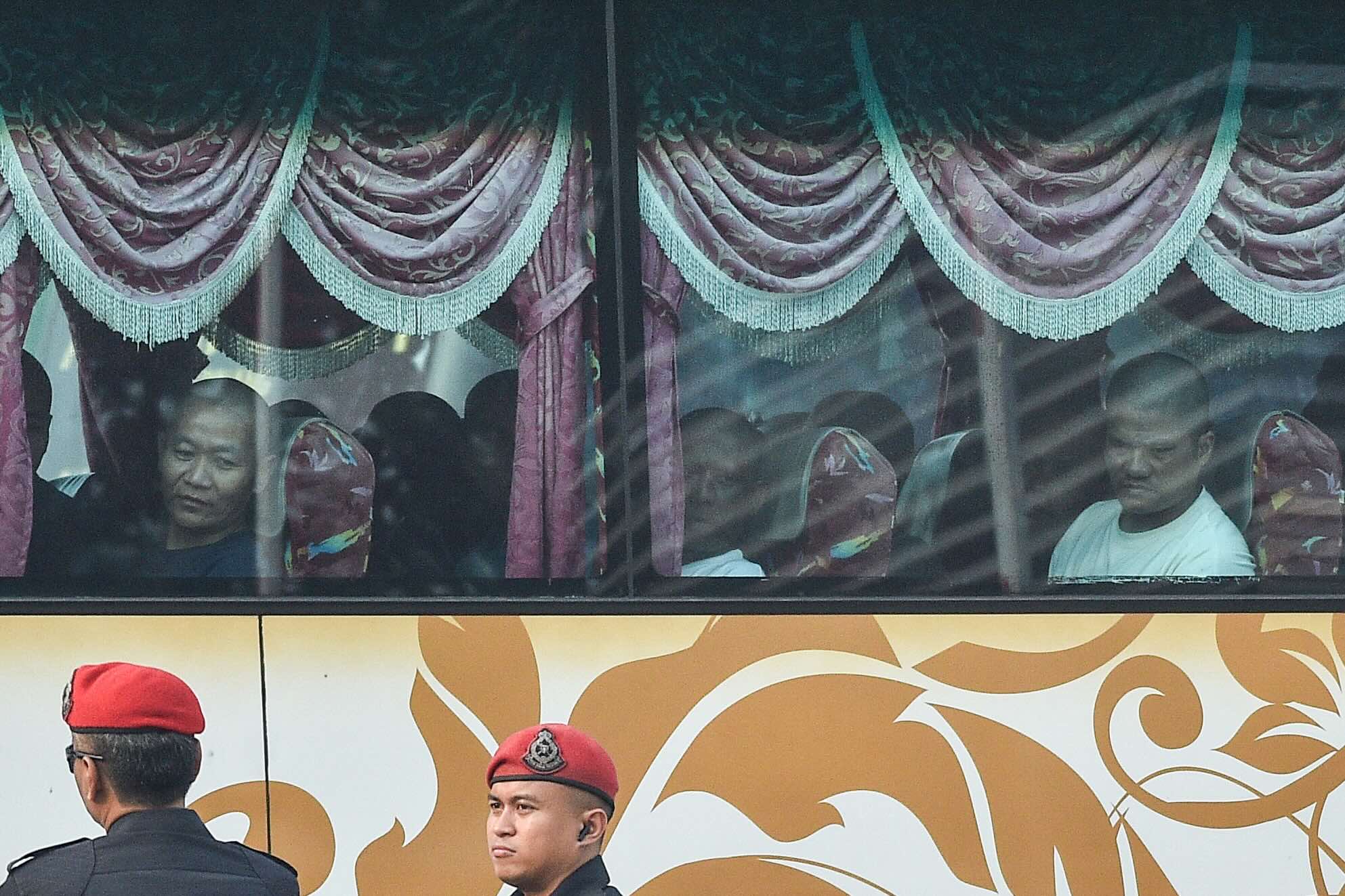
A bus carrying Myanmar nationals being repatriated from Malaysia heads toward to a naval base on the outskirts of Kuala Lumpur on September 29 (Photo: Arif Kartono / AFP) A controversial program to repatriate Myanmar nationals detained in immigration detention centres across Malaysia has heightened a sense of insecurity within the country’s sizable Myanmar community. Among the large number of Myanmar nationals residing in Malaysia—some as asylum seekers and others as migrant workers—those lacking legal documentation are being arrested, detained, and “voluntarily” returned to their home country. In late July, the Malaysian government announced plans to send up to 5,000 Rohingya refugees to Myanmar under an agreement with the regime. In coordination with the junta, the first group of 1,476 Myanmar nationals departed Malaysia’s Lumut Port in three naval vessels on Tuesday, bound for Yangon. Soe Htet Thein, an official from the Malaysia-based Myanmar Affairs Alliance, a group working to protect the rights of refugees, told Myanmar Now that the move has raised concerns among those still living in the country. He said those sent back face the risk of forced conscription upon their return to Myanmar, with many fearing they will never actually make it home. And as Malaysia’s ongoing immigration crackdown continues, many are terrified that they will be next. “Those who haven’t been arrested yet are in constant fear, wondering ‘When will my turn come?’ Those who have been detained are pressured through various methods to force them to return,” he said. He noted that even individuals holding refugee registration cards issued by the United Nations refugee agency UNHCR face a high probability of arrest, despite being legally exempt from forced return. An anonymous Civil Disobedience Movement (CDM) schoolteacher who left Chin State to seek refuge in Kuala Lumpur said that crackdowns had recently intensified, with frequent raids on residential areas housing Myanmar nationals in the capital. “Even though we are in Malaysia, we feel that our lives are still very insecure,” he said, describing the situation as “extremely perilous.” “For those who joined the CDM and then requested asylum In Malaysia, it has become even more dangerous. Once you have been arrested, had your identity papers checked, and are sent back to Myanmar, there is no way to escape the clutches of Min Aung Hlaing and his dictatorship,” he continued. He added that delays in receiving refugee cards have also increased. James Bawi Thang Bik, chair of the Kuala Lumpur-based Alliance of Chin Refugees, told Myanmar Now that among those sent back on September 29 were undocumented Chin, Kachin, Karen, and Rakhine refugees, as well as those from other ethnic groups. He noted that there appeared to be few Rohingya refugees included in the first return, despite the persecuted group being identified as the primary target of the repatriation push when it was first announced. While Malaysia initially stood in strong opposition to the junta’s illegal seizure of power in 2021, its recent actions suggest a significant move away from that stance, he remarked. James Bawi Thang Bik described the current situation as the harshest crackdown he has seen in his 15 years of living in Malaysia, noting that he’d seen joint immigration and local enforcement teams simultaneously raiding up to three locations. He also said there had been various reports of coercive tactics being used in detention centres to pressure individuals into returning. “They always claim they are sending them back voluntarily, but we don’t know what pressure they face inside the prisons. Just because there is a signature on a piece of paper doesn’t make it voluntary,” he said. James Bawi Thang Bik also criticised the growing hate speech towards the Myanmar community in Malaysia, including claims the refugee population was increasing and that refugees were taking jobs without paying taxes. He added that while the UNHCR has expressed concern about the current situation in Malaysia, it is unable to ensure the safety of those being sent back to a conflict-ridden country that offers no security guarantees. On September 16, Malaysian Prime Minister Anwar Ibrahim said that if an agreement was reached on the readmission of Rohingya refugees, he would officially invite Myanmar’s self-appointed President Min Aung Hlaing on a state visit. According to Malaysia’s state news agency Bernama, that visit is expected to take place later this month.
Myanmar nationals in Malaysia fear arrest and forced return
Full Article
Original Source
Read the full article at Myanmar-now →KhanList aggregates and links to publicly available news content. We do not host full articles from third-party sources. Always verify important information with original sources.