
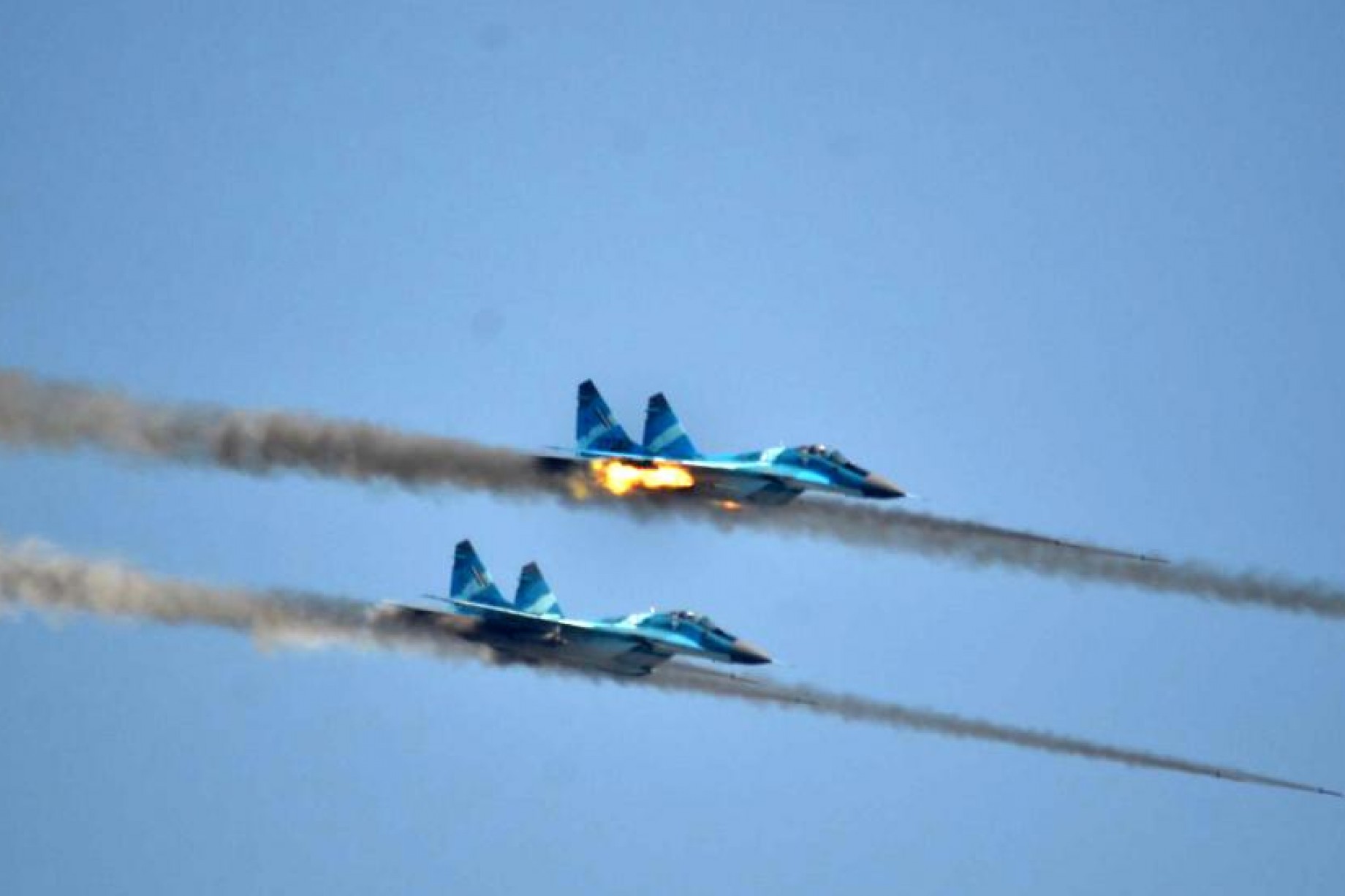
Two fighter jets are pictured during a training exercise (Photo: CINCDS) The junta stepped up its airstrikes and other crimes against civilians in the lead-up to its military-controlled elections completed in January, and these strikes have since “continued unabated,” the United Nations’ Independent Investigative Mechanism for Myanmar (IIMM) said on Tuesday. The deeply restricted polls held by the junta delivered a walkover win for its military-controlled party. The IIMM’s annual report, covering July 2025 to June 2026, documented a pattern of deliberate aerial attacks on civilians, arbitrary detentions, torture, and sexual violence committed by the Myanmar military. “The frequency and intensity of war crimes and crimes against humanity committed by the Myanmar military and by various armed groups continued to escalate,” it said. Myanmar’s military seized power in a coup on February 1, 2021 that ousted Aung San Suu Kyi’s elected government, ending a 10-year experiment with democracy and plunging the southeast Asian nation into bloody turmoil and a humanitarian crisis. ‘Increasing reliance’ on drones The IIMM report said aerial attacks had targeted homes, schools, medical facilities, religious buildings, and camps for internally displaced persons, causing deaths, injuries and destruction. “The military’s increasing reliance on paramotors and drones has made attacks harder for civilians to detect, limiting their ability to flee or seek shelter,” it said. The investigators said the conflict in Rakhine State—where the military is fighting the Arakan Army, an ethnic armed group—“intensified significantly” during the reporting period. Across the country, “the conflicts between the military regime and various armed groups showed no signs of abating.” The team said it had collected and analysed “extensive evidence” of arbitrary detention, torture, and sexual violence in military-run detention facilities. These included cases linked to the 2025 law criminalising criticism of the elections. “Numerous individuals have been arrested under the law and face up to 20 years’ imprisonment and the death penalty for activities such as posting critical comments on social media.” ‘Devastated lives’ “Behind every piece of evidence we collect are people whose lives have been devastated by these crimes,” said IIMM chief Nicholas Koumjian. “Communities across Myanmar are not only living under the constant threat of violence but are also coping with the profound and lasting impact of what they have endured. This underscores the urgent need to hold those responsible to account.” Citing funding cuts, the investigation said it was “losing resources and capacity at a time when serious international crimes in Myanmar are only intensifying.” The IIMM was established by the UN Human Rights Council in 2018 to collect evidence of the most serious international crimes and prepare files for criminal prosecution. So far it has collected and processed more than 28 million items of information and evidence from over 1,600 sources. These include witness accounts, photographs, videos, audio material, documents, maps, geospatial imagery, social media posts and forensic evidence. The Gambia has brought a case against Myanmar at the United Nations’ top court, accusing it of breaching the 1948 UN Genocide Convention during the 2016 and 2017 clearance operations against the Rohingya minority. The IIMM has provided extensive evidence in the proceedings at the International Court of Justice in The Hague. A decade of reporting at a cost In 2025, we marked the 10th anniversary of Myanmar Now. In Myanmar’s history, journalists are often the first targets during political repression. We founded this outlet during a brief window of stability, starting with a small team in a modest office in downtown Yangon. Our goal was simple: to report on injustices that had been silenced for decades. In many countries, justice is sought through courts and police. In Myanmar, these institutions have historically been instruments of oppression. From the start, we committed to reporting without discrimination—regardless of ethnicity, religion, or citizenship. We believe our work should be accurate, deeply sourced, and strong enough to serve as a historical record. We also believe journalism should be a force for positive change, and that our primary readers should be the people of Myanmar. That belief came at a cost. Members of our team and others associated with Myanmar Now have endured long legal battles, physical assaults, arrests, and torture. Despite these hardships, Myanmar Now continues to report the news—thanks to the resilience of our team, the courage of our sources, and the trust of our readers. Please subscribe to support a free press in Myanmar.
Myanmar military escalating aerial attacks on civilians: UN probe
Full Article
Original Source
Read the full article at Myanmar-now →KhanList aggregates and links to publicly available news content. We do not host full articles from third-party sources. Always verify important information with original sources.