
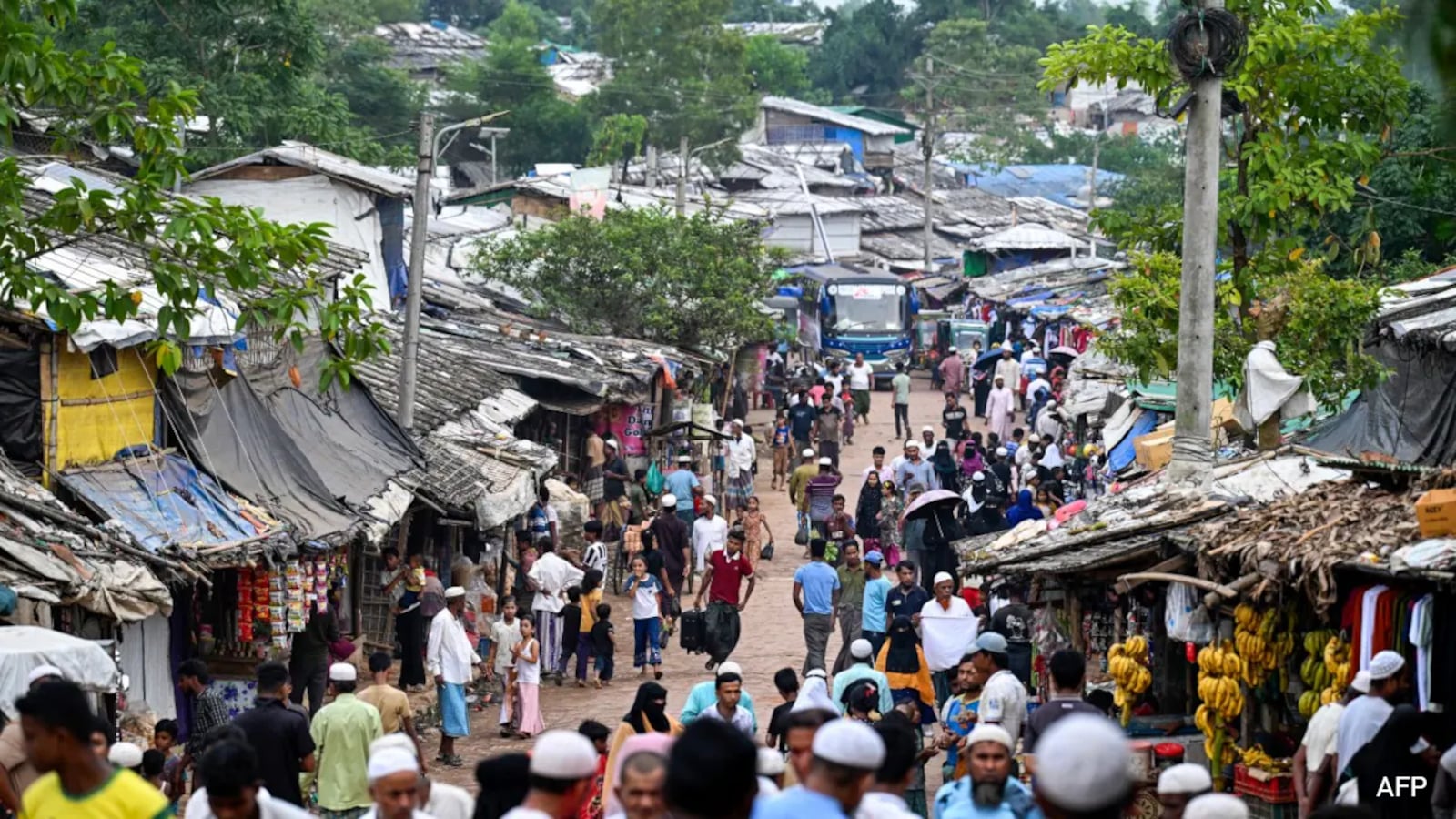
Yesterday, the International Court of Justice in The Hague ruled, by nine votes to six, that Myanmar is responsible for having committed a genocide against the Rohingya in 2017, and had also failed to investigate and prosecute those responsible.In the landmark ruling, which came seven years after the case was filed, the court ordered Myanmar to provide restitution and compensation to the victims of its “clearance operations” in Rakhine State in 2017.It is the first time since the adoption of the UN genocide convention in 1948 that the court has found a state responsible for committing genocide.Why the case mattersTwice before, however, the ICJ has ruled on the merits of a genocide claim.In 2007, the court found Bosnian Serb forces had committed genocide at Srebrenica in 1995 during the Bosnian War, but that Serbia itself was not responsible for it. It concluded instead that Serbia had failed to prevent the genocide and punish those responsible.And in 2015, the ICJ dismissed Croatia's claim and Serbia's counter-claim over crimes committed during the conflict after the breakup of Yugoslavia in the 1990s. The court found serious crimes had occurred, but there was not the intent to destroy a group that genocide requires.The case against Myanmar was already significant because it set a new precedent for who can bring cases to the ICJ.The Gambia, a small African nation with no direct connection to the Rohingya, brought Myanmar before the court under the genocide convention in 2019. Three years later, the judges accepted that any party to the treaty can enforce it.This reasoning will be considered carefully in another genocide case currently before the court, brought by South Africa against Israel over its actions in Gaza.How did we get here: attacking the RohingyaFollowing attacks by a Rohingya armed group, Myanmar's military launched a wave of what it called “clearance operations” in northern Rakhine State in late 2017. Many thousands of Rohingya civilians were killed, hundreds of women and girls were raped, villages were burned and more than 740,000 people fled to neighbouring Bangladesh.But genocide has a narrow legal meaning, and mass violence alone is not enough. The acts must be carried out with the intent to destroy the group, in whole or in part.While it is possible to gather evidence of the physical acts of genocide, proving intent is difficult. Genocidal plans are rarely recorded in official documents.The court had to infer Myanmar's intentions from its conduct. The court made clear that an intention to destroy can coexist with other intentions. What matters is whether the inference of genocide explains all of the evidence taken together.The Myanmar military and former Myanmar leader Aung San Suu Kyi did not deny that people died. Instead, they argued they were fighting terrorism and had no intent to destroy the Rohingya ethnic group.Myanmar also argued the case is “flawed and unfounded”, claiming it was committed to returning and resettling the Rohingya from Bangladesh.The ICJ rejected Myanmar's arguments. It found much of what the military did could not be explained by fighting an insurgency.There was no evidence it distinguished between civilians and fighters, for example. Men and boys were executed, women and girls were raped on a mass scale, babies and small children were targeted, villages were burned methodically, and people were shot at as they fled their homes.The only reasonable inference to draw from the evidence, the court held, was an intention to destroy the Rohingya of northern Rakhine State.Restitution ordered for victimsThe court therefore ordered Myanmar must investigate and, where warranted, prosecute those responsible for committing the genocide, including military commanders. It must prohibit genocide in its national law, and provide guarantees this will not happen again. It must also allow the return of displaced Rohingya and the reunification of families, and it must return or replace their property.Myanmar must also help search for the disappeared and rebury the dead, provide physical and psychological rehabilitation to victims, and protect the Rohingya from further discrimination and persecution. Where these acts of restitution cannot fully repair the damage, Myanmar must offer compensation to the Rohingya, both individually and collectively.The ICJ settles disputes between states and does not try individuals for their actions. However, prosecutors at the International Criminal Court have sought an arrest warrant for Min Aung Hlaing, Myanmar's former commander in chief, for alleged crimes against humanity.Its judges have yet to rule on that request. The ICJ decision may open the door to future prosecutions of individuals for genocide and other crimes against humanity.Myanmar todayMin Aung Hlaing led the 2021 coup that overthrew Aung San Suu Kyi's government and became president this April, after elections widely dismissed as a sham.Five Southeast Asian governments have since received him. The United States, which has declared the atrocities against the Rohingya a genocide, has joined them. A senior US state department official met with Min Aung Hlaing in Myanmar in September. In addition, a published US strategy has linked peace talks to access to Myanmar's rare earths.Despite the legal victory in the ICJ, the Rohingya remain in perilous conditions. Those still in Rakhine State continue to experience torture, abuse and discrimination from the Myanmar military and the Arakan Army, an ethnic armed group which controls most of the state.And more than a million Rohingya remain in worsening conditions in camps in Bangladesh.What happens next?The court has kept the case open to decide further on the amount of compensation to be paid. Myanmar has two years to report back to the court on the steps it has taken to comply with the judgement. The ruling by the ICJ is final and binding, but the court has no police force or security services to enforce it.The UN Security Council can take steps to compel Myanmar to abide by the decision under Article 94 of the UN Charter, though it has never previously taken this step. And Myanmar's backers on the Security Council, China and Russia, have routinely provided the junta with diplomatic cover. Whether this support will survive the court's conclusion that Myanmar has committed genocide remains to be seen.China is keen to be seen as a responsible global citizen, so this decision may impact its level of diplomatic support for Myanmar's military government, although geography and history will ensure it remains engaged.Russia, having been brought in from the cold by the US under US President Donald Trump, will also be keen to avoid being seen to condone genocide. However, defence and security cooperation between the two countries is likely to continue.Southeast Asia is where diplomatic shifts are most likely. The ASEAN bloc of 11 Southeast Asian nations has recently indicated it could pursue “calibrated engagement” with Myanmar, but the ICJ finding may make that more difficult. Any country pursing normalisation of ties with Myanmar will face significant pressure from the European Union to disengage.The same government that was found to have attempted the destruction of the Rohingya people is now required to act as the guarantor of their safety.For now, the court has done what it can, as has The Gambia in bringing the case. Ensuring Myanmar takes up the task of implementing the court's orders now rests with all states, including those that have so far preferred to look away.Juliette McIntyre, Senior Lecturer in Law, Adelaide University and Adam Simpson, Senior Lecturer in International Studies in the School of Society and Culture, Adelaide UniversityThis article is republished from The Conversation under a Creative Commons license. Read the original article.(Except for the headline, this story has not been edited by NDTV staff and is published from a syndicated feed.)
Myanmar Found Guilty Of Genocide, But Will It Help The Rohingya?
Full Article
Original Source
Read the full article at Ndtv →KhanList aggregates and links to publicly available news content. We do not host full articles from third-party sources. Always verify important information with original sources.