
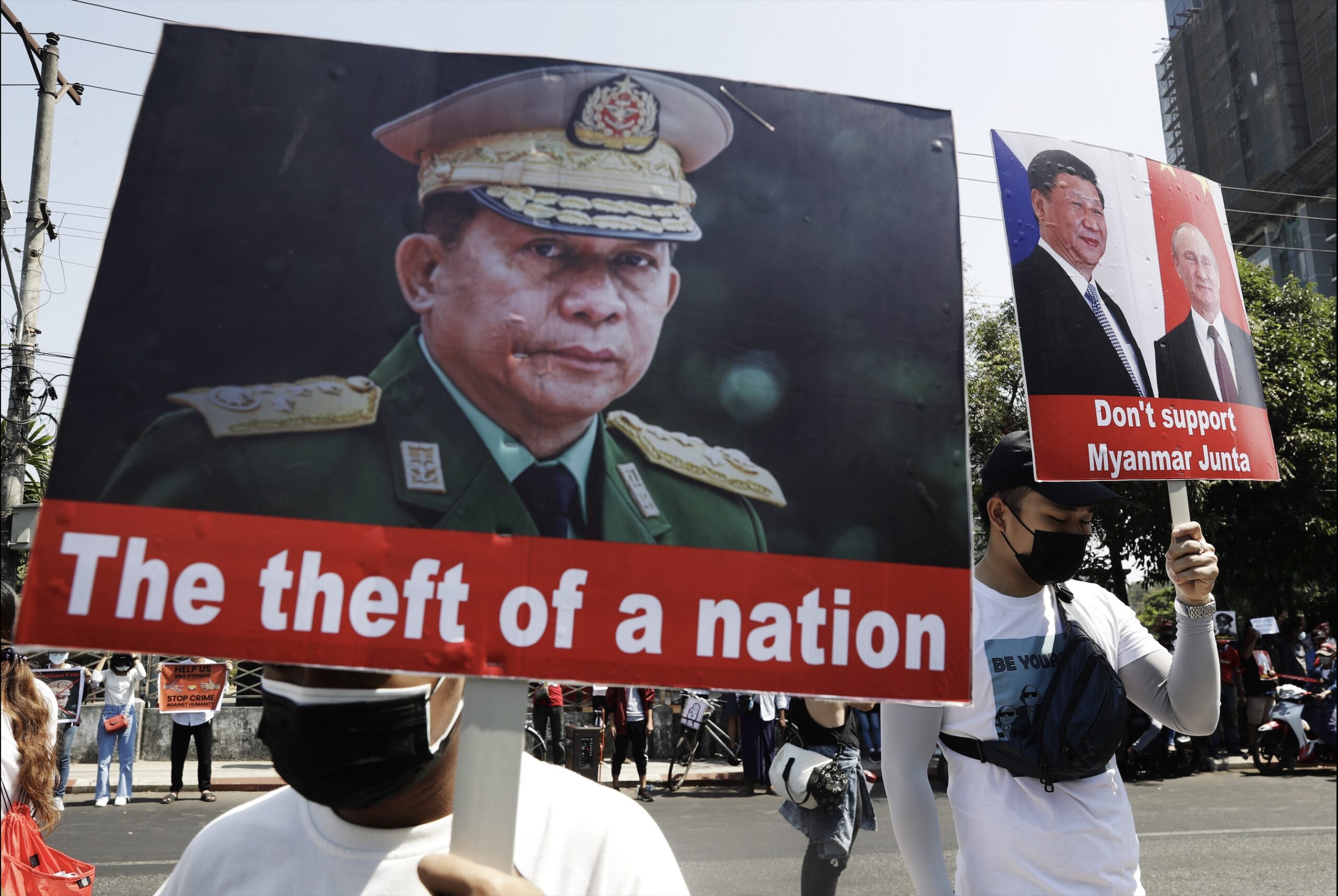
Protesters hold placards depicting Min Aung Hlaing during an anti-coup demonstration in Yangon in February 2021 (EPA) Myanmar’s coup leader and self-appointed president Min Aung Hlaing said in an interview published today he has been “extremely lenient” on Aung San Suu Kyi, who he ousted and jailed in 2021. Min Aung Hlaing ordered the military putsch that toppled the Nobel Peace Prize laureate’s democratic government, claiming she won power through massive voter fraud in elections the previous year. Suu Kyi remains detained on charges rights groups say were confected to return power to the military, which has historically ruled Myanmar since independence. “I have been extremely lenient toward her,” Min Aung Hlaing said, according to an interview with US magazine Time. “We made every possible effort to prevent the situation from reaching this point.” Min Aung Hlaing retired as military chief to assume so-called presidency in April, following military-controlled elections derided by rights groups as a charade. He has since been on a diplomatic push to end Myanmar’s international pariah status, but many nations remain concerned about the 81-year-old Suu Kyi. Analysts say Min Aung Hlaing is using the prospect of loosening her detention to entice countries into engaging—despite a raging civil war challenging his rule. Just days before he made a landmark trip to Thailand in August, his office released rare photos showing Suu Kyi meeting with a senior Red Cross official. The possibility of an amnesty for Suu Kyi “depends on her”, he told Time, but hinted the situation may change if “grounds for reconsideration emerge on our part”. Min Aung Hlaing ordered Suu Kyi be moved from jail to house arrest in the capital Naypyitaw in April, as he prepared to make his push for international recognition. The December-January election installing Min Aung Hlaing was tightly controlled by his junta, sidelined Suu Kyi’s party and punished dissenters with prison time. Analysts described his nominally civilian administration as a proxy of the military. “There are various forms of democracy,” Min Aung Hlaing said in the Time interview. “There is American democracy, there is European democracy. I will ensure that Myanmar achieves a democratic system that truly aligns with our own culture, customs, and traditions.” A decade of reporting at a cost In 2025, we marked the 10th anniversary of Myanmar Now. In Myanmar’s history, journalists are often the first targets during political repression. We founded this outlet during a brief window of stability, starting with a small team in a modest office in downtown Yangon. Our goal was simple: to report on injustices that had been silenced for decades. In many countries, justice is sought through courts and police. In Myanmar, these institutions have historically been instruments of oppression. From the start, we committed to reporting without discrimination—regardless of ethnicity, religion, or citizenship. We believe our work should be accurate, deeply sourced, and strong enough to serve as a historical record. We also believe journalism should be a force for positive change, and that our primary readers should be the people of Myanmar. That belief came at a cost. Members of our team and others associated with Myanmar Now have endured long legal battles, physical assaults, arrests, and torture. Despite these hardships, Myanmar Now continues to report the news—thanks to the resilience of our team, the courage of our sources, and the trust of our readers. Please subscribe to support a free press in Myanmar.
Myanmar coup leader claims ‘lenient’ on Suu Kyi: report
Full Article
Original Source
Read the full article at Myanmar-now →KhanList aggregates and links to publicly available news content. We do not host full articles from third-party sources. Always verify important information with original sources.