
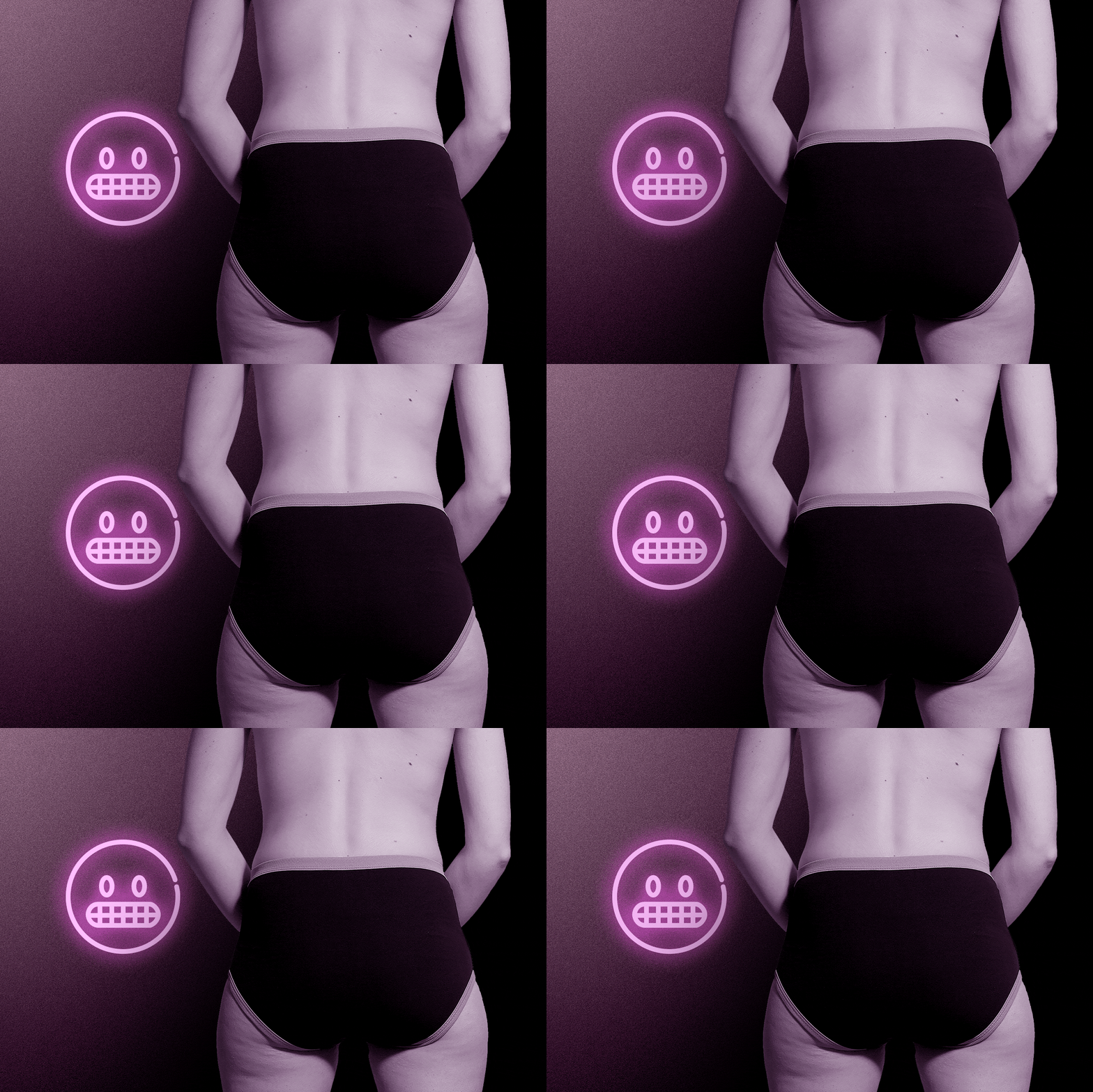
How to Do It This is not working for me. Photo illustration by Slate. Photo by TACrafts/iStock/Getty Images Plus. Sign up for the Slatest to get the most insightful analysis, criticism, and advice out there, delivered to your inbox daily. How to Do It is Slate’s sex advice column. Have a question? Send it to Jessica and Rich here. It’s anonymous! Dear How to Do It, My wife has recently gotten into something that has completely turned me off. Last month, she ran out of clean underwear and borrowed a pair of mine (briefs). She said they were the most comfortable she had ever worn and immediately purchased some for herself and threw out all of her old panties! I just can’t get turned on when I look at her in them, much less try to fool around when she’s got them on. Can you suggest a way to convince her to go back to something I wouldn’t see in a men’s locker room? —Pining for Panties (he/him) Dear Pining for Panties, This is a recent development, so keep in mind that the full-time wearing of briefs might settle into something more flexible. But why not directly communicate to your wife that seeing her in men’s briefs completely shuts down sexual interest on your end? Until we got to the locker room comment, what you said in your letter was entirely focused on your visual preferences and the way this change in undergarments affects your arousal. Even the locker room line merely uses comedy to underscore the association you have between men’s briefs and a gender you are wholly turned off by. So what’s in the way of a short statement that the briefs are blocking your boner, and a request to find a solution together? Is there a history of you trying to control her clothing choices? Were the two of you already having a disconnect around sex? Did your wife make a comment as she was throwing her panties in the trash that instilled a fear of starting a fight if you ask to look for middle ground? If there’s a factor along those lines, address it. Otherwise, your best bet is to share where you’re at rather than trying to convince her more subtly to return to a style of daily undergarments that was clearly causing her annoyance. There are a variety of options here, and the optimal ones to pursue will depend on what your wife wants, wants to avoid, and is willing to wear for special occasions, as well as your own squicks. To find the overlap of what each of you is open to, you’ll need to have a conversation. Please keep questions short (<150 words), and don‘t submit the same question to multiple columns. We are unable to edit or remove questions after publication. Use pseudonyms to maintain anonymity. Your submission may be used in other Slate advice columns and may be edited for publication. Dear How to Do It, I’m a 46-year-old woman and coming out of my first relationship of 25 years. My sexual experience has been limited to my first relationship and a few hookups with a long-time friend. Although the situationship hasn’t quite ended, it’s long-distance and not readily available. My friends recommend casual sex; however, I have a hard time wrapping my mind around it. I desire emotional intimacy, and without it, I’m not sure I even want to have sex. Emotional intimacy feels like it is the opposite of casual sex. Do you have a recommendation on how to go about it? —Horny and Inexperienced Dear Horny and Inexperienced, You desire emotional intimacy. And you’re correct that casual sex is usually at odds with that. This is a great start. What else do you want? What does emotional intimacy mean to you, and what does the amount you want look like in action? How often would you ideally be seeing a partner? Would you be exclusive? How much communication between dates would you prefer, and what forms and depth of emotion do you want in that contact? Go through these questions again and consider what is absolutely not enough, and what is probably too much. Whatever the range is that you’re after, you can build that with enough time and with a partner who wants approximately the same things. In broad strokes, this is how dating works. I’m guessing your friends are well-intentioned, but might not be entirely grasping the differences between what works for you and what works for them (or what they imagine they would want were they single). If that bothers you, clarify those differences or set a boundary around discussing your love life. Whether you’re meeting people on apps or in social situations, let them know what you’re looking for and listen when they share their own preferences and desires. This kind of communication is one of the main ways you can make dating more efficient. It also allows you to engage in a little bit of emotional intimacy, and I’m assuming that you’re well-versed in how to do that and what the signs are of early successful connection. You’ve got this, and it’s about maintaining the patience required to find someone who fits in all the necessary ways. Share Your Story With How to Do It! Readers often have great suggestions for our letter writers, occasionally disagree with a point our How to Do It writers make, or simply want to provide some additional advice. Each month, Jessica and Rich will be replying to some of these comments and suggestions from readers. Write to us! Dear How to Do It, I am a straight woman in my mid-40s who loves sex. For the last 20 or so years, though, sex itself was somewhat painful, and after sex, I would suffer from spasms beginning in my lower pubic area and radiating through my lower abdomen. The better the orgasm, the worse. The post sex abdominal pain was a tragedy because my husband is excellent at giving me great orgasms. I attributed this to the fact that my ovary, uterus, and cervix were all a broken mess. However, a couple of years ago, I gave myself the gift of a hysterectomy. I’ve got rid of the cystic ovary, the fibroid-filled uterus, and my stupid cervix. I left one ovary for hormone production. Honestly, if I could have talked the doctor into doing it when I was in my 20s, I would have, knowing I never wanted children, but I will leave my rant about medical misogyny out of this as much as possible. The hysterectomy fixed the pain during sex, but the post orgasm pain remains, including spasms in my abdomen. I have talked to both my primary care physician and my gynecologist, and neither has an explanation. Is this something about my remaining ovary? Something pelvic floor therapy could fix? Something in my own head? I would love any suggestions. —Phantom Uterus Pain Dear Phantom Uterus Pain, Twenty years of pain from sex is a lot. Twenty years of asking for a hysterectomy, when you know you don’t want children, is also a lot. Finally getting surgeries that help but don’t entirely resolve the issue is still more of a lot. Your frustration is reasonable. Exasperation and even anger at the ways medicine has systemically failed women (what you’re referring to as medical misogyny) is incredibly valid. All of these things are tied together. If my sense that you’re now grasping at straws, looking for anything that might give you a full solution, is accurate, that’s both understandable and unlikely to be as productive as you’re hoping for as quickly as you’d like. Over and over, during my time as a sex advice columnist, I’ve been told by doctors what they are and aren’t able to comment on. Those conversations are what I’m basing this next statement on. The only way a medical expert can give you any useful recommendations on this subject is after they’ve taken a look at your full medical history, probably done a physical exam, and likely run more than one imaging procedure or blood test. Based on every conversation I’ve had with a doctor about female reproductive health, professional and personal, there are limits to what is known by science, and doctors often find this frustrating themselves. You do have options, though. You can seek a referral to a pelvic floor specialist, as you mention. This does seem within a pelvic floor therapist’s scope of practice, and really might lead you to something else that helps significantly. Looking for a gynecologist who specializes in pain might be a fruitful second opinion. And a pain specialist who works with sexuality could also have a helpful perspective, and may be able to help you find more effective ways of coping with the pain you still experience—not necessarily with medication. I don’t think the pain is all in your head, but a therapist who specializes in chronic pain can help you come to terms with the frustration you’ve experienced so far and the fact that this might be as good as it gets or there might be something that can make your situation better but still not get you all the way to “fixed.” Regardless of what else you’re able to find in terms of medical advice, accepting your current situation will help you have a less stressful time as you’re seeking out further opinions, and that decrease in stress might increase your chances of finding the specialists who do have relevant insight and worthwhile ideas to pursue. Plus, when you’re working your way through a complex mystery, it’s incredibly useful to be able to pull out a paper that confirms “psychosomatic” has been ruled out by a qualified professional, or that psychological factors have been addressed and some physical phenomena persist, if that ends up being the case. —Jessica More Advice From Slate I’m a bisexual man in his mid-twenties. I was attacked by a man during a one-night stand in college. After that, I stopped having sex with men for a few years and only had sex with women. I also got in really good shape to try to help my confidence, but I still didn’t feel comfortable having sex with men until I met “Ellis.” Never miss new Slate Advice columns Get the latest from Prudie and our columnists in your inbox each weekday, plus special bonus letters on Saturdays. Advice Sex
My Wife Has Discovered the Comforts of a … Manly Accessory in Bed. It’s a Major Turn-Off.
Full Article
Original Source
Read the full article at Slate →KhanList aggregates and links to publicly available news content. We do not host full articles from third-party sources. Always verify important information with original sources.