
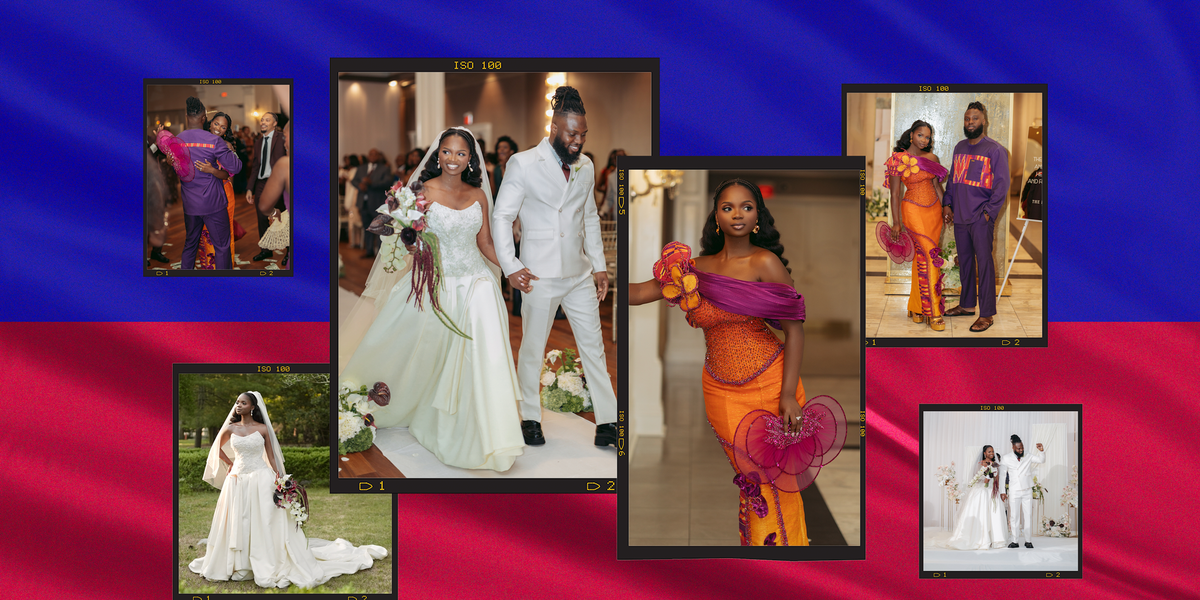
I thought I would cry. There I was perched prettily on a podium in a gorgeous champagne wedding dress and mantilla veil. My mom and three sisters beamed up at me in between their sips of bubbly, awaiting my enthusiastic proclamation that this dress was, much like my fiancé, The One.A soft violin rendition of an inspirational song slowly crescendoed through the speakers, and it all felt like signs that this was the gown I’d say “I do” in. I stared at myself in the mirror almost blankly, tilted my head, and asked my family, “Really? This is beautiful but is it me?” I tried to find the words to explain to my heart-eyed audience that there were no butterflies, no fireworks, no cinematic overture, no little voice spelling out yes.I waited, hoping the rush that was supposed to sweep me away was a little off schedule. But...nothing. Isn't this the part where I’m supposed to burst into tears? I couldn’t rationalize how all of the frenzy and booked appointments came down to this level of underwhelm. I left without a dress that day, and even though my wedding was in a mere two months (yes, really), I wasn't panicked—yet.I know what you’re thinking: “Isn’t it a little late to be wedding dress shopping?” And normally, you’d be right. But after getting engaged in November 2025, my fiancé and I decided to skip the long engagement. There was just one tiny detail: We had two months to plan the entire wedding, which meant finding the dress of my dreams was officially a race against the clock.I loved how I looked in every gown, but it felt like it was something bigger missing. Unfortunately, this dress scenario played out several more times. By the time I got to Kleinfeld Bridal, the iconic New York City shop featured on TLC’s Say Yes to the Dress, I was positive I would find the perfect wedding dress there. I felt confident, primed to cancel future dress appointments, telling myself this day would end with the happy tears and excitement that I dreamt of as a little girl playing dress up. My mom and sisters were aligned, and kept their eyes open for any “wow” moments. Then my stylist brought out an every-bride-would-love-this custom Pnina Tornai gown that had a compelling backstory. A sucker for some good lore, but not an emotional buyer, I was okay with not having it. Once again, I left another bridal salon dress-less.All of this had me perplexed: I loved how I looked in every gown, but it felt like it was something bigger missing and made me consider meeting with a therapist to figure it out. Was it wedding jitters? I dissected myself after every boutique visit, and often wondered, “What’s wrong with me?” Conscious of the clock, part of me wanted to just pick one and keep the peace. Appointment after appointment, maybe I was too difficult to please? But I refused to talk myself into a dress—I am allergic to settling, after all.My family instilled in me that you showed up looking good because looking good was part of showing up. I grew up Haitian-American, and in my family, there was a real appreciation for presentation and what you wore. You dressed up for church, celebrations, and even going to the grocery store. Don’t get me started on school picture day. Even in college, while my classmates wore sweats to class, I’d be pumping through campus in heels. My family instilled in me that you showed up looking good because looking good was part of showing up. It was more than superficial; looking good was a way of showing respect, taking pride in yourself, and representing your family with honor. So I wasn't just trying to find a beautiful gown. Before I took on a new last name, filled with new traditions, I needed to recognize myself—where I come from—in it.Everything shifted on a solo trip to San Francisco. I was luxuriating in bed at the Palace Hotel when a thought landed on me like fresh dew in the morning: I, a Haitian-American fashion girlie, was marrying a Ghanaian artist—I was entering a marriage that brought two cultures, two families, and two creative identities together. What if I wear a Haitian designer for the ceremony, and then honor his culture with a Ghanaian traditional gown during the reception? I thought. Finally, the feeling I had been searching for started coursing through my body.For my Haitian piece, I began researching and it ended almost instantaneously when I stumbled upon Jean-Ralph Thurin, a Haitian designer I was already following on Instagram. We met years ago during NYFW when I was getting my start in the industry. I reached out and scheduled an appointment for as soon as I landed back on the East coast.Jean-Ralph’s atelier was elevated, with cream, ivory, and white gowns displayed throughout the luscious showroom; each one reminded me of some special element of Haiti. The loveseats created an intimate, almost familial feeling, like you’d come over to someone’s beautiful living room and settled in to watch a show. It’s like he saw past the weeks of hidden disappointment I’d been hiding behind my smile, and he knew there was a story begging to be told through my dress.The family vibes only intensified as the appointment went on. Jean-Ralph’s wife, a fellow designer, helped me in and out of dresses, and his daughter was his attendant. It felt like being at my aunt’s house, and suddenly it made sense why none of the other shops worked for me—I was meant to be here.As my sisters oohed and ahhed at me in a dress that I couldn’t stop smiling in, Jean-Ralph sketched an entirely new option for me in his notepad. It was a rendition of what I had on (which was sadly too big and couldn’t be altered due to the elaborate detailing) and totally me. “I’m inspired,” He told me. “I’m going to design this for you.” I was honored. It’s like he saw past the weeks of hidden disappointment I’d been hiding behind my smile, and he knew there was a story begging to be told through my dress.The moment I put it on ... I felt like me—the once-shy Haitian-American girl who grew up to be a woman of the world. With just five weeks until the wedding, I held my breath through every fitting, clinging to hope. The gown, which was for the ceremony, had a pearl-beaded lace bodice in a warmer ivory champagne. The moment I put it on, everyone—my mom, my sisters, and yes, myself—said it: “This is the one.” I never felt so sure, so complete. I felt like me: the once-shy Haitian-American girl who grew up to be a woman of the world.And yet, we were only halfway there. For my second look, my fiancé’s entire family helped bring it to life: His brother, a menswear designer in Ghana, connected me to a talented seamstress; his sister bought the material; and his mom searched for the accessories and we discovered renowned Ampy Bridal fans. One WhatsApp call after the other, an ocean away, my gown came together: a vibrant purple and fuchsia ombré, complemented by rich kente detailing, glistening stones, and flowery embellishments.What started as a dress became something much bigger: a beautiful merging of my Haitian heritage and his Ghanaian roots, stitched together by the family I was becoming part of.When it finally arrived, I knew this wasn’t something even a fairy godmother could have conjured. As the first child and eldest daughter of immigrant parents, I was used to forging the path and getting things done. This time, it was a family affair, and I was catching a glimpse of who I was becoming. What started as a dress became something much bigger: a beautiful merging of my Haitian heritage and his Ghanaian roots, stitched together by the family I was becoming part of. And somehow, before we even said “I do,” I already felt like I belonged.And then, after a dizzying two months, there I was: walking down the aisle feeling like royalty in my custom Haitian designer gown. Every emotion came flooding to the surface. The butterflies I’d been waiting for were swirling in my stomach. At the reception, I changed into my one-of-a-kind traditional Ghanaian dress, dancing towards my husband as every piece of me was on full, beautiful display: a Haitian-American, a new wife, a woman who loves a Ghanaian man and his culture. My Haitian gown let me honor where I came from; my Ghanaian gown let me honor the culture I was marrying into. And together, they felt like coming home.
My Two Wedding Dresses Were a Love Letter to My Haitian Roots and New Ghanaian Family
Full Article
Original Source
Read the full article at Cosmopolitan →KhanList aggregates and links to publicly available news content. We do not host full articles from third-party sources. Always verify important information with original sources.