
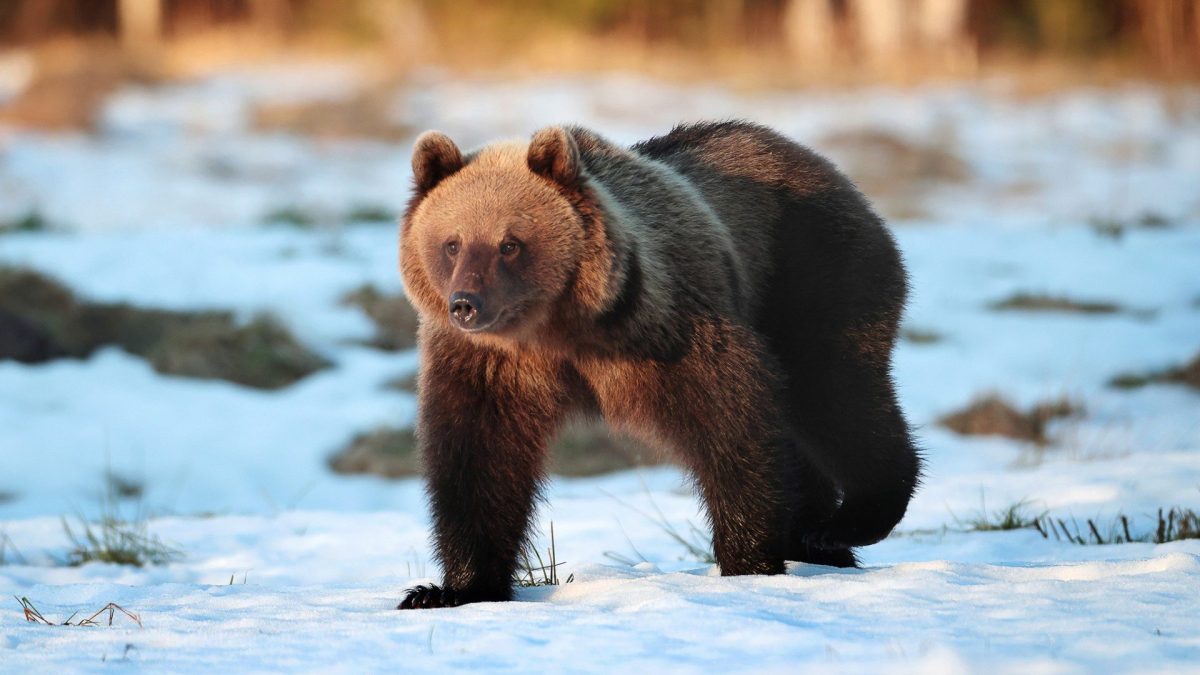
If ever there was a time to hire a car and drive an hour and a half into the Estonian countryside to meet strangers at a wooded location, it was on a grey, drizzly Sunday in autumn. Despite the rain, my drive east out of Tallinn was painless thanks to the largely empty roads. The capital‘s medieval Old Town and lively café culture felt a world away by the time I reached the forested countryside. Estonia’s modest population of 1.3 million has its perks, but I’ll admit to feeling a flicker of relief at spotting another two vehicles as the tires of my €22 (£18) hire car crunched over the gravel logging road that led me to the afternoon’s meeting point. Confident I was in the correct spot, I parked, hopped out and heaved my camera bag over my shoulder. St. Catherine’s Passage is among Tallinn’s oldest streets (Photo: karetoria/Moment RF/Getty) In hopes of seeing Eurasian brown bears before they all hunkered down for a long winter’s nap – as well as raccoon dogs, elk and maybe even a wolf or a lynx – I had booked a night in a bear hide operated by NaTourEst, which specialises in nature and wildlife tours. Although bear-watching is largely a spring-to-autumn pursuit, the hides also provide winter opportunities to photograph golden and white-tailed eagles. After exchanging quick nods of greeting with the two other parties – a British couple and a trio of German-speaking friends – photographer and NaTourEst guide Kärt Miljaste briefed us on what was to come. It was simple, really: after a 300-metre walk into the woods, we’d be shown to our hides. We weren’t to step out again until 8am, when we’d reconvene and walk back to the parking area as a group. Grateful I had worn hiking boots instead of trainers, I squelched along the muddy path enjoying the scent of damp forest. It didn’t take long to reach the small collection of nondescript wooden huts at the edge of a pond-adorned clearing. Miljaste pointed us to our respective hides (mercifully, there was no sharing with strangers; each party gets their own) with a promise to come round shortly for orientation before leaving us for the evening. Tours start with meeting a guide before guests head into their hides (Photo: Herve Rannu Photography) While NaTourEst’s classic hides are the real bargain from €135 (£113) with a dry toilet (without a flush) and beds to sleep up to nine people, I had secured a premium hide (from €590/£492), which had electricity and a flushing WC. Guests are responsible for bringing their own food and drinking water, regardless of which hide they’re staying in, and honestly, aside from one use of the kettle upon the happy discovery of an instant coffee sachet in my camera bag, I didn’t need the extras. I arrived at the hide around 1:30pm and stayed in the viewing room until approximately 2:30am, with my eyes (and borrowed binoculars) glued to the scene before me. There are no night-vision cameras; instead, subtle lighting illuminates the clearing in front of the hides, helping onlookers spot wildlife with the aid of binoculars, although I had brought some of my own photography equipment. I only got in a few hours of sleep before returning to my post at 6am. Prior to this experience, I’d never seen a bear in the wild. My hopes were high, but having spent plenty of time on African safaris, I’m keenly aware that there are no guarantees when it comes to nature – and that’s a huge part of the appeal. Summer had plenty of opportunity to photograph racoon dogs (Photo: Summer Rylander) What a privilege it was to have an expanse of hours to sit in the wilderness and simply observe. As the speaker crackled with sounds of the rain and rustling birds about 45 minutes into my arrival (each hide has a sensitive microphone fixed just outside to create a more immersive experience), I glanced up from fiddling with camera settings and saw a raccoon dog snuffling through the wet grass. Excitement coursed through me. I’d barely heard of raccoon dogs before, let alone seen one just a few metres away. I dropped to the floor to poke my largest telephoto lens through the porthole allowing an unfettered view of the clearing, glad I had my full kit with me. The common raccoon dog is native to East Asia and is technically an invasive species in Estonia. They arrived via the early-to-mid 20th-century fur trade, and those that were released or escaped have flourished through the decades, preying on the eggs of ground-nesting birds. Ecological impacts aside, raccoon dogs were my constant and welcome companions that night. The fluffy canids were bothered neither by the persistent rain nor the presence of bears, as I learned when one finally lumbered into the scene just as the light was too low to capture anything better than a grainy, tabloid-style snapshot of a vaguely bear-shaped creature. What a sighting, though. The bear Summer spotted after an evening of wildlife watching (Photo: Summer Rylander) My viewings may have been under the cloak of darkness, but I had reportedly only just missed out on daylight activity. Chatting on our way back to the cars the next morning, the Brits told me this had been their second night in the hide. “The bears were out around 2pm on our first day; we saw a mother and three cubs,” the woman told me. The pair, who said they live just outside of Windsor, were at the conclusion of a 10-day road trip visiting national parks for hiking, canoeing, birdwatching and bear-spotting. I asked why they’d chosen Estonia, of all places. “It’s not a very popular holiday destination for Brits,” she said. “It’s undertouristed, which we think is fantastic. It’s the perfect country for road trips because the roads are so quiet and nature is so abundant.” Eagle spotting attracts visitors to the hides in winter (Photo: NaTourEst) UK travellers may be catching onto Estonia’s appeal, however. In the first nine months of 2026, almost 68,400 UK tourists stayed overnight in Estonia, up by 20 per cent on the same period in 2025. Less than two hours after leaving the hides, I was back in Tallinn and took myself on a leg-stretching walk through the Unesco-designated old town. The city is pleasingly compact with lively cafés, terrific vintage shops, and plenty of character beyond the historic centre. The creative district of Telliskivi is a personal favourite, with its galleries, street art, restaurants, alond with neighbouring Balti Jaam Market, where I’ve spent many a whimsical hour treasure-hunting through the upper floor of antiques. From bear-watching to bargain-hunting, Estonia isn’t your ordinary weekend away. Getting there Direct flights from the UK to Tallinn are available from around £30 one-way, with connections from several London airports as well as Birmingham and Manchester. 1autorent has vehicles from €22 (£18) per day. Tallinn’s public transport system is contactless inside buses and trams. A one-hour ticket is €2 (£1.68) with a daily cap of €5.50 (£4.60) Staying there The NaTourEst bear hides start from €135 (£113), self-catered. In Tallinn, Nunne Boutique Hotel has doubles from €150 (£125), with breakfast. More information natourest.ee/ visittallinn.ee/eng visitestonia.com/en
My solo break in Estonia sleeping by bears was exhilarating – and costs £113
Full Article
Original Source
Read the full article at Inews →KhanList aggregates and links to publicly available news content. We do not host full articles from third-party sources. Always verify important information with original sources.