
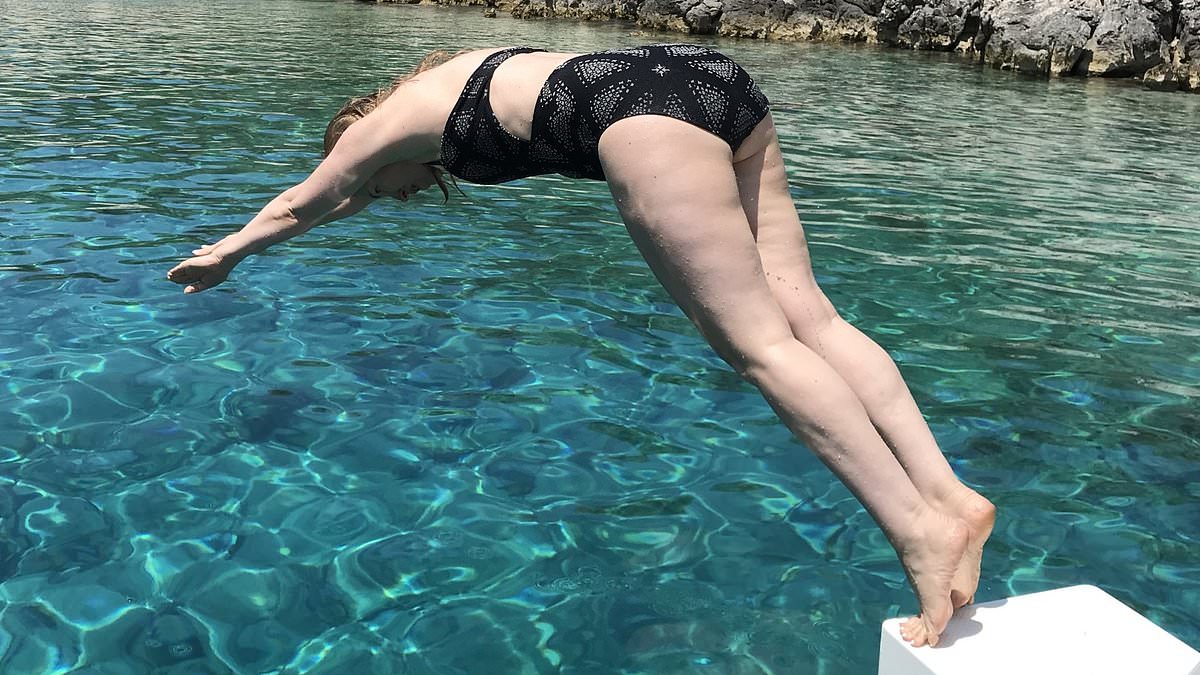
For years I've looked forward to getting back into tights as it gets cooler. On the beach I've swathed myself in sarongs and floaty maxi dresses and shunned shorts.Not because I like the look, but due to my cellulite.The condition affects up to 90 per cent of women – and at 52, I'm no exception. What began as a few faint dimples on the backs of my legs in my late thirties has evolved into full-blown orange peel, wrapping itself around my thighs and creeping towards the tops of my knees.As a beauty editor I've spent more than 20 years testing cellulite treatments, and to date, the most effective has been cheap, low-tech daily body brushing, which gave me slight textural improvements. But nothing really helped.I was excited, then, to become the first British journalist to try a brand new injectable treatment, Alidya, developed by Italian plastic surgeon Professor Pasquale Motolese. Would Alidya – which has been available in Europe for a while but is relatively new to the UK – give me the confidence to sport shorts this summer?Before we get to the injections, a bit of (slightly yucky) biology. Cellulite is a structural change beneath the skin in which fat pushes upwards while fibrous bands connecting skin to muscle pull downwards, creating the familiar dimpling.Hormones, genetics, circulation and collagen, the protein that makes skin firm and springy, all play a role. Women are particularly prone because the bands beneath our skin run vertically, making it easier for fat to bulge between them. In men, those fibres form a criss-cross pattern that holds fat more evenly in place.As in most things, menopause doesn't help: fluctuating hormones cause more fat to be deposited around the thighs and hips, and also thin the skin, making any dimpling more visible. They also deplete the body's stores of collagen. Olivia Falcon was the first British journalist to try a brand new injectable treatment, Alidya, developed by Italian plastic surgeon Professor Pasquale Motolese Images from before and after Olivia had the treatment show her skin looking considerably less mottled and with less pronounced dimplingSome researchers also believe low-grade inflammation – from stress, poor diet and environmental toxins – may play a role in damaging the skin's supporting structures over time.That's what makes Alidya so interesting. Rather than simply trying to tighten the skin or shrink fat cells – as many treatments I've had in the past have done – it claims to target several of the biological changes associated with cellulite, including oxidative stress and fibrosis – the gradual stiffening of those collagen bands beneath the skin.I went to Wigmore Medical in central London, where I met aesthetic practitioner Anna Baker, who owns the Retreatery clinic in East Grinstead, West Sussex, and is one of the few UK clinicians trained in Alidya.She examined my thighs and told me I had moderate Grade 2 cellulite, when skin has visible dimples when standing that often disappear when lying down. (There are three grades: Grade 1 is mild dimpling and Grade 3 appears more severely like a deeply quilted mattress). 'Grade 2 cellulite is exactly the type Alidya was designed for,' she said.I asked the obvious question: Would it actually work?Anna was careful not to overpromise. 'Results can vary,' she said. 'But in the right patient, we do see great improvement in skin texture and firmness. It works gradually by improving the underlying environment of the tissue. Most patients need about seven treatments (from £250 each) spaced a week apart.'You should see gradual improvements with each treatment, but you can expect to see full results a few weeks after the final one.' Alidya is delivered via a series of very small injections (I had about 70 injections on each bum cheek and upper thigh) just under the skin using a fine needle. The solution itself contains a combination of amino acids to put spring back into skin, antioxidants such as calcium ascorbate to neutralise oxidative stress in tissues, and other agents which help mop up and eliminate heavy metals that accumulate in the tissues and slow lymphatic drainage.Anna warned me I would feel 'a stinging sensation' but for me the injections felt bearable. An aesthetic practitioner told Olivia that she had moderate Grade 2 cellulite, when skin has visible dimples when standing that often disappear when lying down After eight weeks and six treatments, Olivia went on holiday to Sweden and said the 'orange peel' effect on her outer thighs was goneThe whole process took around 40 minutes. By the end, my thighs sported what looked like a constellation of mosquito bites but didn't hurt. Over the next 24 hours, the area became bruised and tender for about three days. Anna reassured me that this was normal and would settle and prescribed skin creams and collagen drinks that were designed to ease lingering bruising.I wasn't to expect instant change, said Anna. 'The first thing people notice is usually a slight improvement in skin tone and puffiness after a couple of weeks,' she said. 'Structural changes take longer.'By week three the skin on the backs of my thighs looked significantly less mottled. The dimpling was still there but felt less pronounced, as though someone had ironed them. Eight weeks (and six treatments) on, I faced the holiday test. I was going to Sweden and would be surrounded by ultra-fit Scandinavians, so it was a big one.Standing in the bathroom of our coastal cabin, I caught sight of my reflection in harsh Scandi daylight – the kind that shows absolutely everything and forgives nothing. The cellulite was faintly there but it looked less dense, less shadowed. The skin had a slightly more even tone, and the worst of the 'orange peel' effect on the outer thighs was gone. I felt lighter and brighter.I wore shorts to breakfast, which felt liberating. No one said anything or let their gaze linger with distaste – believe me, that's happened before – and that was enough of a win.Alidya is not a miracle cure. Science shows that there is no clinically proven 'cure' for cellulite. But, for me, it shifted the texture and appearance enough to make a visible, confidence-boosting difference.After my course of six treatments, I'm signed up for bi-monthly booster sessions, which are recommended to maintain results. Yes, it's an expensive new habit. But without them, I imagine the skin will revert to its previous state. Cellulite, I've finally accepted, isn't something to be conquered – but it can definitely be improved.For treatments nationwide visit: alidya.webflow.io/#clinic-finder Follow Olivia Falcon on Instagram @theeditorslist
My 'orange peel legs' mean I've always hated wearing a swimsuit. But this is the groundbreaking new cure for cellulite that means - after 20 years - I can finally wear shorts again
Full Article
Original Source
Read the full article at Dailymail →KhanList aggregates and links to publicly available news content. We do not host full articles from third-party sources. Always verify important information with original sources.