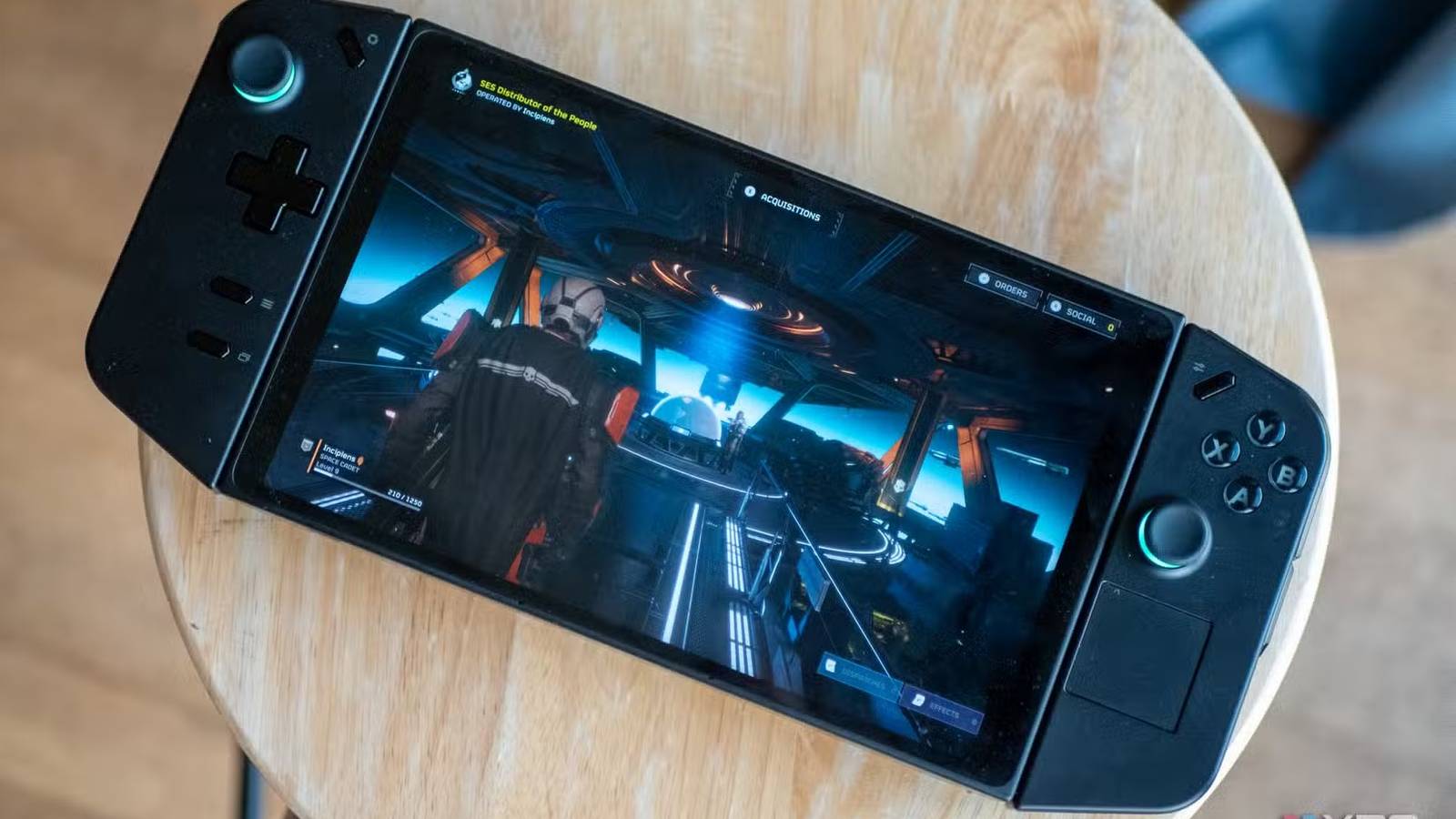
Published Aug 6, 2026, 9:00 AM EDT Abhinav pivoted from a career in banking to pursue his first love in writing. Even while working full-time, he continued contributing as an editor-at-large, a role he has held for more than 7 years. A lifelong tech enthusiast who has built three gaming and productivity powerhouse PCs since 2018, his passion for technology keeps him closely following the semiconductor industry, from NVIDIA and AMD to ARM. His MSc dissertation explored how artificial intelligence will reshape the future of work, reflecting his curiosity about the wider social impact of emerging technologies. Consumer laptops were designed on the premise of portability. The laptop, as a device, was built on the idea of having access to a computing interface everywhere you go, with a form-factor that supported it. On the market, you'll see a wide variety, ranging from ultra-thin MacBooks and ultrabooks to bulky gaming laptops with a larger heat-sink and a discrete GPU. iPads and tablet PCs sit somewhere in between, as Steve Jobs would say. When Valve paved way for a new category of consumer devices with the Steam Deck, it inspired a lot of other portable, handheld gaming PCs, and the one that caught my eye was from Lenovo. It wasn't until I bought my first Legion Go that I realized it did something better, and that very thing happened to be portable computing itself. It took me a few seven-hour flights from London Heathrow to Abu Dhabi to realize that my ultrabook was beaten by the Legion Go in nearly every category that matters to me. The Legion Go is a powerhouse for everything I need on the go Entertainment, checking up on work, and even getting work done Whenever I travel internationally, the journey starts long before I reach the airport. In my case, it usually begins with another domestic flight just to reach the international terminal, which means an hour or two of transit before the real trip has even started. That also means hours of waiting around, and, over the last few journeys, I began to realize that I don't reach for my laptop anymore. The Legion Go took over as the first device I picked up without my realizing it, and it mostly started with the boring stuff. Sometimes it was to go through a web check-in while I was in the taxi, or when I wanted to double-check a gate change over the airport Wi-Fi. The other time it was replying to a Microsoft Teams message I forgot about before leaving for vacation. The rest of the time, it was nothing more than putting on Spotify while waiting at the gate or watching an episode of whatever show I had been watching the night before. None of these things are particularly difficult on an ultrabook, but over time, I realized that they were just inconvenient enough that I often couldn't be bothered to pull the laptop out, find somewhere to balance it, wait for it to wake up, and then put it all away again five minutes later. Having a device that wakes up instantly and can be put away just as easily actually helped my willingness to engage with all the things I've described. Instead of putting everything off until I reached the hotel, I did them whenever they crossed my mind. The handheld form-factor is an underrated luxury I can see more, and therefore do more My iPhone is excellent for quick interactions, of course. The problem is that it stops being excellent the moment there are two things happening at once. And besides, a phone has its own job in the device hierarchy. If I were to use it for gaming, streaming TV shows, and working on the go, the battery would go critically low before I even reached the gates, leaving me stranded as I rely on Apple Pay to go from A to B. Even if I were to pretend that I could do all of that on my phone, the limited screen real estate makes everything I described sound even more like a chore than it would on my laptop. The Legion Go, in this situation, is a rather special addition to my device arsenal. It gives me roughly nine inches to work with, yet it remains something I can hold in one hand while standing in a queue or waiting at the gate. It also eliminates the hassle of juggling a trackpad or trying to hit buttons on the phone as I can tap, scroll, pinch to zoom, and carry on. All of it sounds really trivial until you decide to travel with it. Ironically, it's the laptop that has started to feel like an antiquated form-factor. It demands a flat surface, enough room to open the lid, and two hands to even get started. The handheld fits the small moments between destinations, and that's where I would argue the usability advantage entirely lies. No Nintendo Switch ever comes close The OS does not get to limit what I do I own a Nintendo Switch OLED. It has spent the last six months in a drawer, and it only comes out when a new Pokémon game does. This isn't a complaint about the hardware, since it's lighter than the Legion Go. It's rather my gripe with what Nintendo allows the console to be, which is one of the reasons why I decided to invest in another handheld altogether. Windows makes most of that difference for me. Sure, you could argue that it's clumsy in handheld mode, because I have tried to launch the taskbar and move tabs around with my thumb. But regardless, having access to a portable device that runs it is still empowering. What it means is essentially having something that handles my documents, checks my emails, opens files, and installs emulators for whatever I decide to play. Which brings me to gaming, which, of course, is at the center of the entire experience, and kind of the whole point. With tuned settings and FSR 3.1, there's nothing else I own that lets me cruise through Night City in Cyberpunk 2077 at 40–50 FPS, 40,000 feet in the air, fits in the palm of my hands, and can be tucked away in the front seat pocket when it's time for the in-flight dining service. My only major gripe is that it does leave me wanting to be in an airplane with a full plug more often than it should. The best travel "PC" is my gaming handheld, and I never expected it to be When I first made the purchase, I'll admit I didn't think of these use cases. I just wanted something to play games on that weren't exclusively from Nintendo's eShop, or required a bulky device with a lid that was a hassle to handle in a cabin, a taxi, or in a lounge. Everything else came as a result of what the handheld enabled for me, and so far, most of it has been a pleasant surprise.
My old Legion Go does something my ultrabook couldn't, and now I travel lighter
Full Article
Original Source
Read the full article at Xda-developers →KhanList aggregates and links to publicly available news content. We do not host full articles from third-party sources. Always verify important information with original sources.