
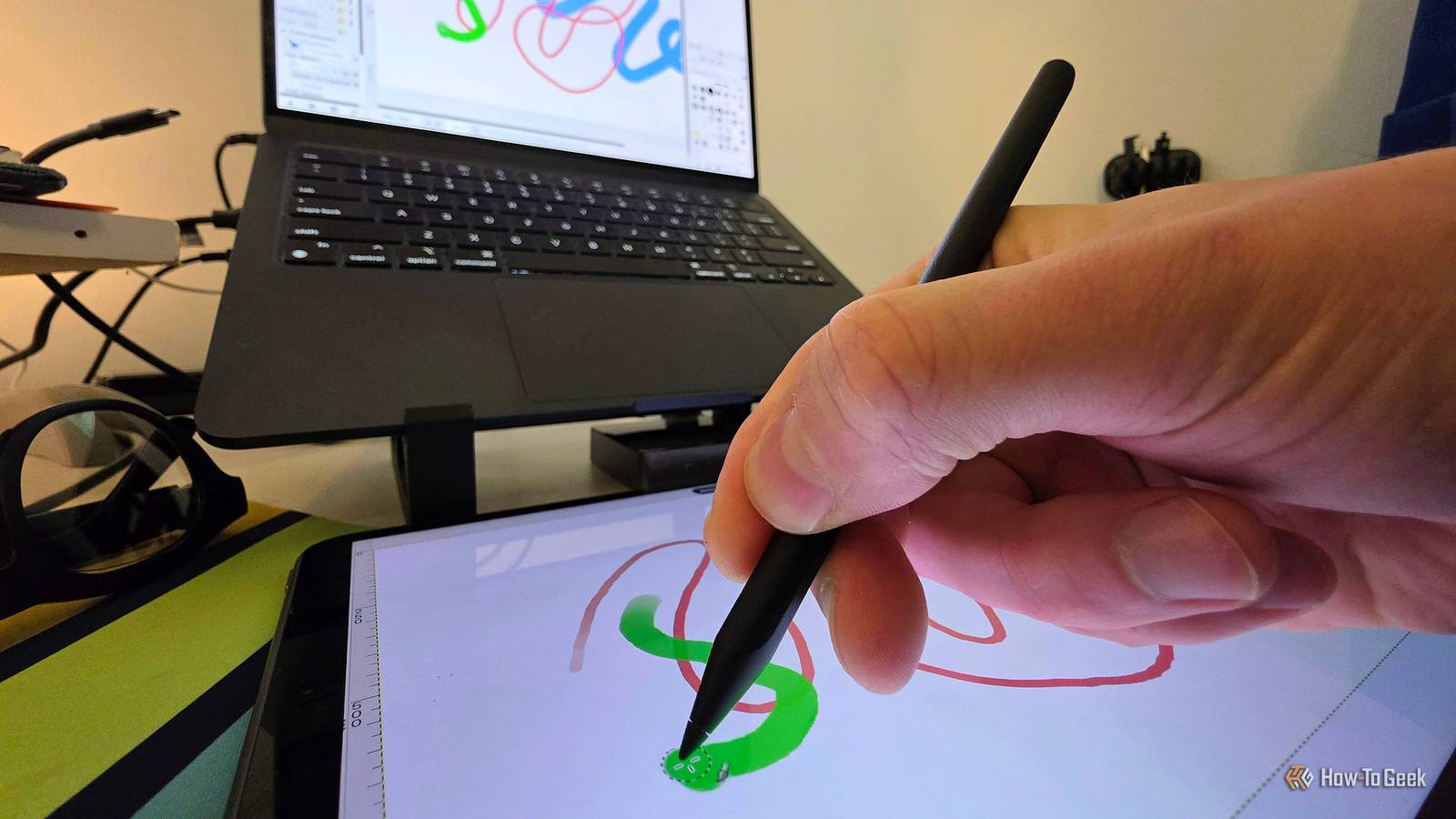
Published Oct 18, 2026, 1:00 PM EDT Joe Fedewa has been writing about technology for over a decade. Android and the rest of the Google ecosystem have been a focus for years, as well as reviewing devices, hosting podcasts, filming videos, and writing tutorials. Joe loves all things technology and is also an avid DIYer and food blogger. He has written thousands of articles, hundreds of tutorials, and dozens of reviews. Before joining How-To Geek, Joe worked at XDA-Developers as Managing Editor and covered news from the Google ecosystem. He got his start in the industry covering Windows Phone on a small blog, and later moved to Phandroid where he covered Android news, reviewed devices, wrote tutorials, created YouTube videos, and hosted a podcast. From smartphones to Bluetooth earbuds to Z-Wave switches, Joe is interested in all kinds of technology. After several years of jailbreaking and heavily modifying an iPod Touch, he moved on to his first smartphone, the HTC DROID Eris. He's been hooked ever since. I'm a big believer in giving old devices a second life — especially if it means I can avoid buying something new. That's exactly what I was able to do with an Android tablet I hadn't touched in a couple of years. Now, it's a Wacom-like drawing pad for my computer, and it was incredibly easy to do. At one time, I owned a real Wacom drawing tablet. I enjoyed using it, but I didn't often have a need for it. I eventually lost the stylus, and by that point, I couldn't buy a replacement. Recently, I've been having the itch to draw on my computer again. That's when the idea to use an Android tablet as a drawing pad popped into my head. It's shockingly easy to do I was expecting a lot more work Credit: Hannah Stryker / How-To Geek When I first had the thought to do this, I expected a complicated process. I was pretty confident it would be possible, but I use a Mac, and Apple developers don't often cater to Android users. Even if an app did exist, I assumed it would take a decent amount of configuring. Boy, was I wrong. Thanks to a pair of excellent apps from an independent software studio called Codonic, I was able to start drawing on my computer with my tablet in literally less than five minutes. It's not restricted to Mac and Android, either. Windows 11 with Intel, AMD, or ARM, as well as iPhone and iPad, is supported, too. Now, this is not just simply mirroring a screen and mapping touch input from one screen to another. It supports pressure-sensitive input like a real drawing pad, which means you need a device with a digitizer and active stylus. I'm using a OnePlus Pad 2 with the Stylo 2 pen. A Galaxy Tablet with an S Pen would be a great choice, too. It also works with iPads that support the Apple Pencil. Setup is a breeze. To get started, download the PadMac or PadWin (beta) host app on your Mac or Windows PC. You'll need to grant a few permissions, then restart the app. Next, install PadDroid on your Android phone or tablet and open it. Assuming your computer and Android are on the same network, you should immediately see the computer's screen. That's it! Here's how it actually works for drawing A few simple tweaks and you're good to go There are a few different ways to use Pad. First, you'll want to choose what to show on your Android device. It can share the full screen, a specific app, or a section of the screen. If you select a specific app, it will automatically force it into the aspect ratio of the connected device. Pretty cool. Technically, you could share the full screen or full window of Photoshop, Affinity, Krita, etc, and do everything from the tablet. However, I was more interested in using my tablet like I would a drawing pad. I still want to use my nice, big monitor and do the non-drawing stuff with my keyboard and mouse. So, I used the "Select Area" option to share the canvas from my image editing app. This way, the toolbars are only visible on my computer, while the drawing area is maximized on my tablet. That being said, Pad puts some common shortcuts on the screen as well. Things like undo/redo, zoom in/out, copy/paste, and some keyboard shortcuts. So, I used the "Select Area" option to share the canvas from my image editing app. This way, the toolbars are only visible on my computer, while the drawing area is maximized on my tablet. That being said, Pad puts some common shortcuts on the screen as well. Things like undo/redo, zoom in/out, copy/paste, and some keyboard shortcuts. Make sure your editing app of choice supports pressure-sensitive input and has it enabled. For example, I use the GNU Image Manipulation Program, and I just had to toggle on "Enable dynamics." I'm obviously impressed by how easy Pad was to set up, but it also works really well. Latency is always a concern with a wireless setup like this — the app shows it in the corner of the screen. I saw it as low as 6ms. That's barely noticeable for my needs. All in all, it's hard to find faults when something Just Works and does it for free. I would happily pay for an app that makes an otherwise neglected Android tablet actually useful again.
My old Android tablet became a Wacom-style drawing pad in under 5 minutes
Full Article
Original Source
Read the full article at Howtogeek →KhanList aggregates and links to publicly available news content. We do not host full articles from third-party sources. Always verify important information with original sources.