
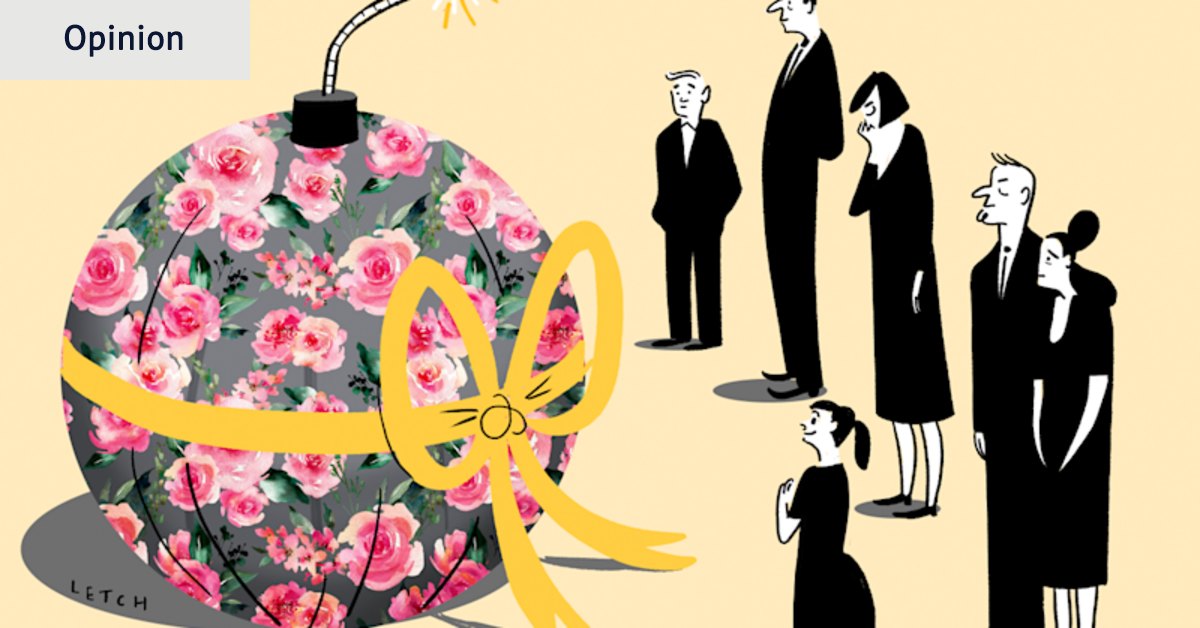
OpinionMoney columnistNovember 18, 2026 — 5:01amNovember 18, 2026 — 5:01amI am 69 and co-executor of my mother’s estate with my sister, 64, and brother, 59. Mum died late last year aged 95, and her only substantial asset was the family home, now on the market for about $1.2 million. We opened an estate bank account, but funeral expenses, household bills and selling costs have exhausted her remaining cash. I’m getting conflicting advice about whether we need to lodge a final tax return for Mum or a separate return for her estate. Her only income was the age pension, and she hadn’t paid income tax for years. The ATO hasn’t been particularly helpful. What are our responsibilities as executors, and how can we settle the estate without unnecessary complications or delays?Even a straightforward estate can face an unexpected challenge.Simon LetchI think it’s well worth engaging an accountant and a solicitor to guide you through the process. If your mother’s only income was the age pension, it’s unlikely a final personal tax return will be necessary, but the ATO should be notified of her death and advised that no further returns are required.The estate is a separate matter and may need to lodge a tax return, depending on whether it earns taxable income or makes a taxable capital gain. The good news is that the sale of your mother’s home should be exempt from capital gains tax, provided it was her main residence and settlement occurs within two years of her death. Your accountant can confirm the exemption and deal with the ATO.As executors, your practical duties are to identify and collect the assets, keep proper records of money received and expenses paid, settle outstanding bills and taxes, and distribute the balance according to the will.Keep the beneficiaries informed, retain enough money to cover any unexpected liabilities and don’t rush to distribute the proceeds until you’re satisfied all obligations have been met. Even a straightforward estate can face an unexpected challenge, which is why a solicitor’s guidance is valuable.Given what you’ve told me, the professional costs should be manageable, and a little advice now could save considerable expense and worry later.You recently wrote about a testamentary trust of David who named his three children as equal beneficiaries. Could the 30 per cent minimum tax and non-refundable offset be avoided by nominating the three children as equal beneficiaries under the “excluded election trust” option, provided they receive their shares as specified?Estate lawyer Rachael Rofe tells me this option is available only to trusts existing on July 1, 2028. David’s trust, commencing in 2030, could not qualify.A testamentary trust established from July 1, 2028 can qualify for an exclusion from the 30 per cent minimum tax if its beneficiaries are limited to individuals, tax-exempt entities and special disability trusts.A will allowing companies or trusts to benefit may fail, even if they receive nothing. Earlier trusts are exempt from this condition. The exclusion covers only income from inherited assets. Get this right and a testamentary trust remains one of the most tax-effective and asset-protective vehicles. The legislation is still before parliament, but David should review his will.For existing family trusts, the election fixes each beneficiary’s share, changeable only on death or relationship breakdown. The trustee could no longer favour a lower-income child over a high-income one, losing much flexibility.I am 67, single and working full-time, earning $3432 a fortnight after tax. I hope to retire within two years. My superannuation balance is $239,000, and my employer and voluntary contributions total the maximum $32,500 a year. I owe $219,400 on my mortgage at 6.89 per cent, with repayments of $788 a fortnight. I also have $15,350 in redraw and $6400 in savings. Should I withdraw $100,000 from super to reduce the mortgage or leave it invested? I’m worried about retiring with a large debt but equally concerned about depleting my super.The conventional wisdom was to focus on super because the returns should exceed your mortgage interest. But those days are gone. With mortgage rates approaching 7 per cent, reducing your debt may be just as beneficial as investing in super, particularly in these uncertain times.I have no problem with you withdrawing money from super to reduce the mortgage, but keep making the maximum concessional contributions while working. Once your home is paid off, you’ll have a valuable retirement asset.As the years pass, you may even consider accessing some of that equity through a reverse mortgage or the government’s Home Equity Access Scheme to help meet rising living costs.My father, 63, recently inherited money following the death of his parents. He wants to give $20,000 each to my sister and me. He is still working full-time and plans to continue for at least another five years. We understand Centrelink has gifting rules and that the $40,000 could affect his future age pension entitlement. But are there any other financial or tax consequences? Would he pay tax on the gifts, and would my sister or I have to declare the money as income? Is there anything else we should consider before he transfers it?Your father won’t be eligible for the age pension for another four years, and gifts exceeding Centrelink’s allowable limits are counted for five years from the date they are made. Given the timing, the impact on his future pension should be relatively minor.There are no tax consequences for either the giver or the recipient. However, once the money is in your names, any income earned from investing it may be taxable.Noel Whittaker is the author of Retirement Made Simple and other books on personal finance. Email: noel@noelwhittaker.com.au.Advice given in this article is general in nature and is not intended to influence readers’ decisions about investing or financial products. They should always seek their own professional advice that takes into account their own personal circumstances before making any financial decisions.Expert tips on how to save, invest and make the most of your money delivered to your inbox every Sunday. Sign up for our Real Money newsletter.From our partners
My mum died last year. Do we need to file her last tax return?
Full Article
Original Source
Read the full article at Smh →KhanList aggregates and links to publicly available news content. We do not host full articles from third-party sources. Always verify important information with original sources.