
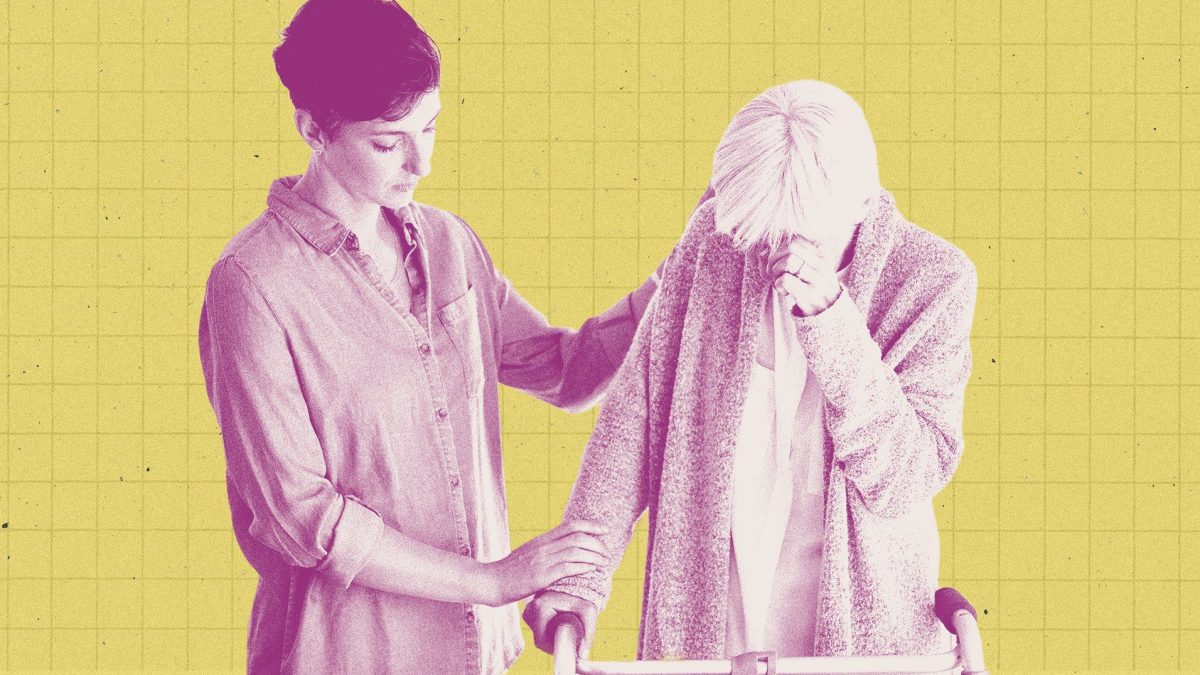
You give your child life, a home, food, love, and encouragement – don’t they owe you something in return? A YouGov survey from July 2026 shows that roughly half of the country believes that adult children have a moral obligation to care for their parents if they become ill in old age. Meanwhile, just 30 per cent believe there is a duty to have their parents live with them. Some people believe you’re obligated to give your parents grandchildren, while others believe that all you owe them is a phone call now and then. Those who don’t believe that we don’t owe our parents anything at all tend to argue that they didn’t ask to be born, that they never signed a contract. In reality, of course, the relationship between a child and their parent tends to be less transactional than that, and more emotionally complex. The most pressing question in today’s UK is perhaps what we owe our parents in terms of care. This is a crucial debate for families, but also our new Prime Minister, who has become leader of a nation with a rapidly ageing population. It is estimated that 46 per cent of the population will be aged 50 and over by 2065. The number of people aged 65 and over in England is projected to increase by 3.3 million in the next 20 years and by 6.5 million in the next 40 years. People are living longer than ever, with increasingly complex conditions that they would not have survived before medicine became so advanced. Age UK research has found that there are at least 4 million middle-aged adults in the UK caring for their elderly parents, but many more than that who are hugely involved in their care in some form. Often people don’t recognise that they are carers, but they are. Often it’s because they want to – out of love, compassion and a sense of morality – but also because they feel they have no other choice due to the severely underfunded, overburdened adult social care system. Jackie Gray, founder of Carents, says some people care for their parents out of duty, or reciprocity – but for others there is a financial interest The matriarch of one of Thailand’s richest families recently announced she was suing her son under the century-old “ungrateful child law”, which allows parents to revoke gifts if their offspring are deemed ungrateful, abusive or neglectful. She has since dropped the case, but similar laws exist in other countries. In 2013, a woman in China persuaded a court to legally compel her adult daughter to compensate her financially and also visit her once every two months. In 1601, England introduced the “43rd Elizabeth” statute which ensured that adult children could not legally abandon their ageing or impoverished parents. Annie, 63, very much feels this sense of filial duty. She lives in London with her husband, and her two grown-up children live nearby. She retired a year ago from her role as a legal PA in London, but is now spending the majority of the week sleeping over at her 89-year-old mother’s home on the Kent coast. “I didn’t want to retire like this,” says Annie. “After my dad died four years ago, I tried to persuade my mum to downsize to somewhere more sensible, and nearer to us, but she wouldn’t. She said she’d be fine in her own home, but then she had a fall, and her health declined. She is adamant that she doesn’t want to go into a home, that she doesn’t want to move to London. My mum’s house [the home Annie grew up in] is full of stairs, no downstairs bathroom, and a big, rambling garden. We have a couple of carers drop in, but I can’t pay for the sort of support she needs, and she’d need to sell her house to be able to fund it herself.” Annie is the sole caregiver as her sister lives abroad, and visits only a few times a year. “My mum has always been a tough, stubborn soul and she’s got more so with age. She seems furious and irritable with me a lot of the time, yet also doesn’t want me to go. I can imagine it must be really hard to be in her state, but I’m stressed, and I want to help, but I am beginning to feel resentful. The truth is that my parents didn’t plan for the future, and they were in denial about it. So now I’m left for an indefinite amount of time being a carer. Friends have said that I don’t need to be as involved, but this is what you do for a parent isn’t it? I can’t just act against her will and b*gger off. She did the best she could as a mum.” Jackie Gray is a GP who gave up her job to look after her father in his final years. In 2020, after experiencing the gaps and shortfalls in support services for older people and their families, she founded The Carents Room, which helps adult children looking after their ageing parents. “People care for different reasons,” she says. “For some, it’s a sense of duty, for some it’s payback – they’re showing that reciprocity – and for some there’s a financial interest. They may not want to lose the family home, so they’ll do all they can to keep mum or dad at home and not have to pay for a care home. Another reason is, of course, compassion, and that is actually often shown by the people who perhaps didn’t have a great relationship with their parents.” What’s clear from talking to adult children about their parents is that often there’s a central tension there; they are grateful to them in many ways, yet also they resent the issues their parents burdened them with. Philip Larkin was right. Shorts Kellie is a 57 year-old single mother, and NHS worker, from Nottinghamshire. Her father is in his 90s, and is in a care home an hour’s drive away. There’s no other family on the scene, and her mother died over fifteen years ago from cancer. “He was never really around, and he left my mum and me when I was eight. Even before he left, we didn’t have a close bond. When I got pregnant, he gave me money for a deposit to buy a house, as he’s got a fair bit of cash. I’m very grateful to him for that, but it’s very confusing, as I also hate that he wasn’t a proper dad to me.” When Kellie’s father first needed care, he funded private carers, which she helped to organise, but she still found it “really tough”. “He is unfortunately cynical, demanding, and self-centred, and I don’t enjoy his company,” she says. “Being his carer was impacting my work, my son and my mental health, so I visit, but I’ve stopped going so many times a week.” So what does Kellie feel she owes the dad who wasn’t around? “Regular visits, overseeing his care and making decisions when he can’t. I have a lot of boundaries, though, and I try to maintain a balance between doing the kind thing, and making sure I stay sane and happy. I am not trying to punish him, but I’m sure I’d be able to give more if he’d been a half decent dad.” According to a Carents UK survey of 4,293 adult children caring for their parents, 81 per cent said that society treats a caring role as something that does not deserve support. Respondents said that if they’re your mum or dad, it’s “just what you do”. Lulu Sinclair is a BACP-accredited psychotherapist, and she finds that people’s sense of duty to their parents comes in all shapes and sizes. “I knew of someone who was approaching retirement age,” she says, “and he left work early to look after his mother. He was there with her for several years, and some time after she died, people would say to him that it must have be difficult to care for her, and he said, ‘no, not at all’, that he’d been ‘honoured’ to do it. So, never assume everyone thinks the same. “But life nowadays makes it hard for lots of adult children to give up everything to look after their parents. They may have their own children, and demanding jobs. Times are so very different from when the youngest daughter was expected to stay unmarried and look after her parents until their deaths.” Now there is simply more going on for “the sandwich” generation, where they might be at the peak of their career, or they’ve just got back on the horse after bringing up their children, and now they begin caring for their ageing parents. Gray says that because it is so tough to fathom the idea of parents one day being dependent on you, families tend to avoid the topic. “A lot of parents also say things when younger that perhaps they haven’t thought through. So it might be, ‘don’t ever put me in a care home’. But do they mean don’t ever put me in a care home even if it means giving up your job, your husband, your children’s childhood? How much of a price do they want you to pay to follow that instruction?” Jane, 88, lives in her own home, and outsources her care as far as she can. She has a cleaner, someone to do laundry, and has a stair lift, walk in shower, and a mobility scooter. “I don’t believe my daughter owes me care, let alone her partner,” she says, “and I don’t want them to feel obligated. I do believe people need to help themselves as much as they can and not assume their kids will do it all for them. I do appreciate what she and her partner do for me, like giving me lifts to appointments. They also do some cooking for me. I’m lucky, but people shouldn’t have children because they think they will be ‘repaid’ one day.” Alisoun Milne is professor of social gerontology and social work, at the University of Kent. “As far as we can tell,” she says, “there is no sense that family today feels any less obliged than it ever did to support parents. I’d never argue for a law that obliges people to care, because people do it without that anyway.” What Milne has found, though, is that who we might care for has shifted. “Whereas in the past you’d likely have two parents who remain together until one of them dies, now there are different family structures, so you may be more likely to care for your stepfather than a biological dad you only saw a few times when you were five years old. There are people caring for stepmothers, and for their ex-partner’s parents.” For those grappling with the idea of what we owe our parents, and what it means to be “an ungrateful child”, Sinclair has some therapeutic advice; “Ensure your life is not all about looking after your parents,” she says. “It’s about incorporating what’s going on within your own life. Try to share out the load with your siblings, if you have any. Decide where your own boundaries are and try to stick to them. You’ll be pushed and you will find yourself doing more than you expected but, if that happens too often, you’ll get resentful, so try and set out the expectations earlier on. None of this is easy, and it’s ok to say so. Lastly, if when they’re gone, it would be good to look back and think you’d done the best you could for those people who brought you into the world. Whatever ‘the best’ looks like to you. It will also be a comfort for you in your grief. I think above all, that’s the thing worth remembering.”
My mother refused to downsize – now I’m spending my retirement caring for her
Full Article
Original Source
Read the full article at Inews →KhanList aggregates and links to publicly available news content. We do not host full articles from third-party sources. Always verify important information with original sources.