
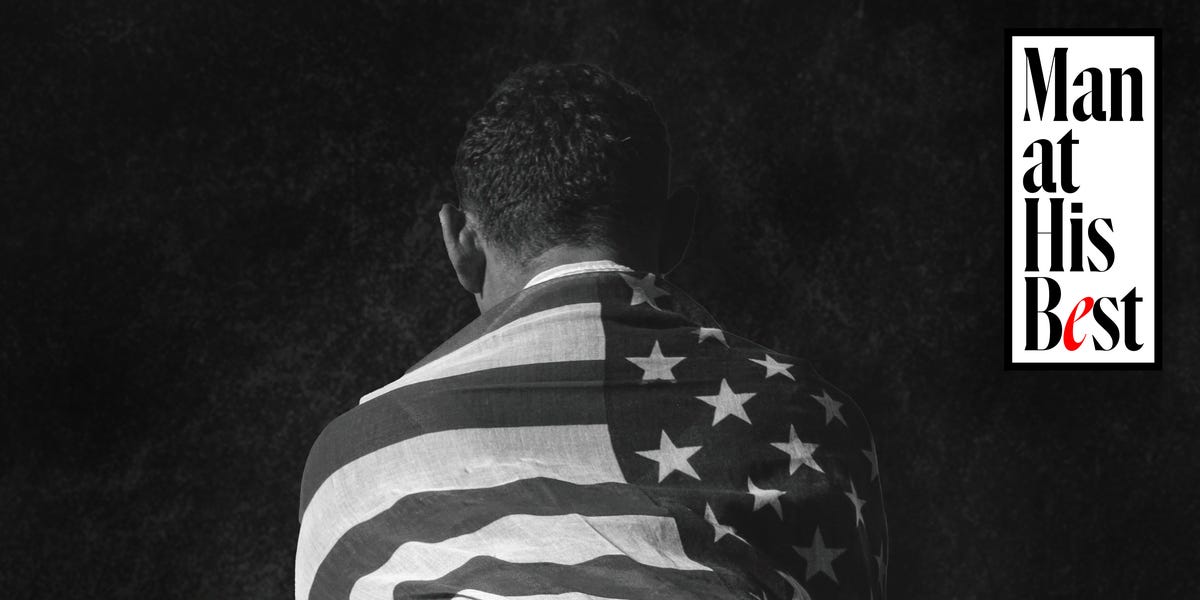
GettyNewsMan at His BestMy Life as an Asylum Seeker in the U.S.I came here 11 years ago to give my daughter a better life. I believe in the American dream, even if the American government doesn’t want me here.By Adel, an asylum seeker from Venezuela, as told to Kevin DupzykPublished: Nov 9, 2026I want to tell you about some things that I think you can only understand when you are an immigrant.The first, and most important, is that emigrating is not something you do without a reason to leave. I will tell you mine. In Venezuela, when I would take my daughter to school, she had to ride lying down on the floor of the car. At any moment, someone might knock on your door, point a gun, steal your phone. It was safer to have her flat on the ground, below the windows. She was a great student at a private school, and that is what it took to get her there. I challenge you to imagine being a father and seeing that little girl, not even ten years old, huddling for safety.That was my reason for leaving, but it is not the reason I and my family have been allowed to stay here. We are asylum seekers, and there are strict rules around qualifying for asylum in the United States. The fear of being mugged is not enough. But political persecution is. In the year after the 2013 election of President Nicolás Maduro, when life in Venezuela was very difficult, the country erupted in protests. I was among the protesters, and I was detained and separated from my family for a week. We decided that when we visited my sister in Miami in 2015, we would request asylum.This is surely something you only understand as an immigrant: the specific, and confusing, rules and requirements and procedures of the American immigration system. People who are born here can take these things for granted. They don’t understand how much of your life can be dictated by paperwork and how the paperwork your life most depends on always has the most boring name. When we got to the United States, the application for asylum I filled out and turned in to U.S. Citizenship and Immigration Services, a part of the Department of Homeland Security, was called Form I-589.According to the government, it should have taken at most five months for the application to be processed and to get an interview, which would allow USCIS to evaluate if my family should be granted asylum.Our wait began when I turned in that form. That was the start of the first countdown clock. You think about it every day, because for those five months, you cannot work. When they are up, you can fill out another form, Form I-765, to apply for a work permit. But in the meantime: Five months… four months… three months…We were fortunate: We had savings. Miami was expensive, but we were getting by.Two months… one month… As the clock ticked down, we had a decision to make. We had family in Miami, but it was too expensive for us to stay for the long term. If the process dragged on much longer, we’d run out of money. We decided to move north, to Orlando. We didn’t know anyone there, but it was affordable. That’s where we would wait out our chance at the American dream.When we moved there, the newest iPhone was the iPhone 6s. A nuclear deal was finalized with Iran. Barack Obama was president.Eleven years later, we are still waiting for an interview.Right now, when many people here think about immigration, they think about ICE—men in the streets with guns, killing people in Minnesota, or Maine, or Texas. I worry about ICE every day, but what has defined the past decade of my life is the waiting. Maybe if I can tell you about it, you will understand something, even a small part, of what it is to be an immigrant.GettyThe author’s experience with ICE has been unlike the stories many Americans are familiar with from violent incidents earlier this year. As his family waits for an answer to their request for asylum, ICE lurks—the specter of being forced to return home.In Orlando, we were alone. We moved in December, a difficult month. Christmas is a big holiday in Venezuela, and there the family is always together: cousins, siblings, uncles, aunts, grandparents. Our first Christmas was just the three of us.I dutifully filled out Form I-765. I understood the work permit would take about two weeks to arrive. Once I had it, another countdown: It would be good only for one year. In that time, though, I could get a job and also a driver’s license, which would make our lives much easier. And surely, we thought, a year was enough time for our interview appointment to come through.Instead of two weeks, the permit took three months. Three more months of stretching our savings. There were desperate moments. We sometimes had to go to churches to get food so we wouldn’t starve. We wondered if we should go home, live with the risks in Venezuela. Finding resolve in these moments is hard. Having a young child motivates you, but you also see the challenges they face. My daughter was nine years old when we arrived. She had anxiety attacks when she first started school, which was in a different language and organized much differently from her school in Venezuela.It made me think the government might expect us to be waiting two more years.When my work permit finally arrived, we were so happy. This card with the faded flag and my picture and the red border—we felt that we could sustain ourselves.It wasn’t so easy. My English is not perfect. It isn’t now, and it really wasn’t when I started looking for jobs. I’m an engineer by training. I worked at a telephone company in Venezuela. When I first started working here in the United States, I worked overnight, I cleaned bathrooms, I cleaned kitchens, I washed cars. I’m not trying to denigrate those jobs; they were the first jobs that I could find. But I could not get paid well doing them. After we had been here for a year, our savings ran out. We were lucky to have family and friends who could help us. But we kept going to food pantries. I always tried to make sure that my daughter and my wife did not go without food. I often didn’t eat enough myself.After we had been here for a few years, my mom came to the United States to visit me and my sister. It was the first time she had seen me in four years. I was so skinny she cried.Alex Wong//Getty ImagesBefore President Obama left office, he extended the term of work permits for asylum seekers. When President Trump took office, any sense of generosity toward immigrants vanished.I did some English classes online, but they did not really work. Here is another thing you understand when you are an immigrant: When you have to start to speak on the street, it’s very different from the lessons that they teach you in class. Really, construction job sites were my classroom. With more English, I became more confident I could find a job in my field.Before I could do that, my work permit expired. I applied for a renewal, and I got another one. Another year. Another countdown until the day I could, hopefully, make my family’s case.That one expired too.By then, President Obama had left office, but before he did his administration made work permits valid for two years. That was what my next renewal got me—a little more time to work, and save, and wait. But it also made me think the government might expect us to be waiting two more years.Meanwhile, Donald Trump had been elected president. I wasn’t blind to his attacks on immigrants, but my family and I were following the rules, working hard, just trying to survive. And Venezuelans, historically, hadn’t immigrated that much to the United States. We didn’t think the attacks were about us.But things were changing. More and more people were coming from Venezuela and from other countries in South and Central America. My family thought of ourselves as three people looking for safety, but we could tell we were becoming something different: a problem.Sometimes a risk is worth it to feel that you are still living.We started to see news that the people who were waiting for asylum interviews were waiting four years. Later, it became five years. And then, as you started to talk to people, they tell you that they’ve been waiting six years or they’ve been waiting seven years.It was hard to imagine how we could possibly last that long, but in 2019 I saw a listing for a job in my old profession. It was with a major telecommunications company. I was hired to join a team that climbs up telecom towers to do maintenance and upgrades. Back in Venezuela, I had supervised this kind of work.My daughter was in high school by this time, and I would think about her when I was up there. When she was little, she would tell me she wanted to be an engineer. I told her, You don’t have to be an engineer just because I’m an engineer. It could be scary being up so high. We have harnesses, and something like parachutes, and we’re always connected to something in case we fall, but we recognize that we can’t get too comfortable, because any error could end our lives. Still, there was something special about being able to see for miles, this place that held my family’s future stretching out in every direction.Most of us on the crew were new, many of us immigrants. Our boss was impressed at the quality of our work. He asked us once, How is it that you guys are able to do this kind of work not having done it before? I told him we were trained. And also that when you have this need to survive, you have this need to get ahead, you end up finding a way.In 2021, we bought a house.For years we had been saving, and Covid made it possible for us to save much more. The pandemic, strangely, was good for my family. I was an essential worker, and I received bonuses and other incentives. I never stopped working. At the same time, Covid exposed the political problems I protested in Venezuela, which made the pandemic even worse there. It was a reminder of why we had left.And the house was a reminder of home. In Venezuela, people move less than they do here. Neighbors stay for years, for a very long time. The importance of a house there, like here, is that when you own it, no one can remove you from it. It really meant something to feel that feeling in America—like we were beginning to live the American dream. My daughter, in her way, had even become a typical American teenager. Our new house was about forty minutes from where we had been living, so she had to change schools. She sulked.In 2023, the Biden administration extended work permits from two years to five years. I think probably they did this because, after the pandemic, everything was chaos. I knew it was a sign that my family might be waiting unimaginably longer for our interview, but when I renewed my permit in 2024, after living life in a five-month increment, then one-year increments, then two-year increments, five years felt like forever, like a clock it was hard to imagine reaching zero.Joe Raedle//Getty ImagesIn Florida, multiple law-enforcement agencies collaborate with ICE, creating a pervasive sense of fear.I won’t tell you that it all came crashing down when President Trump was elected a second time. It’s not just that Orlando wasn’t like Minnesota. There was no crash. It was a gradual decline in freedom and a gradual increase in fear.Simply, here is what began to happen this past December and January, when things got bad: You’re driving on the highway and you’re followed by an undercover cop. Sometimes it’s for a few minutes, sometimes it’s for ten minutes or more. Sometimes they pull you over. Sometimes they detain you.In Florida, many law-enforcement agencies collaborate with ICE, so almost anywhere you go is a risk. I drive a lot for work, and I see enforcement in exits and rest stops and Wawas, in school areas where you have to go slow. There are police or highway patrol or border patrol on the turnpike down to Miami, and on State Road 417, and on Interstate 4. You can be referred to ICE if you owe money for a toll, or if you don’t stop for a stop sign, or if they see that your driver’s license says that it’s temporary. Unlike most people, I like working more than fifty miles from home—it means I can stay in a hotel, which means less driving.Going to work, or for essentials, is nearly all we do. When my family needs groceries, only my wife goes or only I go. We can’t risk both being picked up, because of my daughter. As for my daughter, she sometimes has my sister—a lawful permanent resident who moved to Orlando after we did—drive her to school.There are a lot of people in my situation in this part of Florida, so we find ways to help each other. We have chat groups, maybe fifteen hundred people total, that warn each other about high-risk areas. And I am a member of an organization called the Asylum Seeker Advocacy Project that has helped us understand our rights and how to be safe.Thank God, I have never been stopped. But my wife and I each keep a binder in the car just in case. We know it might not be worth a lot, but we carry it with us. It contains all of our paperwork, the forms with boring names that are proof we have a right to be here. Our immigration paperwork, our asylum applications, the approvals for work permits that we’ve gotten before, the asylum receipts and claims. Everything we might need in case one of us is detained. You have to basically see if the documentation convinces the police officer to let you go. But it is up to luck. It is up to God.Sometimes a risk is worth it to feel that you are still living.Once, I took a trip to a bar with a few friends. Three beers and an Uber home. It was so scary, but we did it.The gym, four days a week, at 4:30 a.m.—before law enforcement is on the road. Once or twice a week, when her schedule allows, my daughter comes. She has the certifications to be a personal trainer, so she’s my personal trainer. There comes an age, though, at which children don’t really want to spend that much time with their parents, so she just tells me what to do and goes to do her own exercise. I still like having her there. I’ve lost about forty-three pounds, roughly twenty kilos, over the last year and a half. This time by choice.Then there was the World Baseball Classic, in Miami last March. I love baseball. When Venezuela reached the semis, I knew I had to go. We left at 3:00 a.m. for the four-hour drive down. Venezuela beat Italy in the semis, so we stayed for the final. Of all the teams we could have faced, it turned out to be the U.S.A. The game was in the evening, and it ended late in the night. We drove directly back to Orlando.Venezuela ended up champions, by the way. It was like vengeance, because the United States knocked us out in the quarterfinals of the last WBC, in 2023. And to top it off, my favorite player, Wilyer Abreu, hit a home run in the championship game. He’s from Maracaibo, just like me.Rob Tringali//Getty ImagesThe author risked leaving home to attend Venezuela’s victory in the 2026 World Baseball Classic in Miami.We have an ongoing joke with the people we know who are also in limbo. We’ll casually refer to “when we were treated like U.S. citizens.” Now we’re treated like criminals, but in other times, in other administrations, we could make a life without worrying so much, the way that we do now. Still, my family does our best to live like U.S. citizens. We follow the rules. I would not have a job, for example, if Immigration had not given me a work permit with which to do that job. I know, because for eight months, I did not work—I went hungry. We pay taxes on our house. I pay taxes on what I make at my job. I’ve always paid. I’ve been here eleven years now, making a life, paying taxes to the government, but I still am here with no status. Who is the criminal?I guess it’s not really a joke. I can tell you that if you were an immigrant, you would understand.Since things got really bad in December and January, they haven’t gotten much worse, but they also haven’t gotten better. We stick to our routine: work, groceries, school.Recently, one of the places that I was going to have to service for my job was a police station, and I told my boss that I could not do it. I told him that he should change me out for a different job, and that if he didn’t I would stay at home until I could be assigned to a different site. He was able to find something safer for me to do. He is a very understanding man. Several of us are in the same situation, and the company has been very supportive.So many people down here are like that. In my experience, the politicians do not make a country. The people do.And so through everything, my feelings toward this country have not changed. I will stand on the fact that this is a great country. I’m very thankful. The situation in Venezuela was not good. Some people tell me that things are better there now, since the U.S. detained President Maduro. I’m not hopeful. I am grateful for the peace we’ve had here. I came for a better life for my family and for my daughter. We bought our house; we have saved for our daughter’s future.Eleven years is far too long to live someplace and still be made to feel like an outsider, let alone like a criminal. That is the thinking of someone who takes home for granted. But I am an immigrant. One thing I understand is how to extend grace to a place that is foreign to me. I have nothing against the U.S. I am grateful for this country.At the end of last year, for the first time since I have lived here, the government made work permits shorter. Now they last only eighteen months. The wait has not gotten any shorter, though. We’ve seen no signs we’ll get an interview anytime soon. I was very lucky to get a five-year permit when I did. Right now, my countdown runs until 2029.If there is one thing I am certain Americans who were born here do not understand, it is the immigration system itself. I have been telling you about the past decade of my life and our excruciating wait for our asylum interview. I have not told you yet that that is not the end of the process.After our interview, we will wait for a decision. Officially, it should take only two weeks. I know it will take longer. It will be a long time still that we live with the question that, for eleven years now, has been hanging over our heads: What if we do not get to stay? But in a way, after all this time building a life here, the uncertainty of that question has lost some of its power. If I’m honest with you, when my daughter is ready to graduate college, I can tell you that I could die in peace, because she’s my only daughter, and what I wanted most for her was a good future.A long time ago, she changed her mind about being an engineer. After she started taking college classes, she decided to study something called media design. She’s learning how to create applications, like for phones. She graduates in May.I still cannot believe that when we got here, she was just nine years old. It’s painful for me, as it is for any father, to look nostalgically back at when this grown woman was my little girl. But it also fills me with joy. My wife and I have spent every minute of every hour of every day of all of the time since she was young counting down—to the exhaustion of our savings, to the end of a work permit, to an interview. You persevere through these things for your children for a simple reason. Children should only ever have to count up.That, anyone can understand.
My Life as an Asylum Seeker in the U.S.
Full Article
Original Source
Read the full article at Esquire →KhanList aggregates and links to publicly available news content. We do not host full articles from third-party sources. Always verify important information with original sources.