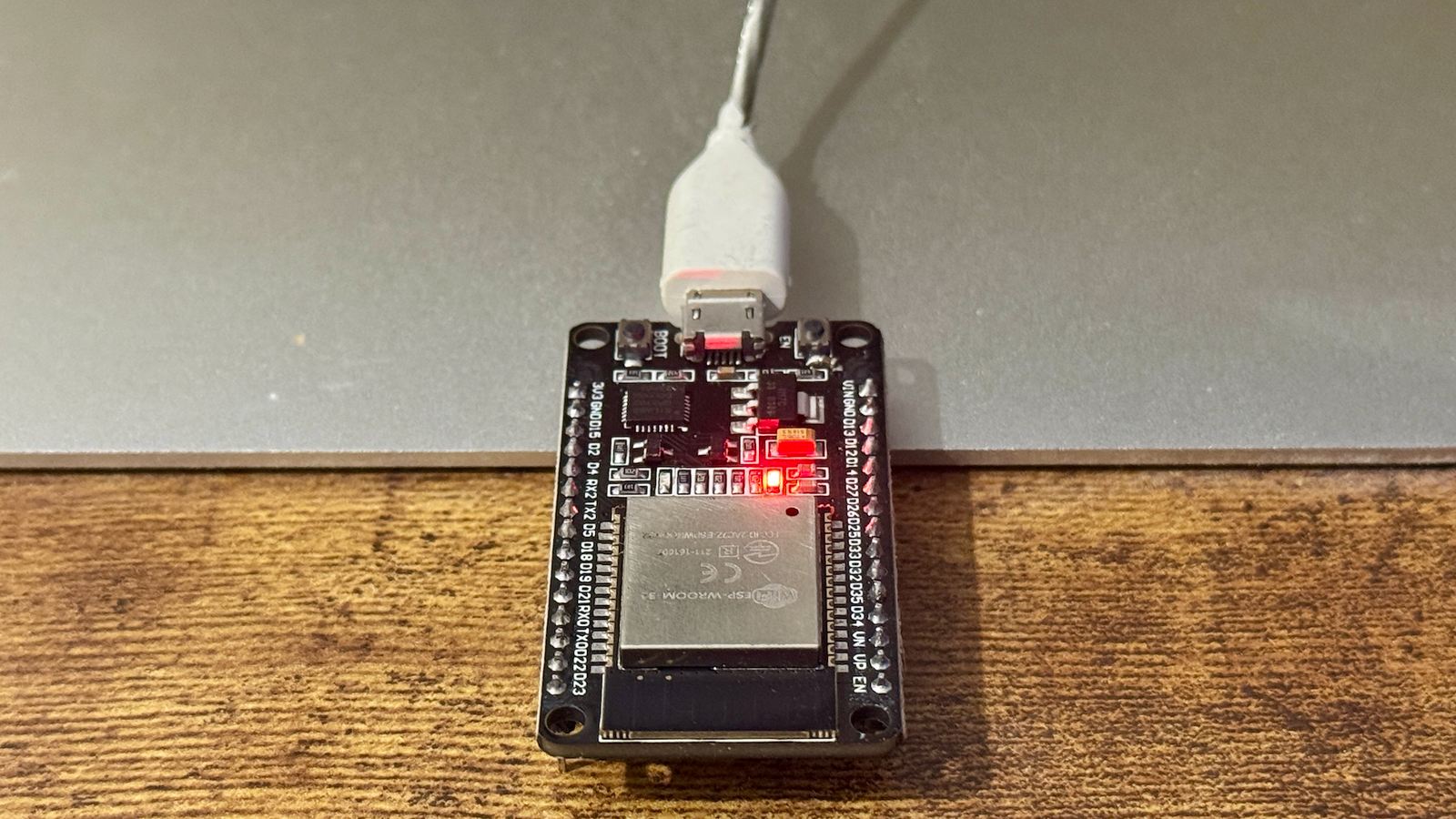
Published Jul 25, 2026, 1:00 PM EDT Adam has a degree in Engineering and has a life-long interest in technology. He has been writing for over a decade for various print and online publications, with a focus on consumer tech. He joined How-To Geek in 2024 while working at Pocket-lint. As well as being a long-term fan of Apple products, he also has a strong interest in smart home tech, running a Home Assistant server at home to automate all his smart home devices. He believes that the ideal smart home should work with minimal interaction from the user, with automations running as if by magic rather than requiring you to push buttons on a control panel. You can find more of his work on Muck Rack. The internet is a wonderful thing, but we don't always appreciate it. It's only when we lose access that we remember how amazing it really is to have access to pretty much all the information that exists. My internet went down recently, and it took me far too long to notice, so I built myself a tiny internet status light to keep track. My internet went down, and it took me a long time to notice My smart home and my phone kept on working Credit: Ismar Hrnjicevic / How-To Geek I recently got an upgrade deal from my ISP offering me a free Wi-Fi 7 router. I don't normally go for ISP routers, but for some bizarre reason, I was getting the router and faster speeds for less than I was currently paying. Of course, it didn't take long to regret my decision. An over-the-air update to my router completely killed it and cut off my internet access. It happened overnight, but it was a good hour or so after I woke up before I finally noticed. My smart home is set up using Home Assistant and aims to be as local as possible, so most of my automations were working as expected without any internet access. I didn't notice when I checked my phone because it had automatically switched to cellular data. When I did finally notice, it took me several hours to get it resolved, so I wish I'd noticed sooner. I decided that I would never be unaware of my internet going down again. Seeed Studio XIAO ESP32C3 The Seeed Studio XIAO ESP32-C3 is the perfect budget-friendly microcontroller for smart home projects. With Wi-Fi and Bluetooth built-in, it also features a super deep sleep mode for low power usage when it isn't doing anything. The compact size makes this ideal for building smart home projects, and ESPHome allows it to easily integrate into Home Assistant. I wanted a simple way to see when the internet or Wi-Fi was down Home Assistant notifications weren't ideal for this Credit: Lucas Gouveia/How-To Geek | Stokkete/Shutterstock My plan was to build something that could give me a visual indication of when the internet was up, and which could immediately make it obvious when the internet went down. I also wanted it to be able to alert me if the Wi-Fi dropped, too. I could have used Home Assistant to set something up. Even if the Wi-Fi went down, Home Assistant would still be able to control my Zigbee lights, so I could make an automation to flash them on and off if something was wrong. I really wanted something that was always-on, however, so that if I suspected the internet was down, I could check with a quick glance. Using a light bulb for this wasn't ideal. I decided to see if I could make a dedicated internet monitor instead. An ESP32 had everything I needed On-board Wi-Fi and an LED were all I required As is almost always the case, if you want to build something, an ESP32 will probably be able to help. A cheap ESP32 board has everything I'd need for an internet monitor. It has Wi-Fi to be able to check the connection, and an on-board LED that I can change to different states. Using ESPHome, I created a fairly simple YAML file to achieve what I wanted. Every 10 seconds, the ESP32 checks if it's connected to the router. If it can't connect, the LED on the ESP32 goes into a fast blink, indicating the Wi-Fi is down. If the ESP32 can connect to the router, it then sends a tiny HTTP request to a well-known, highly available internet address. If the first address fails, it tries a second address. If a reply comes back from either address, the ESP32 has internet access, and the light stays solid. If there's no response, the LED starts a slow blink, indicating that the Wi-Fi connection is working, but internet access is unavailable. My internet status light is simple but effective A flashing light is hard to ignore As is always the case, since setting up my internet monitor, my home network and internet access have remained rock solid, so the light has remained solid red. I did test it before I deployed it by turning off Wi-Fi temporarily, and using Pi-hole to block the domains that the ESP32 uses to check internet connectivity. The blinking is obvious enough that I'm not going to miss it. I have the ESP32 on my desk in my home office, which is where I spend the majority of my time at home. The real benefit is being able to instantly see if everything is fine with a glance. If I can't connect to Home Assistant, for example, I glance at the LED and confirm that it's solid, so I know immediately that there isn't a wider network or internet outage. It's honestly very satisfying to be able to rule out a potential problem almost instantly. An ESP32 can do a lot Even if you don't connect an ESP32 to any other hardware, it can still be a really useful device. I have several around my home running as Bluetooth proxies that I can use to track my location on a room-by-room basis. For my simple internet status light, it was the perfect tool, and I had it up and running in less than ten minutes.
My internet went down for hours before I noticed—so I built an internet status light with an ESP32
Full Article
Original Source
Read the full article at Howtogeek →KhanList aggregates and links to publicly available news content. We do not host full articles from third-party sources. Always verify important information with original sources.