
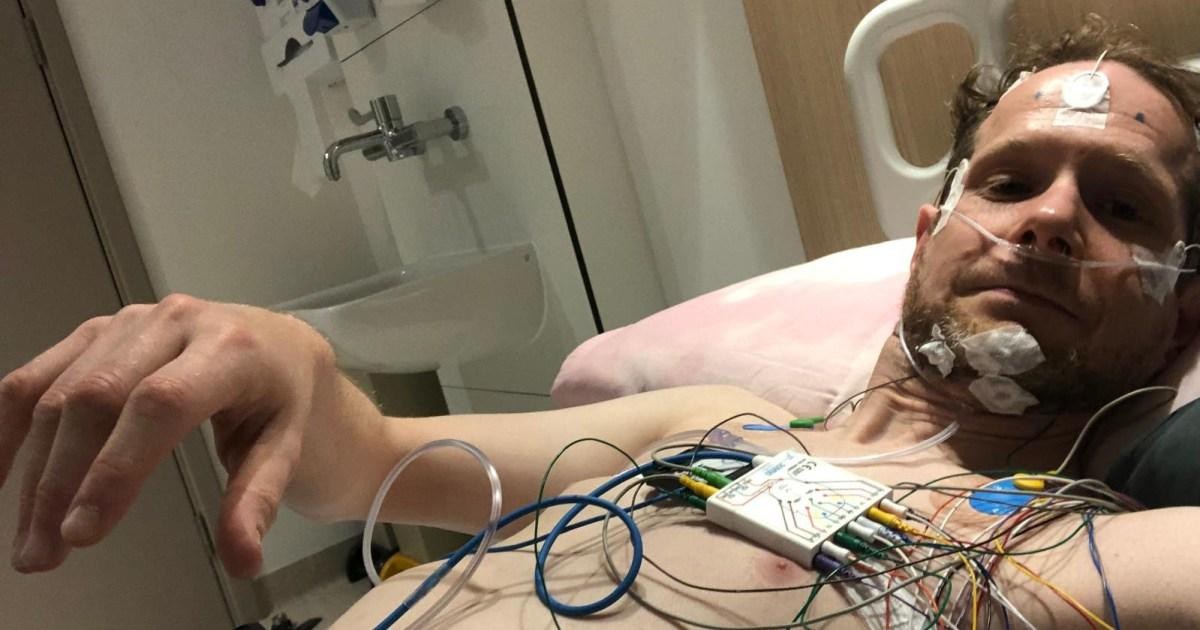
I was sent for a sleep study, which involved being attached to a plethora of cables and sleep sensors (Picture: Cieran Brown) It’s the middle of the night, or maybe morning – I’m not sure anymore. My new blackout blinds prevent me from seeing if the sun is up, and my silicone earplugs block any sounds. I roll on my side to see my phone on the bedside table. Shall I look at the time? I manage to resist, and roll to the other side. How long have I been tossing and turning, trying – and failing – to sleep? I do the mental arithmetic to work out how long I’ve got until my alarm goes off: three hours, I’d guess. The thought of another sleep-deprived day fills me with dread. I close my eyes in one last-ditch attempt to doze off. At least I can rest my body, I tell myself. Another 30 minutes pass before I admit defeat, dragging myself into the bathroom. I look at myself in the mirror, struggling to comprehend the grey, sunken-eyed person staring back at me. My insomnia journey started over a decade earlier, in 2015, when I was given Valium – a powerful medication that calms the nervous system – after the unexpected death of my mother. I had just turned 30 and the grief and stress of arranging her funeral led to poor sleep, so a well-meaning relative handed me a strip, saying it would give me the rest I needed. Before long, I found myself relying on Valium to sleep at all. Eight years later, well and truly addicted, I sought help and finally managed to quit. However, the side effects of stopping such a strong medication resulted in severe anxiety and night tremors and I became a chronic insomniac. No matter how hard I tried, sleep wouldn’t come, says Cieran (Picture: Cieran Brown) The cumulative effect of tiredness began to take its toll and I dreaded nighttime, knowing it would involve hours of rolling from one side to the other. No matter how hard I tried, sleep wouldn’t come. Most nights, I got two to three broken hours at best. Later in the day, I found myself seeking out naps until I realised they too were futile. The more I obsessed over sleep, the more it evaded me. Ask Metro Use AI to go deeper into the stories you care about – powered by Metro and trusted publications. My waking hours were spent walking around in a daydream, getting stuck in negative, repetitive thoughts and unable to follow conversations, absorb written information or follow the most basic of plots on TV. My body felt heavy and listless, like I was wading through glue. I began to cancel the occasional day of work when it got too much, with the list of excuses growing more elaborate, as well as social plans with friends and family. Eventually, after consulting my GP, I was referred to a free NHS insomnia clinic. At first I was sceptical – I had become jaded by this point at my prospects of improving. My body felt heavy and listless, like I was wading through glue (Picture: Cieran Brown) On arrival at the Royal London Hospital for Integrated Medicine, I found myself sitting in a room surrounded by similarly tired-looking patients. The five-week course was run by psychotherapist Catherine Ouriach and used a form of talking therapy called cognitive behavioural therapy, or CBT-i for short – the I stands for Insomnia. Catherine explained that, instead of trying to ‘fix’ sleep, we would use ‘evidence-based habits that strengthen the body’s natural drive for sleep and challenge unhelpful thoughts and beliefs.’ My inner cynic scoffed, but I quickly admonished myself for being closed-minded and resolved to give it a go. I was also given a personalised bedtime and ‘risetime’ that I had to stick to without fail – no weekend lie-ins allowed. This meant going to bed no later than 11pm and rising at 7.30am. We were encouraged to avoid napping during the day (Picture: Cieran Brown) We were told that things might get worse before they got better – but as I made my way home from the session, I vowed to give it a go. Over the next five weeks, I learned about healthy sleep routines, habits and hygiene – like how TV and phones are bad for our bodies’ circadian rhythms, and how substances like caffeine, nicotine, and alcohol can affect our rest. I was taught a relaxation technique called PMR (progressive muscle relaxation), using guided visualisation and reframing strategies – like separating thoughts from reality – to address negative associations with sleep. We were encouraged to avoid napping during the day and to limit the bedroom to sleeping only – no reading or other activities – for the remainder of the course. By the end of the course, I felt some of the changes starting to take effect (Picture: Cieran Brown) I tried my best to incorporate these techniques, but by week three I was struggling more than ever. In particular, I found the 15-minute rule – if I was still awake after 15 minutes of going to bed, I was to move to another room where I could do something non-stimulating like reading or listening to a podcast – the toughest, as it meant getting in and out of bed on repeat for a couple of hours. By the end of the course, though, I felt some of the changes starting to take effect. I found myself falling asleep easier, staying asleep for longer and feeling more energised during the day. In the final session, Catherine explained that sleep doesn’t respond well to pressure and used the analogy of holding a dove in an open hand. ‘The more you try to keep hold of it, the more likely it is to fly away.’ I slowly clawed my way out of being an insomniac and into someone who slept normally (Picture: Cieran Brown) My biggest takeaway was the discovery that, although my insomnia had been brought on by a physiological change (quitting medication), the underlying cause was my anxiety around not being able to cope if I didn’t sleep. Catherine taught us about constructive worry: I was allowed to worry as much as I wanted for 20-30 minutes prior to bedtime, but once in bed I was to draw a line and repeat ‘I’ve tried my best, now put it to bed.’ The ‘thought algorithm’ was another technique that breaks down whether a thought is useful – ie. can something be done about it now; and, if so, can it be done just as well the next day? If the answer is no, then we were to get out of bed to do it; otherwise, leave it till the next day. After the course finished, I was sent for a sleep study by my GP, which involved an overnight stay in a hospital room while attached to a plethora of cables and sleep sensors. They were looking for any abnormalities like snoring or sleep apnea, but the results proved something I had long suspected: there was nothing remarkable about my sleep. The study results proved there was nothing remarkable about my sleep (Picture: Cieran Brown) This reassured me more than anything. Back home, I continued the CBT-i techniques and gradually, with consistency, things began to improve. I slowly clawed my way out of being an insomniac and into someone who slept normally: getting between seven and nine hours a night, although still occasionally broken. Now, my energy levels have rebounded, my mood has stabilised, and the days of feeling like the walking dead are long gone. I have realised that I don’t operate well on little sleep, as my thinking becomes impaired – leading me down some dark paths in my head – so I now prioritise sleep above all else. Looking back, I’m glad I persevered with the techniques. Recently, I found my sleep suffering significantly while caring for my terminally ill father. If it wasn’t for the tools I had picked up during my time at the clinic, I would no doubt have slipped back into chronic insomnia. Deals of the Day The viral LED face mask with over 350 lights that's currently discounted by £100 A friend said I looked 'snatched' – I credit this new Charlotte Tilbury powder Shop MySweetSmile's biggest Bank Holiday offers before they end Back-to-school shopping just got a lot cheaper thanks to Primark The back-to-school essential parents forget every year – and it could cost them As it was, I managed to stay emotionally balanced during such a turbulent time and still get enough sleep to stay healthy in body and mind. Do you have a story you’d like to share? Get in touch by emailing izzie.price@metro.co.uk. Share your views in the comments below. Arrow MORE: The 7 health signs that prove you’re officially getting older Arrow MORE: My wife died five years after we married — I was just 25 when I became a widower Arrow MORE: The date was already a disaster – then he brought out the tomato The Slice Your free newsletter guide to the best London has on offer, from drinks deals to restaurant reviews.
My insomnia was debilitating – until a sleep clinic changed everything
Full Article
Original Source
Read the full article at Metro →KhanList aggregates and links to publicly available news content. We do not host full articles from third-party sources. Always verify important information with original sources.