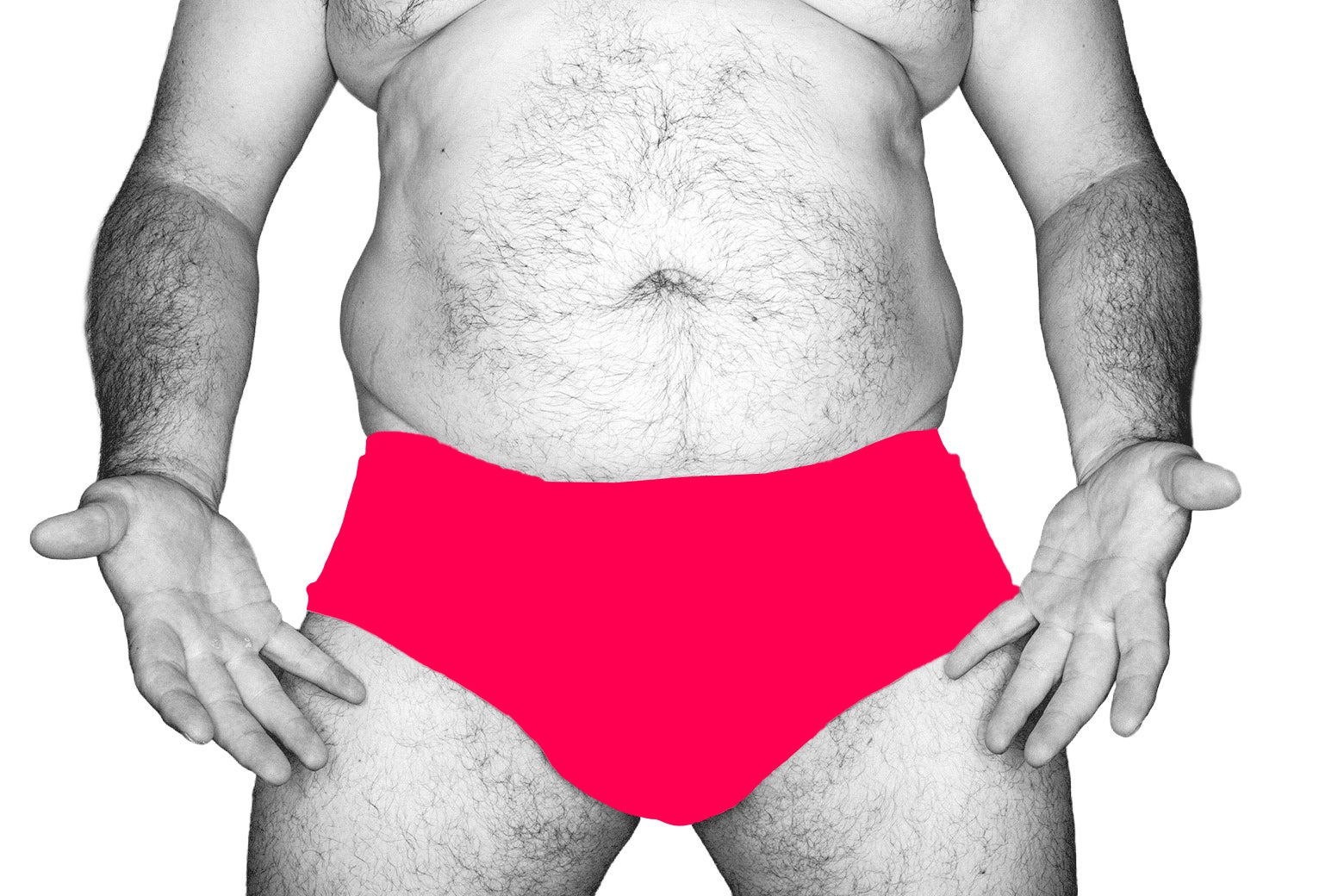
Dear Prudence Is he trying to cause a scene? Advice by Enter your email to receive alerts for this author. Sign in or create an account to better manage your email preferences. Unsubscribe from email alerts Are you sure you want to unsubscribe from email alerts for Jenée Desmond-Harris? July 23, 20266:00 AM Photo illustration by Slate. Photo by txking/Getty Images Plus. Sign up for the Slatest to get the most insightful analysis, criticism, and advice out there, delivered to your inbox daily. Dear Prudence, My family is planning a trip to the beach next month, and my husband wants to wear a speedo. If I’m being completely honest, he doesn’t have a body that’s viewer-friendly (he’s allergic to exercise). Can you give me a way to suggest to him that he should go with something less revealing? —Go Easy on the Eyes of Others Dear Go Easy, Please don’t ruin your vacation by unnecessarily body-shaming your husband. First of all, it’s just mean and it will create tension between the two of you. Second, he is going to look the way he looks whether he’s in a speedo with 90 percent of his naked body showing or in a different swimsuit with 75 percent exposed. And guess what? A lot of other people at the beach are going to look that way too! Let’s just say he somehow stands out as the person on the beach who is the most allergic to exercise? So what. If you can’t let go of being the body police and simply release this thinking, turn your attention to yourself. I’m sure there’s some way in which you would like it to look different before you put on a swimsuit next month. Focus on that, and decide you won’t think about your husband’s physique again until yours is absolutely perfect. The catch is, of course, that it never will be. Please keep questions short (<150 words), and don‘t submit the same question to multiple columns. We are unable to edit or remove questions after publication. Use pseudonyms to maintain anonymity. Your submission may be used in other Slate advice columns and may be edited for publication. Dear Prudence, I was raised in a very liberal home, both politically and socially, and I still consider myself very liberal. My pet peeve is gay married couples using the terms “wife” and “husband.” It seems to me that gays use the term more often than hetero couples do. “My wife this, my wife that.” I was raised that it was polite to use names, not pronouns. This is pretty much the same. I almost never say “my husband said.” I say, “Frank said.” But my real peeve is feeling something precious has been stolen from me. The term wife and husband had a specific meaning since the dawn of mankind. Now it has a more legal meaning. I wish society would create another word for the legal relationship of two same-sex people who love each other. Does this make me homophobic? —I’ll Respect Your Word If You Respect Mine Dear Respect Mine, Every time a letter starts with something along the lines of “I’m very liberal but …” I brace myself for what’s to come. Because it’s always something the letter writer knows damn well is a bigoted, ignorant, or just plain mean opinion. This was no exception. I don’t even know that homophobia is the biggest issue here, although it’s certainly present. You’re just being ridiculously petty and a diabolical hater. Let’s think through this together: Pretend you’re right (to be clear, you’re not) that gay couples use the terms husband and wife excessively. How have they stolen something from you when your upbringing (in which topics like mind your own business and live and let live evidently didn’t feature heavily) means you don’t even use these terms because you believe it’s better to use names? What exactly is happening in your life and in terms of your status in the world and your ability to find happiness as a result? And really, truly, who cares? Your stance is such a random waste of energy that I can’t help but want to dive deeper to investigate what might have made this feel important enough to write a letter to an advice column. And you should take this journey with me, because I’m sure you would rather not spend your emotional resources on tallying the words uttered by people who aren’t giving you a second thought and then stewing in resentment. Do you harbor some kind of unconscious belief that there’s only so much relationship happiness to go around and gay people are hoarding it? Does it bother you that they may now be relishing rights and legal status that same-sex couples didn’t always have? Do you worry that if they are enjoying this level of equality too much, something in the universe will be thrown off and you will have bad luck? Is your marriage so miserable that the only thing it has going for it is the titles for each spouse, and if too many people use these titles, their value is somehow watered down? Did a tree fall on your house in a recent storm, or are you in a fight with your best friend, or has your husband fallen in love with a chatbot, and are you protecting yourself from the stress of confronting the issue that’s facing you by manufacturing non-problems to complain about? Either way, you seem to feel that being homophobic is a bad thing. I appreciate that and I agree with you. So if you must have a stupid pet peeve, please create a different one that doesn’t turn you into someone you don’t want to be. Want more Prudie? Slate Plus members get an additional column each week. Sign up for Slate Plus now. Dear Prudence, I am an early-40s white woman in a very predominantly white European country. The other day, I had an Uber Black booked to take me home from lunch at a fancy hotel. The kind with, in this case, an older white man doorman. When I got into the car, my driver, a Black man, was a bit rattled and recounted to me how the doorman was incredibly rude to him while not letting him wait for me in the hotel drive. I agreed that it was super messed-up by the guy and to myself I suspected it was a racist microaggression. I honestly cannot remember, but I don’t think one car would have blocked the drive and even if so, the doorman could have nicely explained that rather than yelling something along the lines of “get out of here.” I know the phrase “White people don’t get to decide what’s racist” is in response to white people invalidating BIPOC people when they share their experiences of discrimination, but what about if I am the one to suggest that something could be racist? In the situation of this being a complete stranger I likely will never see again, I had no idea how he personally would feel. And more importantly, with him being my Uber driver, I did not want to put him in an unfair situation where he then had to worry about my reactions. Of course, if he would have named racism then I would have agreed, but I understand why he would not have even if he thought so. I thanked him for the ride (which I would have done anyway) and gave him five stars and extra tip. But I have been wondering if that was the kind of moment that I should have been the white person to name possible racism? —Call It by Its Name Dear Call It, I like the way you’re thinking about this! You’re pretty sure you know that racism was behind the way your driver was treated, and there’s a chance that hearing you identify that and express your disapproval would make him feel supported and less alone. But something made you hold back. Although you didn’t spell it out in your letter, I imagine it’s the idea that saying “Dude, what happened back there was really racist!” would introduce an upsetting thought that the driver hadn’t already had, make him uncomfortable, or just be a downer that he really wouldn’t be in any position to address. I agree with that. In a world where there’s so much debate about what’s racism and so much denial about how racism shapes our daily lives, it makes sense that you’d want to be on the right (and honest) side of things by calling it out where you see it. But this one-on-one, private interaction with a person who you believe is the victim of racism probably isn’t the most helpful place to do so. After all, as you two drove to your destination, what were you going to do about the situation after analyzing it? Not much. So you did the right thing by staying quiet. But don’t abandon your urge to speak up about injustice! A few options for addressing this directly, perhaps saving someone else from similar mistreatment, or simply using your voice to chip away at a culture that loves to ignore and deny racism would be: Going back to the hotel and speaking to the manager or the doorman himself to express your disapproval about what you believe happened. Reporting your experience in a hotel review. Or sharing the story with your community back home on social media. They key thing is that instead of asking yourself the inward-looking question, “What is the right action for me, a white person who wants to be on the right side of things, to take?,” you should focus on the effects by asking yourself “What could I do to make this doorman, this hotel, or the world overall a tiny bit better?” Classic Prudie I’m a 28-year-old woman who used to have a tight, supportive friend group, but I seem to have alienated them all since dating “Aaron.” I met Aaron in my hometown during a really bad time with my family (involving drug abuse and a young relative’s death). He was supportive and made me laugh when I really, really needed it, and the sex was incredible. Because of this, I overlooked A LOT of problems with him. Never miss new Slate Advice columns Get the latest from Prudie and our columnists in your inbox each weekday, plus special bonus letters on Saturdays. Advice Dear Prudence
My Husband Just Announced His Beachwear Plan for Our Vacation. God Save Us All.
Full Article
Original Source
Read the full article at Slate →KhanList aggregates and links to publicly available news content. We do not host full articles from third-party sources. Always verify important information with original sources.