
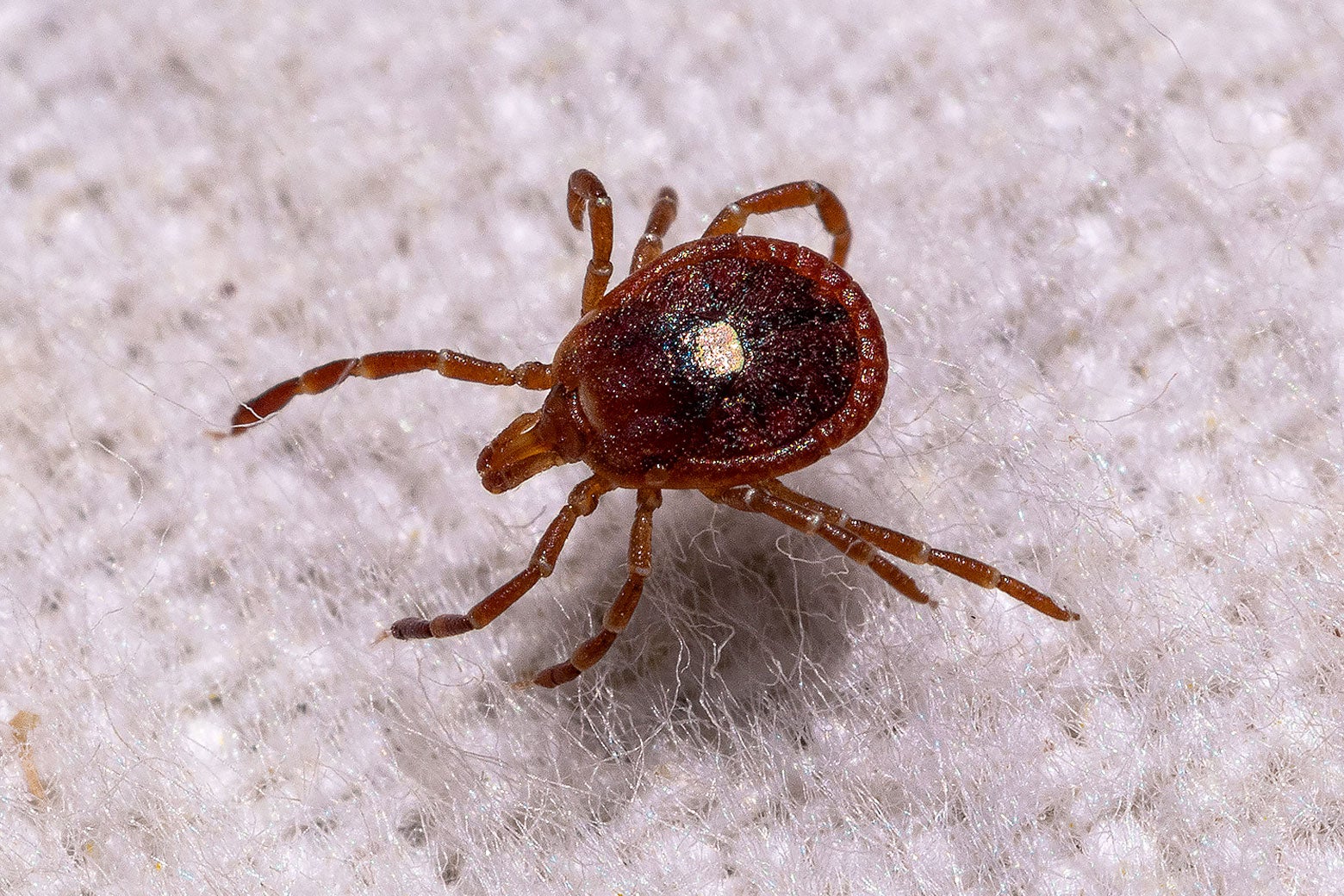
Medical Examiner The Ticks Are Coming A man on Long Island is the first person to be diagnosed with the tick-borne Bourbon disease in the New York area. The news hits close to home. Finn Gomez/The Boston Globe via Getty Images Sign up for the Slatest to get the most insightful analysis, criticism, and advice out there, delivered to your inbox daily. It was an unremarkable night after an unremarkable day in mid-July, and my husband and I were getting ready for bed in our Midtown Manhattan apartment when he let out a blood-curdling shriek. “What is that?” he said, holding a corner of the comforter aloft, staring intently at something located where he had been about to lie down. I may or may not have rolled my eyes, expecting to see a spider—something my North London upbringing taught me to care little about—when I froze. There, crawling on eight legs across the white sheets toward us, sporting a single dot on its back, was a deep-red, plump tick. Clearly, it had recently eaten. We were stunned. Neither of us had been anywhere as nature-adjacent as even Bryant Park all week. We live on the fourth floor of a walk-up that is typically devoid of insects. We do not have a dog. The previous time either of us had been face-to-face with a tick was years earlier, after a weekend in the wilds of Northern Michigan. Google and ChatGPT—and, later, a vet—identified it as a lone star tick. But what was it doing in New York City, far from the confines of the rural areas to which I had assumed it was limited? And perhaps more importantly, what was it doing in our bed?! Ticks aren’t completely new to town in New York City, I learned: They’ve shown up on surveys since at least the 1970s. But studies indicate they are on the rise even in the most urban of areas. Climate change and environmental disturbance have aided an increasing creep of the territories ticks inhabit—along with the viruses, bacteria, and pathogens they carry. Earlier this year, the Centers for Disease Control and Prevention released data tracking ER visits for tick bites, which are the highest on record in almost every U.S. region since 2017. Lyme disease, anaplasmosis, babesiosis, Rocky Mountain spotted fever, the substance alpha-gal (which causes the bizarre but potentially life-threatening onset of allergy to mammal products), and now the extremely rare Bourbon disease have all appeared in areas where they were never traditionally on residents’ radars. Long Islander Michael Larkin discovered this when he became the first person to be diagnosed with Bourbon disease in the New York area. His healthcare providers were stumped by his symptoms: a fever, rash, and intense headaches. He was initially tested for Lyme, and it wasn’t until a monthslong antibody study that the Bourbon virus—so far found in only a handful of cases nationwide—was finally pinpointed as the culprit. To date, Lyme disease is still by far the most commonly diagnosed, accounting for more than 80 percent of tick-related diseases, with 476,000 patients in the U.S. receiving treatment annually. But individual ticks are capable of carrying more than one disease simultaneously, and as their territories proliferate, healthcare professionals are warning Americans to pay attention to strange symptoms. “Ticks’ portfolio of diseases is quite diverse—if it was an investment strategy, it would be very successful,” says Michael Augenbraun, director of infectious diseases at SUNY Downstate Health Sciences University. But, joking aside, he emphasizes that some of these diseases can be very serious, causing encephalitis, neurological impairment, and death. Further, they can be hard for primary care doctors, who might not be familiar with every tick-borne affliction, to catch. Few vaccines are available to combat tick-related illnesses. After a complicated history, a Lyme vaccine is in the works, recently completing Phase 3 human trials. But currently, the only such vaccine is available to those traveling to certain parts of Europe or Asia where tick-borne encephalitis can be found. Until other kinds of vaccines are developed and disseminated, Augenbraun says, anyone in areas at high risk for ticks should consider keeping prophylactic doses of antibiotics in their medicine cabinet for the occasions they do find themselves bitten. But for now, the most viable method to avoid infection is to wear a long-sleeved shirt tucked into belted pants, and socks—even better if the clothing is permethrin-treated. Add to that your favorite bug repellent and early detection with full-body checks for ticks large and (sometimes very) small, with help from friends and family, along with a trusty pair of tick tweezers if you do find that a tick is living its best life at your expense. Augenbraun acknowledges that all this preparation can take away some of the pleasure of being outdoors and that, ultimately, awareness may simply be the best defense we have at our disposal. “People probably should be aware of the cardinal signs of some of the tick-borne illnesses, particularly Lyme, which oftentimes starts with a rash, and [affected] people should seek medical attention,” he says. That awareness should also extend to our pets. Tick populations rely on deer, dogs, mice, and even birds to survive, and pets are often on the front lines of tick infestations. Dogs, like humans, can experience the joint damage, kidney failure, heart issues, and neurological dysfunction associated with Lyme (there is a vaccine approved for dogs) and should be taken to a vet if exposed. And although cats are decently immune to the effects of Lyme, they can be affected by other tick-related diseases. I still have no idea how, exactly, that tick got into our bed. Maybe we brought it inside and it hitched a ride on one of our cats. Friends and experts alike all express surprise when I share the story of our unwelcome visitor. But our local vet noted that this wasn’t the first they’d heard of this kind of thing—and that we should monitor our cats for any irregular behaviors, such as hiding or lack of appetite. Several weeks later, everyone appears to be fine. But the whole experience has made me wary enough that now, whether I’ve trekked through nature or the concrete jungle, a quick tick check is a part of my nighttime routine. The ticks are here, and I’m taking them seriously. Get the best of news and politics Sign up for Slate's evening newsletter. Animals Cities Climate Change Environment Health Research CDC
My Husband Found an Unwelcome Visitor in Our Bed. It’s a Threat That’s Coming for All of Us.
Full Article
Original Source
Read the full article at Slate →KhanList aggregates and links to publicly available news content. We do not host full articles from third-party sources. Always verify important information with original sources.