
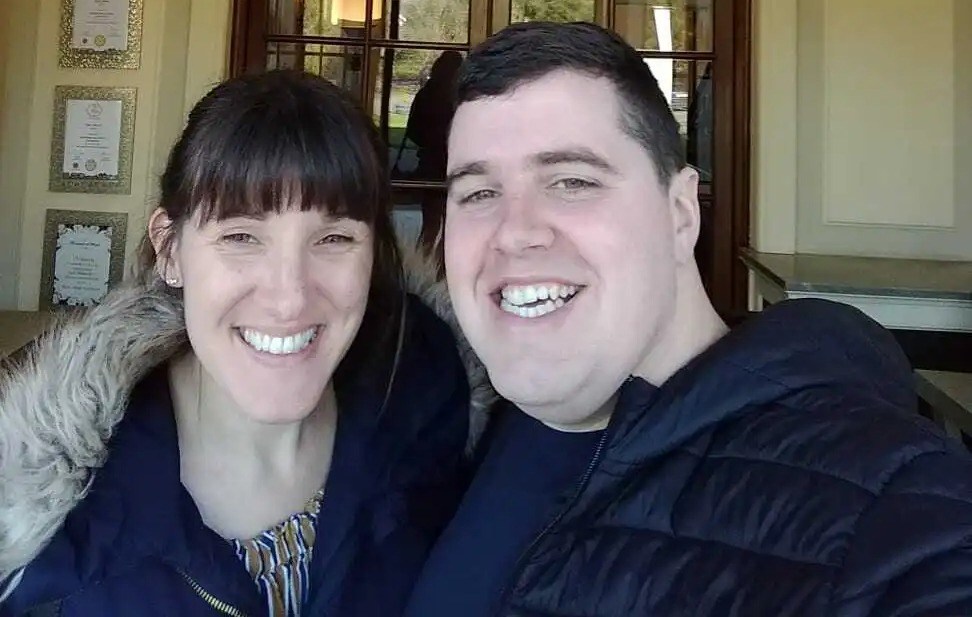
WHEN Jack Timmins came down with headaches and started suffering anxiety, he and his wife Rachael thought it was due to his stressful job working in NHS cancer care. The dad-of-two, in fact, only had a few years to live, something Rachael says they never believed would be the answer. When Jack Timmins started suffering from headaches and anxiety, his wife thought it was due to work stress Credit: Focus Features Rachael and Jack met in 2006 and bonded through their shared love for Newcastle United Credit: Focus Features Jack died on June 2, 2025, with his family around him, and Rachael holding his hand in hers. Three weeks before his death, he organised one last romantic date night with his wife, having showered her with flowers, gifts and surprise trips during their 20 years together. He asked hospice staff to help him organise the night with his wife, including a candle-lit meal, special playlist, and their favourite dishes. “To have one last romantic meal together was so special and it is a memory I treasure now that he is gone,” says Rachael. Rachael says Jack’s symptoms started in early 2019. “Jack started worrying about little things,” she recalls. “He’d avoid social situations and he got stressed very easily. “He couldn’t concentrate for too long on a film or a conversation. It wasn’t like him at all. “But we didn’t worry too much, and we certainly never thought it was serious.” He was also complaining of headaches, but Rachael said: “He had a stressful job, working on the hospital wards, and we put the headaches and anxiety down to that.” But one morning in September 2019, she woke to find him suffering a seizure beside her in bed. Rachael says: “The seizure came completely out of the blue. I woke up early to find Jack shaking next to me. “He was unresponsive and I called an ambulance straightaway. “It was early morning, usually at the time he’d be driving to work but for some reason, he had turned off his alarm. Three weeks before he died, Jack asked hospice staff to help him set up one last date night with Rachael Credit: Ashgate Hospice The dinner included a candle-lit meal, a special playlist and the couple’s favourite dishes Credit: Ashgate Hospice “We were so thankful that he didn’t have his seizure behind the wheel.” He was rushed to hospital but was sent home after checks. But Jack then began struggling with severe headaches and loss of balance. That October, he was referred for scans and diagnosed with a grade 2 astrocytoma brain tumour. Grade 2 astrocytoma occurs most often in adults between the ages of 20 and 45 and are more common in males. Jack had experienced typical brain tumour symptoms such as headaches, seizures and cognitive changes (difficulty concentrating). But it can be hard to spot signs of a brain tumour – which also include fatigue, nausea, problems with vision or memory and a loss of taste and smell. The average survival time after surgery is six to eight years, with 40 per cent of affected adults living more than 10 years. Though shocked at the diagnosis, the couple stayed positive. Rachael and Jack met in 2006 through family friends and bonded through their shared support for Newcastle United. She says: “Jack was really funny; he had a great sense of humour. He was very kind. “We began dating and he was a real old-fashioned romantic, he bought me presents and planned little surprises. I always felt loved. Jack was diagnosed with a grade 2 astrocytoma brain tumour in October 2019 Credit: Focus Features He had surgery after this to remove about 40% of the tumour, followed by chemotherapy and radiotherapy Credit: Focus Features “On our first date, he arrived with a bouquet of red roses, and he kept it going from there. “He bought me jewellery and flowers. He organised surprise city breaks. “Even after our children came along, we made time for date nights.” Jack proposed on Newcastle’s Millennium Bridge on Rachael’s 22nd birthday and they married the following year. The couple had a son in November 2010 followed by a daughter in July 2015. Rachael says: “Our lives revolved around the kids, we both worked in the NHS so we were busy, but we always made time for date nights.” After his diagnosis, Jack had surgery to try and remove his brain tumour. His type can be difficult to operate on because it is diffuse, which means it’s more spread. “They removed about 40 per cent of the tumour,” says Rachael. “He had chemotherapy and radiotherapy and coped really well with it. We had holidays in between his treatments.” Astrocytomas can grow back and at the end of 2020, Jack’s returned and he had a second surgery. Again, he recovered well. Rachael says: “Jack was amazing, really strong, he returned to work, as an oncology associate, because he wanted to help others with cancer, and everyone said he was brilliant at his job.” In July 2025, scans showed the tumour was growing with a second tumour on the other side of his brain. Rachael says: “It was a huge blow. But we lived in the moment, we went to Greece on holiday, we had time together.” Jack began another course of chemotherapy but suffered a stroke in February 2026. All treatment was stopped and he was admitted to Ashgate Hospice, Derbyshire. By May, he was bedbound. Rachael says: “The treatment had to stop because of the stroke and there was no other treatment. “We were told that Jack didn’t have long to live. It was heartbreaking.” Knowing he was dying, he began secretly planning one last date night with Rachael, on May 12. Jack passed away at 38 and asked Rachael to scatter his ashes in Cyprus, where they had their honeymoon Credit: Focus Features What is an astrocytoma brain tumour? Astrocytomas are a type of brain tumour that can develop in adults and children. Astrocytoma belongs to a group of tumours called gliomas. Astrocytomas are the most common type of glioma. The type of symptoms can depend on the size and position of the tumour. They also depend on how slowly or quickly it grows. Possible symptoms include: seizures (fits) headaches feeling or being sick difficulty speaking or understanding words memory problems being confused changes in mood and personality weakness in an arm or a leg, or the face problems with movement and balance problems with sight Source: Macmillan She says: “I had no idea. I turned up at the hospice for the evening and there was a candle lit dinner waiting. “We had prosecco, paella and steak, and a cheese board, all our favourites. They’d made a playlist of our favourite songs and Jack had got me a bouquet of flowers. “The hospice staff were amazing, they went to so much trouble for us both. “It was so romantic, I just burst into tears. We hadn’t had dinner together for so long and it was very special. “It was typical of Jack, so romantic and thoughtful, and he knew I’d hold onto the memory, long after he had gone.” Jack passed away at the age of 38. As he had requested, mourners wore Newcastle shirts in his honour at his funeral at Chesterfield crematorium. Rachael says: “He asked me to scatter his ashes in Cyprus, which is where we went on honeymoon. “I am hoping to do that later this year. I miss him so much, but I am so grateful for the love he brought into my life. “By speaking out, I am hoping to raise awareness of brain tumours, especially in young people. “Jack’s symptoms were not taken seriously at first; his headaches, anxiety, and seizure. “Early diagnosis might not have saved him, but they could help someone else. In his name, lives can be saved.”
My husband couldn’t focus on TV & worried about little things – we blamed work stress but it was sign he’d die at 38
Full Article
Original Source
Read the full article at Thesun →KhanList aggregates and links to publicly available news content. We do not host full articles from third-party sources. Always verify important information with original sources.