
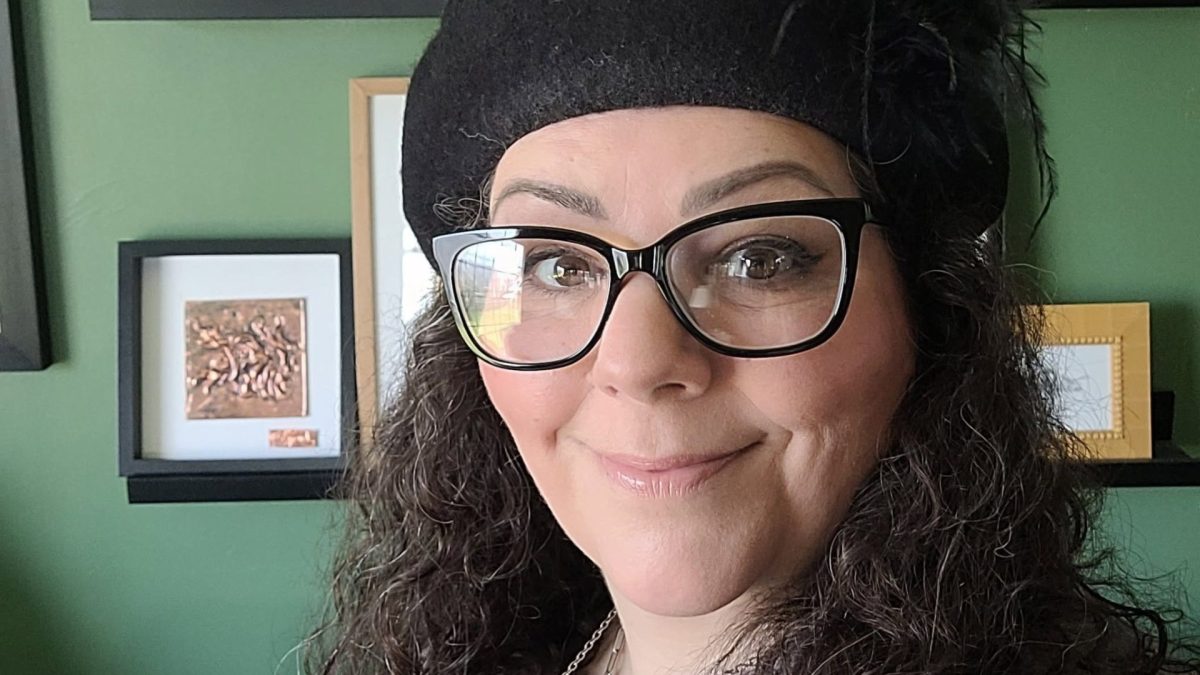
Kerry Freud is a 50-year-old milliner and heritage craft communicator based in Belfast. After a house move last year revealed how much stuff she and her husband owned, she decided that 2026 was going to be a year of no spending. This includes any non-essential items, as well as spending money on treats like coffees. As a result she has saved time, money, and completely changed her perspective on shopping. My husband and I moved at the end of last year from a four-bedroom house with a double garage to a three-bedroom bungalow with a single garage. Once we had taken everything out of the cupboards and drawers and put it into boxes, the amount of stuff that we’d accumulated in 12 years was obscene. Lots of people put their money into their children; it turns out, we spent ours on stuff. We are not hoarders by any means but I was finding stuff that I truly didn’t know I had, or two of the same item, and the number of clothes I owned! I thought it was grotesque honestly. Because of my background in materials and heritage craft, I knew how much wasn’t recyclable and would just end up in landfill. We tried to sell excess items – we didn’t have room in our new house for all the furniture – but it was hard to get anything sold. And there is the financial loss: if you buy something new for hundreds of pounds, you’re only selling it for £50 because nobody really wants it. Shorts The process forced us to really question everything we owned. What did we want to keep and why? And we realised we wanted to keep the things we were emotionally attached to (my husband’s mother’s dining table, for example) rather than the “best” one (the new, more stylish table we’d bought). By the time we moved into our new place in December, we knew that unlike with every other move, we weren’t going to renovate. We didn’t want to start pulling the kitchen out and putting a new £20,000 kitchen in for the sake of it. Instead, we bought paint to match the curtains and light fittings that were already there and that was it. I then made the resolution in January to buy nothing in 2026 beyond essentials: food, utilities and fuel for my car. I also allowed myself to buy books, but I limited that to only two a month, ones that I actually read. We were giving all this stuff away that we couldn’t sell – so why would we want to go and buy more that we’ll just have to give away in the future? At the beginning, it was hard because I was still in the habit of spending. I remember thinking to myself that I needed to get new curtains in: the ones in our new place didn’t quite go with the room. But then I stood back and asked myself why? I needed to paint the room anyway, so why not pick the colour of the room to go with the existing curtains? And leave it at that? The no spend year started to make me think about lots of small decisions: consciously thinking about what you’re doing and breaking that habit of assuming the first and best option is to buy something new. I’d find myself walking into a shop and thinking “ooh that’s lovely” before going over and looking at it more closely. I’d have to stop myself and ask: “Why do you want to buy that? Do you really need it? Do you have something else that does that job?” Every time I would already have something that fulfilled that role and I’d set it back down. Over time, this becomes second nature. I don’t even look in the shops now and I don’t miss it either. It’s made me very conscious of changing trends and how you actually fit in – I found my personal style is much clearer now because I’m wearing what I want to wear from what I have. The trends have nothing to do with it, I just wear what feels me. We’re all human beings and we like novelty so we chase it as a bit of a dopamine fix. But I now get a dopamine fix from walking past something and thinking “I’m not going to buy that”. I feel a bit smug about myself, like I beat the addiction. Not buying anything new has made me realise I actually have so many more clothes than I thought and none of them are wearing out. I’ve now been through all the seasons and there are quite a lot of clothes in my wardrobe that have not been on me this year, and shoes that are unworn. I’m now thinking about having a capsule wardrobe of items that you can wear all year round, but just layer up or down depending on the temperature. With that in mind, if I do notice something I need, I try and challenge myself to make it instead of buying it. I’m not a knitter but I knit a jumper this year because I wanted to be able to layer my linen clothes in winter. I spent about £60 on pure wool and knit something which would have cost me around £250 if I paid for someone else to make it. Yes, it still cost me some money for materials but I see that as a wise investment: it was slow fashion, something that’s going to be made and kept forever because I know the value in it. And this has made resisting online shopping easier too. You might be on social media and something will flash past that is interesting and I’ll go and have a look at it. But instead of wanting to buy it I’ll think I could probably make that myself. The no spend year also rippled out into socialising for me and my husband. We used to often go and spend £5 on a cup of coffee so that we could sit and stare at each other, listening to all the noise around us in a cafe. But, in January, we bought thermos cups and started making our own coffees at home, buying a packet of biscuits, and like two geriatrics we’d drive to the beach and sit there with our coffee and biscuits. We talk to each other, we drink our coffee and we save money. It’s now become this habit that my friends have all joined in with and really enjoy: we bring coffee with us and take turns bringing biscuits or buns from Lidl instead. It’s no different really, we’re just not paying somebody for the privilege of sitting in their premises. It’s particularly good for my friends with kids as they can let them tear about in the outside space while they sit there rather than trying to get them to sit still for half an hour in a cafe. It’s more pleasurable and less stressful for all of us. Everybody has embraced it when I suggest it to them. Not spending adds value to your life: you’re not thinking about buying things all the time and it frees up your brain for other stuff. We have just been conditioned that this is how we should live our lives. The result is that I really think about what role any one thing plays in my life: does it bring me true joy, or have an emotional attachment to it? Does it fulfil a specific role you don’t otherwise deal with? That is how I ended up with my first non-essential purchase of the year. After I finished my Masters degree, my friend bought me a leather-bound journal and so I decided to buy a Lamy refillable fountain pen. This is now something that I’m emotionally attached to because it’s from a memorable milestone moment in my life. I can just keep refilling the pen and if the nib bends or breaks I can buy replacement nib. Anything I buy now I want it to be something that could be mended or can age well. Kerry’s first purchase of the year – a refillable Lamy pen I feel lighter and less cluttered because of this experience, and it’s not that there’s anything less in the house – I just feel that I don’t own stuff for the sake of it. And we have absolutely saved thousands, especially with the house move. Normally we would have had the whole house decorated from top to bottom: new curtains, furniture, a new sofa. Instead we just spend £200-£300 on paint and a bit of wallpaper for the living room. Then there’s the clothes and shoes. Even if you spend £100 every month and bought a couple of items, that’s £1,200 a year. If you include what we didn’t spend on the house, all the clothes I didn’t buy, and coffees I didn’t drink in a cafe, I would say we’ve saved tens of thousands. We were more creative about things like the house rather than just throwing money at it. And the kitchen’s fine! It looked a bit dated because of the colour but once it was painted there was nothing wrong with it. I’m planning on doing this forever now, I think that it’s just in my psyche. With Christmas coming up, I think I’m going to try and make things as gifts for people. I like to bake so I will bake Christmas cakes and things like that. People tend to appreciate that, especially older relatives. People greatly appreciate being given something you’ve put effort into rather than another object they’ll never look at. With all the money we’ve saved we’re planning what we can do in the future. There are a few holidays we’re considering, or maybe buying a motorhome. That’s actually possible now and we can enjoy ourselves rather than working to pay for a kitchen. We’re putting our money into investing in time and joy and experiences and each other and our friends, instead of just buying stuff we don’t even need.
My house was horribly cluttered – so I had a no spend year and saved £10,000
Full Article
Original Source
Read the full article at Inews →KhanList aggregates and links to publicly available news content. We do not host full articles from third-party sources. Always verify important information with original sources.