
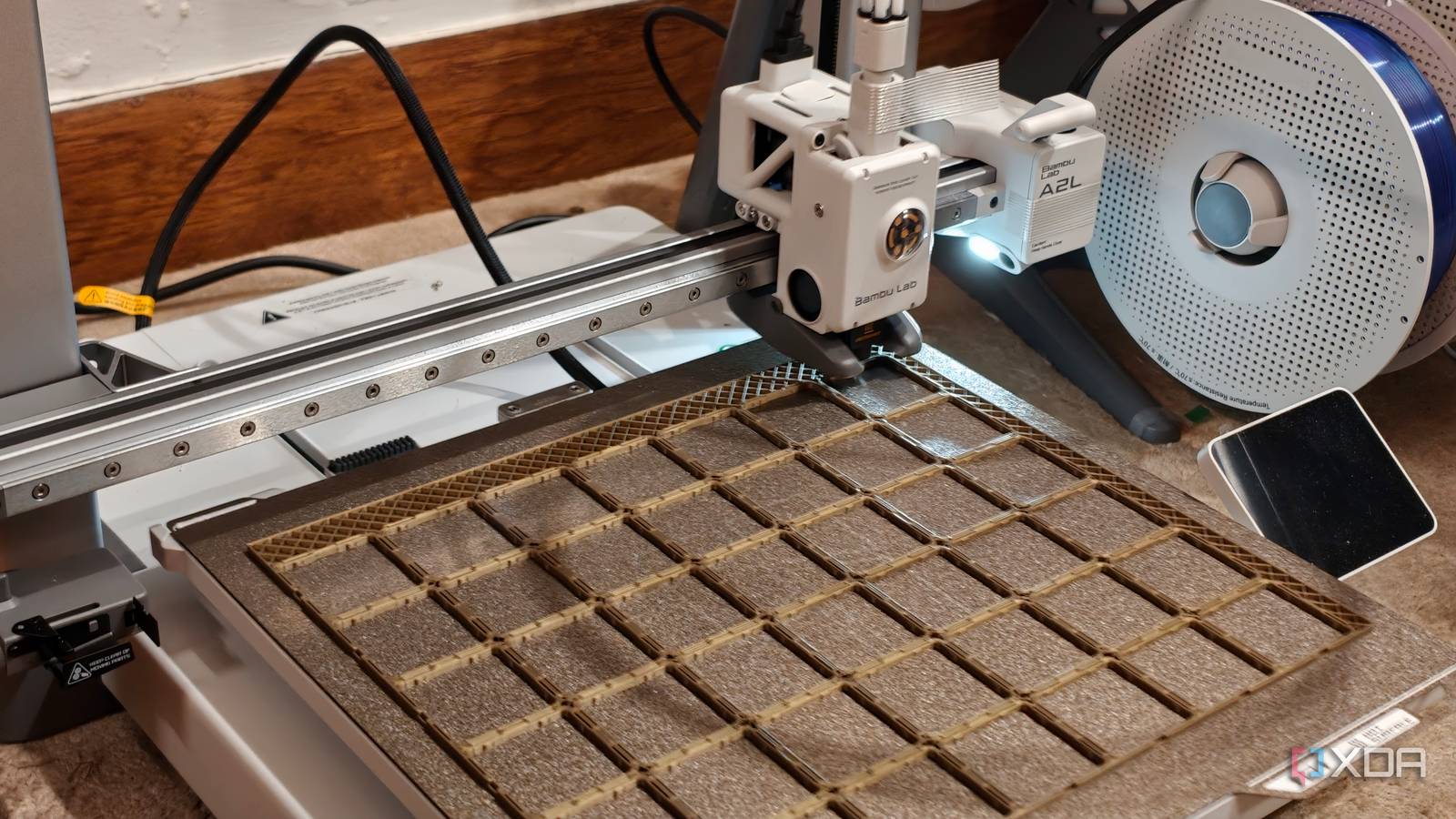
Published Nov 17, 2026, 3:30 PM EST Dhruv Bhutani has been writing about consumer technology since 2008, offering deep insights into the personal technology landscape through features and opinion pieces. He writes for XDA-Developers, where he focuses on topics like productivity, networking, self-hosting, and more. Over the years, his work has also appeared in leading publications such as Android Police, Android Authority, CNET, PCMag, and more. Outside of his professional work, Dhruv is an avid fan of horror media spanning films and literature, enjoys fitness activities, collects vinyl records, and plays the guitar. It's inevitable that any homelab desk will accumulate a lot of clutter. My desk is no exception. Whether it's USB adapters, more cables than I can count, headphones, or an assortment of accessories, keeping everything organized is a task I haven't been able to bring myself to do. Sure, I can just go ahead and buy ready-made accessories, but they rarely fit well on my custom oversized desk. And that's before we talk about the cost. But solving this problem isn't as hard as it sounds. In fact, my 3D printer is perfectly suited for it. Over the last few months of ownership, I've printed dozens of small accessories for my workspace, but these three are the ones that I've used the most. And the best part is that most of these additions cost less than a dollar in filament. Gridfinity Gridfinity gives my homelab accessories a place to live Any home lab aficionado will confirm that the difficulty with organizing a home lab rarely has anything to do with large equipment. My NAS, network switches, router, 3D printer, and other hardware all have designated spots and slots for them. The most painful and time-consuming ones are the small accessories. Be it USB dongles, SD cards, memory cards, or really any small item I don't need day to day but definitely need on hand for when I do. Leaving these items scattered around my desk isn't exactly practical, and putting everything into storage makes these items hard to find. My solution to the problem is pretty simple. Look, if you're into 3D printing as a hobby, you've probably heard of Gridfinity. Gridfinity is a modular storage system built around the concept of a standardized grid. You just print out a baseplate, and everything else snaps or clicks into it. The containers come in a range of shapes and sizes, but more importantly, you can design a bin specifically for the item you have in mind. In my case, I ended up printing single cable bins that perfectly accommodate rolled-up USB cables. Elsewhere, I've got a bin designed to keep flash drives. These small containers use very little filament, and you can easily print a few for under a dollar or so. Headphone holder and custom wrist-rest A $1 print solved a problem years of shopping couldn't Headphone holders come in many shapes and sizes, and yes, I'm aware that Amazon has plenty of options available. But I wanted one of a specific height and of a minimalist design. Why? I can count six headphones in my study at the moment, and a larger stand means wasting more shelf space. So, I turned to 3D printing my headphone mount. I went for a simple three-part design where each section slides into the other and locks in place with friction. This modular construction allowed me to print all six in one go. Moreover, I can easily disassemble it and put it in storage if I'm done using it. The headphone holder solves a problem that most of us face every day, but it lets me do that at a relative scale. My Bambu Lab A2L can print half a dozen or more of these in one batch, and when I need more, I can just batch another few. They've given my headphones a dedicated spot on the shelf and my desk, all while occupying limited shelf space. Not just that, it's way more affordable than buying off-the-shelf headphone holders. Win-win. Elsewhere, as someone who spends most of the day and sometimes even the night in front of a computer, carpal tunnel-related pains have been inevitable. I've dabbled in wrist rests before, but commercial options don't particularly suit my wrist. Some are too wide, while others don't have a shape that fits well under my wrist. Rather than continuing to look for something that might work, I ended up printing my own. I pulled up a model from MakerWorld and dropped it into a 3D modeling program to modify it to my needs. Specifically, I wanted to change the width of the wrist rest to better match my wrist profile. After half an hour on the printer, I finally had a wrist rest that was perfectly comfortable for me. Thirty minutes of printing and a dollar in filament achieved what years of searching couldn't. This is, unironically, one of my favorite applications of having a 3D printer. A wrist rest isn't a difficult accessory, but having one perfectly crafted to match your dimensions makes all the difference in its efficacy. A little filament goes a long way After printing plenty of large-scale models, I think my favorite use case for my 3D printer has been small quality-of-life accessories that I've printed not just for my desk, but for the plenty of use cases these accessories get around the house. Be it a container, a custom-sized tray, a headphone holder, or a custom-sized wrist rest. These might not seem like the most exciting use cases of a 3D printer, but they solve problems. Moreover, the economics help too. Small prints consume very little filament and are almost always way cheaper than buying the commercial version. These accessories cost me less than a dollar, but more than that, they give me the freedom to pick a design, modify it to my liking, and print as many as I need right from the comfort of my home. Bambu Lab A2L Build Volume 330mm x 320mm x 325mm Printing Speed 500mm/sec Materials Used PLA, PETG, and other non-engineering filaments Brand Bambu Lab Max Hot End Temp 300C Max Bed Temp 80C The Bambu Lab A2L is a large format bed-slinger 3D printer that can print large models with ease.
My homelab desk is held together by 3D prints that cost less than a dollar each
Full Article
Original Source
Read the full article at Xda-developers →KhanList aggregates and links to publicly available news content. We do not host full articles from third-party sources. Always verify important information with original sources.