
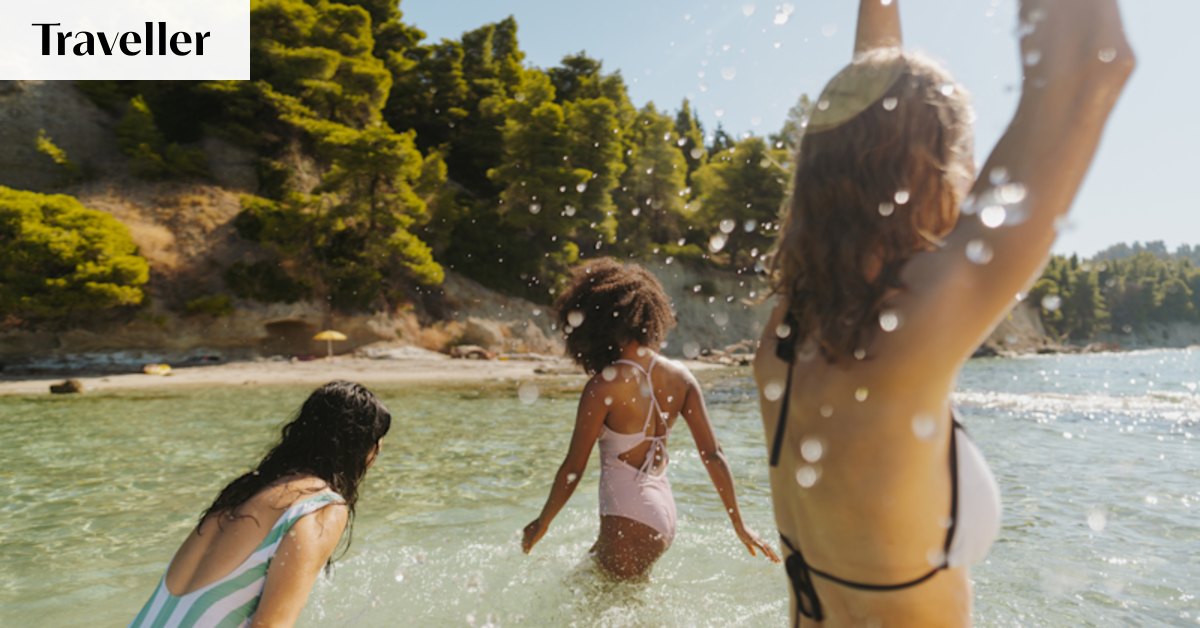
OpinionJournalistSeptember 18, 2026 — 5:00amSeptember 18, 2026 — 5:00amAccording to new research, 80 per cent of Australians get a mood boost simply from having a holiday to look forward to. Almost three-quarters say the anticipation helps them cope with the demands of everyday life.I wholeheartedly believe them.A group of girlfriends and I are going to Greece next August. At the time of writing, the trip is close to a year away. Nobody has packed a bag (truthfully, we haven’t even booked our flights). We are months from ordering our first suspiciously expensive waterside cocktail. And yet Greece has entered the group chat.Even a year out, Greece has entered the group chat.iStockThere are memes. Restaurants. Hotels. Photos sent without comment that everybody understands immediately. Entire imaginary days have been lived before any of us has boarded a plane. And while there’s joy in every shared piece of information, it does raise the question: how much of the pleasure of a holiday happens before the holiday itself?Quite a lot, as it turns out.Sign up for the Traveller newsletterThe latest travel news, tips and inspiration delivered to your inbox. Sign up now.Behavioural and habit expert Dr Gina Cleo says dopamine, the neurotransmitter closely associated with our brain’s reward system, doesn’t come into play only when we get what we want. The anticipation of something good can be powerful, too.“It’s that anticipatory reward and the brain’s response to the expectation that something good is coming,” she says. “It can almost be as much as getting the reward itself sometimes.”Cleo says two to three months before departure tends to be a sweet spot: close enough for a trip to feel real, and yet far enough away to enjoy weeks of anticipation. Keen planners (as I’m beginning to realise I fall into the category of) can stretch the effect much further, with Booking.com’s Travel Happiness Index reporting that 58 per cent of Australians enjoy the planning itself.My friends and I appear to be testing the outer limits of this theory.Pouring over a travel brochure in anticipation of a holiday can deliver a dose of dopamine.iStockIs there something particularly potent about travel? Or could we achieve much the same thing by booking dinner next Saturday or filling a Net-a-Porter cart?While the basic psychological mechanism is similar, what makes travel different, according to Cleo, is the number of pleasurable stages it bundles together: anticipation before we leave, novelty while we’re there and memories afterwards.A dinner or online shopping stint can give us something to look forward to. A holiday can occupy our imagination for months. And imagination has one considerable advantage over reality: nothing has gone wrong yet.“Anticipation isn’t bound by reality,” says Cleo. “You get to imagine the perfect version of the trip in your head.”It’s excellent news for my rose-coloured-glasses personality. In imaginary Greece, the sun shines incessantly, except on that one morning when cloud cover cradles us all through the aftermath of the night before. The hotels surpass anything we’ve seen on social media, and while no one misses a ferry, in my mind, at least, we’re island-hopping aboard a classic Riva motorboat (one can dream, right?).Of course, there is a downside to spending months mentally storyboarding the perfect holiday – eventually reality needs to live up to it. Perhaps this is where anticipation can be our undoing.The Travel Happiness Index found that while travel is overwhelmingly associated with positive emotions, 19 per cent of Australians also report feeling anxious about it and 17 per cent feel pressure to make the most out of their time away.Cleo says that the trouble starts when a holiday becomes something to optimise rather than experience.“The tipping point is usually when there’s zero slack in the itinerary,” she says,” so there’s not much free time or no room for something like a slow morning or a wrong turn.” Cue nostalgia for the dog-eared Lonely Planet and not knowing exactly what lunch is going to look like.The trouble starts when a holiday becomes something to optimise rather than experience.iStockSocial media hasn’t exactly helped. The most photogenic restaurant, beach club or spectacular hotel pool tends to command our attention during the planning stage, even though the same research found it was the far simpler pleasures – beautiful scenery, time with the people we love, good food and drink – that contributed to most people’s satisfaction.Cleo calls it visibility bias. We devote disproportionate planning energy to the things other people will see.There’s also the small matter of switching off once we arrive.Cleo suggests many of us need two or three days before the work brain properly downshifts, which may explain why a weekend away can sometimes seem to finish just as we have finally relaxed.She recommends starting the holiday before departure in a less glamorous way: clear the inbox, tell people you’re unavailable and close as many mental loops as possible before leaving. Don’t return at 10pm on Sunday night with a suitcase of washing and a 9am meeting on Monday.“Add a soft landing,” she says. “Not scheduling anything demanding for the first day or two back is something almost everybody gets wrong.”Perhaps the larger lesson isn’t that we should all spend more money on travel or maintain a permanently revolving collection of airline bookings. It’s that having something genuinely pleasurable on the horizon matters.A holiday just happens to be particularly good at it. It gives us permission to imagine ourselves temporarily outside of the machinery of ordinary life. Somewhere warmer (or colder if that’s your jam), slower, faster, newer or simply different. And for a while, we get to visit that place in our heads before we visit it at all.For now, Greece remains perfect.It exists in photographs and messages and increasingly ambitious plans, somewhere out there on the edge of the Mediterranean in my mind. And while we haven’t yet taken the holiday, perhaps in one small psychological sense, it has already begun.Felicity Bonello is a Sydney-based journalist and producer with a weakness for beautiful hotels, long lunches and the dangerous optimism of an upcoming holiday. Follow her on instagram.com/felicitybonelloConnect via email.From our partners
My holiday is still a year away. It’s already boosting my mental health
Full Article
Original Source
Read the full article at Smh →KhanList aggregates and links to publicly available news content. We do not host full articles from third-party sources. Always verify important information with original sources.