
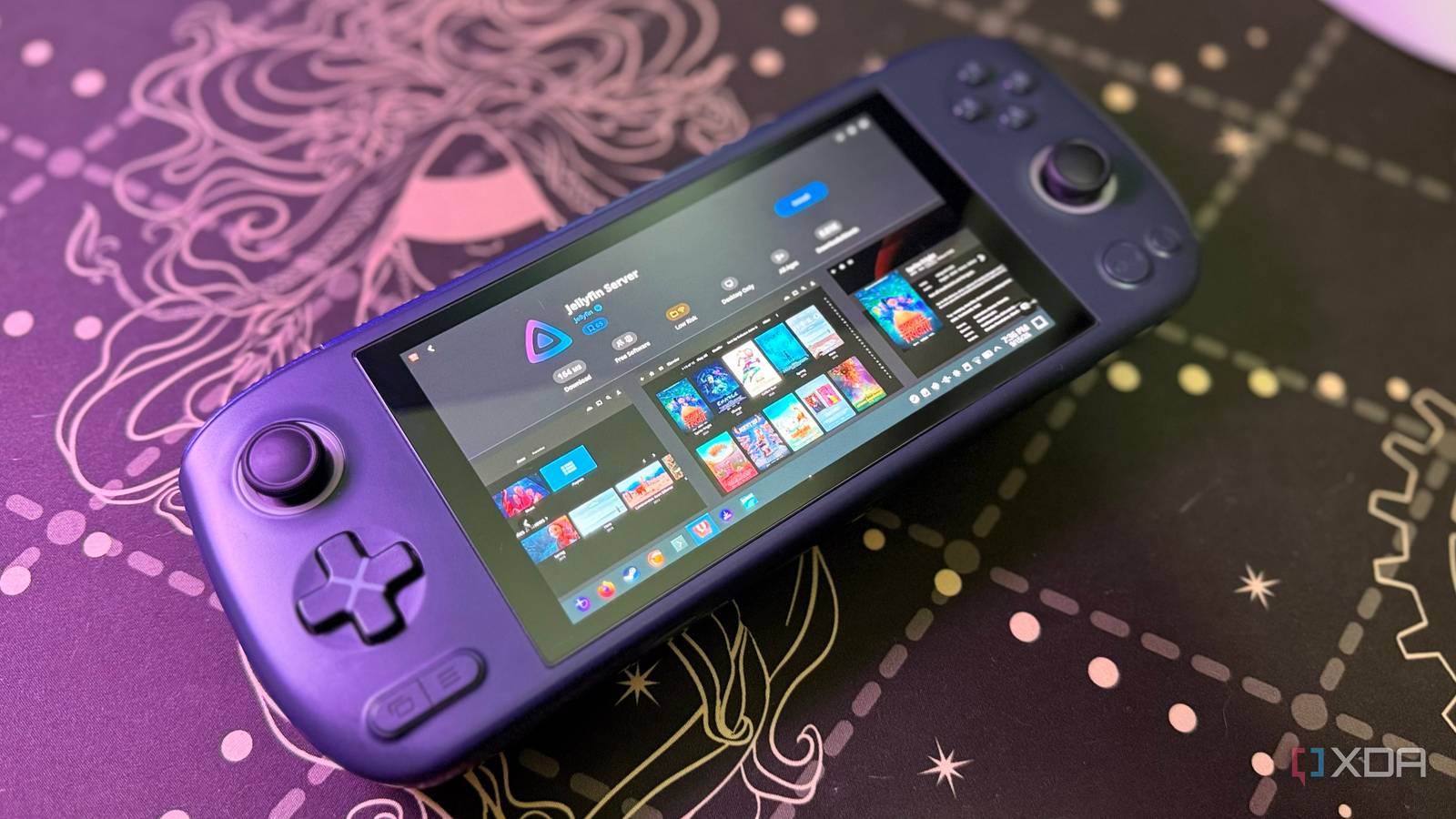
Published Sep 20, 2026, 9:00 AM EDT Abid covers consumer hardware, gaming, and platform updates with an emphasis on accuracy, clarity, and reader-first context. He holds a BSc in Computer Science and Engineering, and his work can be found in multiple publications, including Notebookcheck. Outside of work, he enjoys exploring new gaming hardware, testing system performance, and keeping up with developments across the broader tech landscape. While it may not seem like it, most gaming handhelds pack more power than an average laptop. Of course, they are designed for playing games, but the hardware that they bring can do more than that. For instance, I put the extra capability to use by turning my handheld into a home server when not gaming. It quietly serves media, and nobody could tell that it wasn't being served by a NAS. Most handhelds have more powerful processors than the average NAS A gaming handheld can definitely seem like an unusual choice for a home server, but the hardware is more than capable of handling the basics. Specifically, I am using the Ayaneo Air 1S with the AMD Ryzen 7 8840U, and even the Steam Deck with a relatively less powerful APU would be sufficient for serving media. As for the software, since my gaming handheld runs Bazzite, I already have a Linux-based desktop environment. Popular options like Plex and Jellyfin are compatible, so there's no need to worry about the media-serving platforms either. Speaking of which, between Jellyfin and Plex, I have had good experiences with both in my gaming handheld setup. Both were able to organize, retrieve metadata, and serve movies and shows on the handheld without any major hiccups. However, if an open-source solution is a priority, the former is a better option, while Plex would be a good choice for those who might want a polished interface. The storage can be a big limitation My handheld's internal storage is already busy with games While the hardware made my handheld capable of running a home server, the storage quickly became a point of concern. I have a 512GB internal SSD, and there's a 128GB memory card in the microSD card slot. These two are mostly occupied with games, and given how storage-heavy modern titles are, there's not much room left to work with. For some, an easy solution for this might be an external drive, and with a proper handheld dock stationed somewhere convenient, storage might not seem like a big issue. However, such a setup can make the media server aspect of the gaming handheld less portable, and not to mention, it adds another device to the equation. A larger microSD card can also be the solution, and it would likely be cheaper than upgrading the internal SSD. However, memory cards come with their own compromises, and it's not just the transfer speeds that matter. As a matter of fact, the read speeds should be sufficient for serving movies and TV shows, especially when the files don't need demanding transcoding. The real concerns are reliability and endurance. A high-quality microSD card should be capable of handling a read-heavy media library well, but it's still a storage solution with no built-in redundancy. Adding new files occasionally should not cause it to wear out quickly, either, but card failure or corruption can put the entire library at risk. Keeping the handheld running is another challenge A gaming handheld isn't designed to stay running all the time like a NAS The biggest practical difference between a gaming handheld and a dedicated NAS is how the devices are expected to operate. Handhelds are meant to be picked up, unplugged, put to sleep, and taken somewhere. A NAS, on the other hand, is meant to stay powered on and available when another device needs access to the storage. For a gaming handheld, in comparison, when it enters sleep mode or is disconnected, it stops being a media server. Power management is another aspect, as leaving the handheld connected to a charger for long periods can be an issue, especially if there's no bypass charging feature. It's not a NAS replacement, but it doesn't need to be Turning my gaming handheld into a home server has made me realize how versatile these devices are. With a suitable operating system and the right software, handhelds can serve movies and TV shows around the home without anybody noticing where it's coming from. There are clear constraints, but if the storage limitation can be addressed, handhelds, especially those with capable hardware, can serve as proper media servers when not used for gaming. However, for reliable 24/7 access, larger storage capacity, and backups, a dedicated NAS will remain the better choice.
My gaming handheld runs my home media server, and it costs nothing to keep running
Full Article
Original Source
Read the full article at Xda-developers →KhanList aggregates and links to publicly available news content. We do not host full articles from third-party sources. Always verify important information with original sources.