
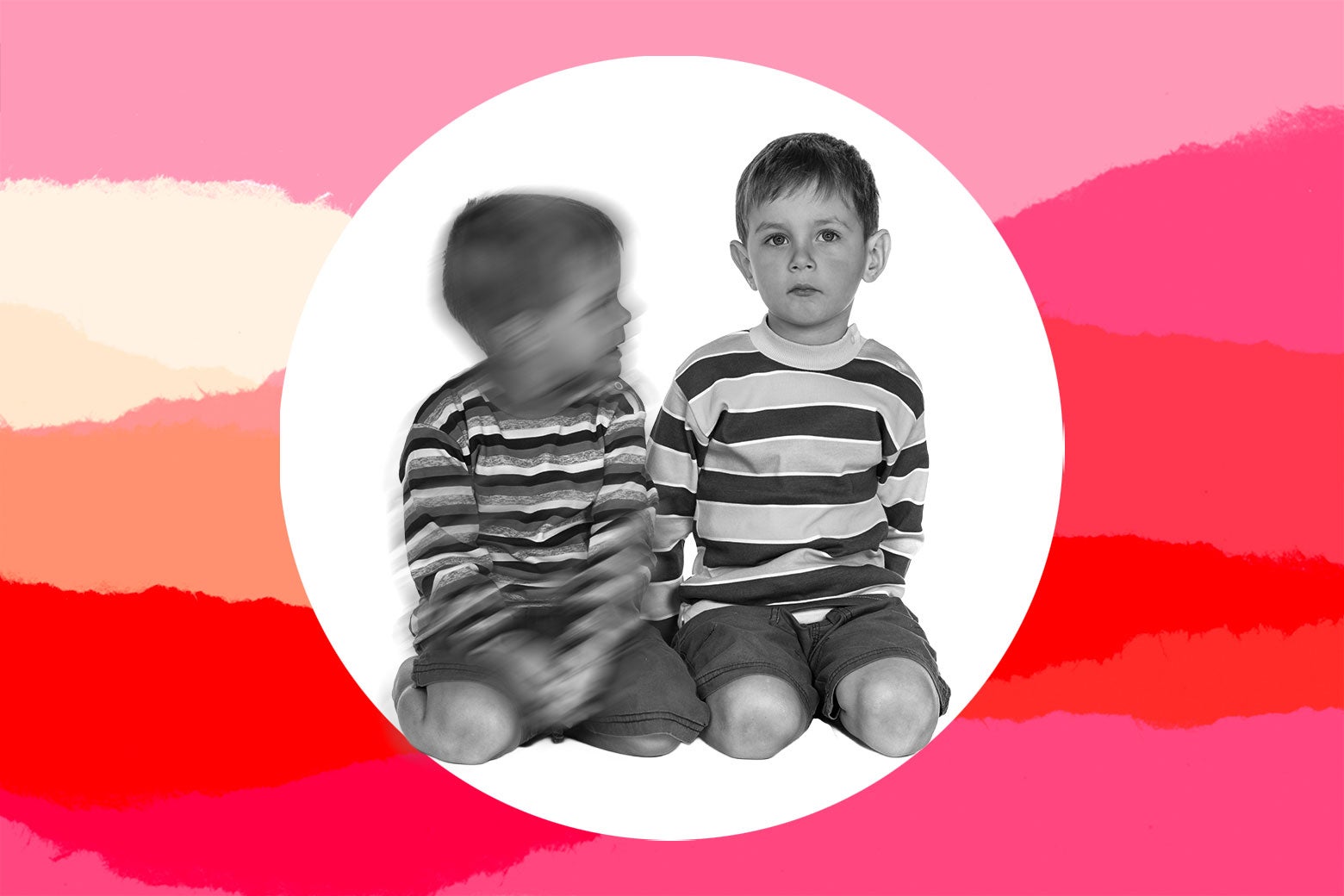
Care and Feeding Photo illustration by Slate. Photo by Getty Images Plus. Care and Feeding is Slate’s parenting advice column. Have a question for Care and Feeding? Submit it here. Dear Care and Feeding, My friend “Beth” and I both had babies at the same time—not planned, of course, just a happy coincidence. We live in the same neighborhood, so we see a lot of each other. But Beth does something that really annoys me. She likes to talk about how our boys, who are now 3, will be best friends forever, and how happy she is that they’ll have each other in school in the future. I get that this is just daydreaming, but it also really annoys me. Especially because it’s clear to me that our kids are completely different! My son is quiet and thoughtful and prefers to play alone. Her sone, meanwhile, is the archetype of a wild child and loves to run and climb and get dirty. He is always kind of bothering my son, and I have to intervene a lot just to physically create some space between them. He will take my son’s toys repeatedly, and I’ll take them back and then kind of block him from taking them again. Then Beth will be like, “Their dynamic is so cute! I hope they play like this forever.” Beth and I have known each other since high school, and it’s really nice to have someone to go to the park with. But I’m so annoyed by her cluelessness about her kid. I can’t decide if I should back away from her, or try to convince her that our kids are different and don’t have to be friends, and that in fact, it might be better if they stayed apart at the playground. —They Aren’t BFFs Dear They Aren’t BFFs, I’m curious: What does your son seem to want? What does he say to you during or after the playdates with Beth’s son? When he’s bothered, he must be showing that to you somehow—no toddler I’ve ever met was lacking in preferences or opinions, just the ability to communicate at length about them. Is he annoyed or upset throughout the playdates, or is it a more temporary irritation that is quickly resolved, and pretty typical for a 3-year-old who might not be getting exactly what he wants every moment? I’m sure you’re already helping your son learn to communicate what he’s thinking or feeling. Even if he isn’t talking a ton yet, he’s probably able to answer yes or no or indicate some sort of preference if you ask, “Do you want to go play with [Beth’s son] today?” During playdates, he might also be able to tell you whether he is having fun or not; whether he wants to go home or not, etc. If you ever discover—or already know!—that he truly doesn’t want to hang out with Beth’s son, I think your choice should be very clear. You should also consider what you really want. From your letter, it sounds like you might prefer fewer playdates, but you still want to be friends with Beth. If that’s true, what else can you do to maintain that relationship, independent of the kids? Would it work to suggest more child-free hangouts that would allow you and Beth to focus on your friendship without always requiring your sons to play together? I like the idea of gently but clearly introducing Beth to the idea that the two of you don’t need to project a particular kind of friendship—or a longstanding one like your own—onto your kids. If she’s going on about how close they will be when they start school, you can say how it’ll be exciting for them to meet and get to know lots of new kids. If she’s talking about how they will be friends forever, it’s fine to say something like, “Maybe, we’ll see—they’re not us, they’re their own people.” Of course you may be right that the kids have very little in common, that it will always be that way, and that your son won’t ever really want to be friends with Beth’s son. But it’s also possible for children who are very different to enjoy hanging out together sometimes, even if there’s occasional friction. Keep paying attention and trying to set whatever boundaries you think your son wants or needs—he’ll soon be able to decide on his own who he wants to be friends with, and clearly communicate that to you. In the meantime, it doesn’t have to be all or nothing—it’s OK to decrease the amount of time you all spend hanging out, or just take it day by day. I think it’s also worth acknowledging when your son is genuinely upset by something her son has done, not to try to make the latter out to be a terrible kid, but just to recognize your child’s actual feelings in the moment. It is not disciplining or parenting another person’s child to calmly say to yours, “I know that upset you,” or to help him find an acceptable way to express what he’s feeling or what he wants. Kids can learn a lot about self-expression, conflict and resolution during playdates with peers. Please keep questions short (<150 words), and don‘t submit the same question to multiple columns. We are unable to edit or remove questions after publication. Use pseudonyms to maintain anonymity. Your submission may be used in other Slate advice columns and may be edited for publication. Dear Care and Feeding, I have a 6-year-old son, “Max.” We’ve made good friends at the playground with a mom called “Kate” and her son, “Shep.” Kate is a single mom by choice, and she’s very cool. She lets Shep call her “Kitty.” I think it is kind of weird, but also whatever—her family, her rules. But now Max has started calling me Kitty, too. I’ve told him I prefer to be called “Mom,” but he says he likes calling me Kitty. I don’t know what to do here. It seems silly to force him to call me Mom, and I don’t even know how I’d do that. But also I really do not want my son to call me Kitty. What can I do? —Not Kitty Dear Not Kitty, Tell him that you love being his mom, and that that’s what he needs to call you. Don’t say it’s your preference; don’t leave it up to him. Make it non-negotiable. You shouldn’t get visibly upset or punish him if he tests you with “Kitty,” but don’t respond to it, either. Remind him that you only answer to “Mom.” This is just a phase, and will likely end soon—sooner, even, if he knows he won’t get attention or a big reaction out of you. —Nicole More Parenting Advice From Slate When I was pregnant with our first child, I cried my eyes out constantly when my husband and I found out we were having a girl. I confessed to my husband that I was worried she would hate me like I hate my mother. Never miss new Slate Advice columns Get the latest from Prudie and our columnists in your inbox each weekday, plus special bonus letters on Saturdays. Advice Family Kids
My Friend Has Big Plans for Our Toddlers. Uh, This Isn’t Happening.
Full Article
Original Source
Read the full article at Slate →KhanList aggregates and links to publicly available news content. We do not host full articles from third-party sources. Always verify important information with original sources.