
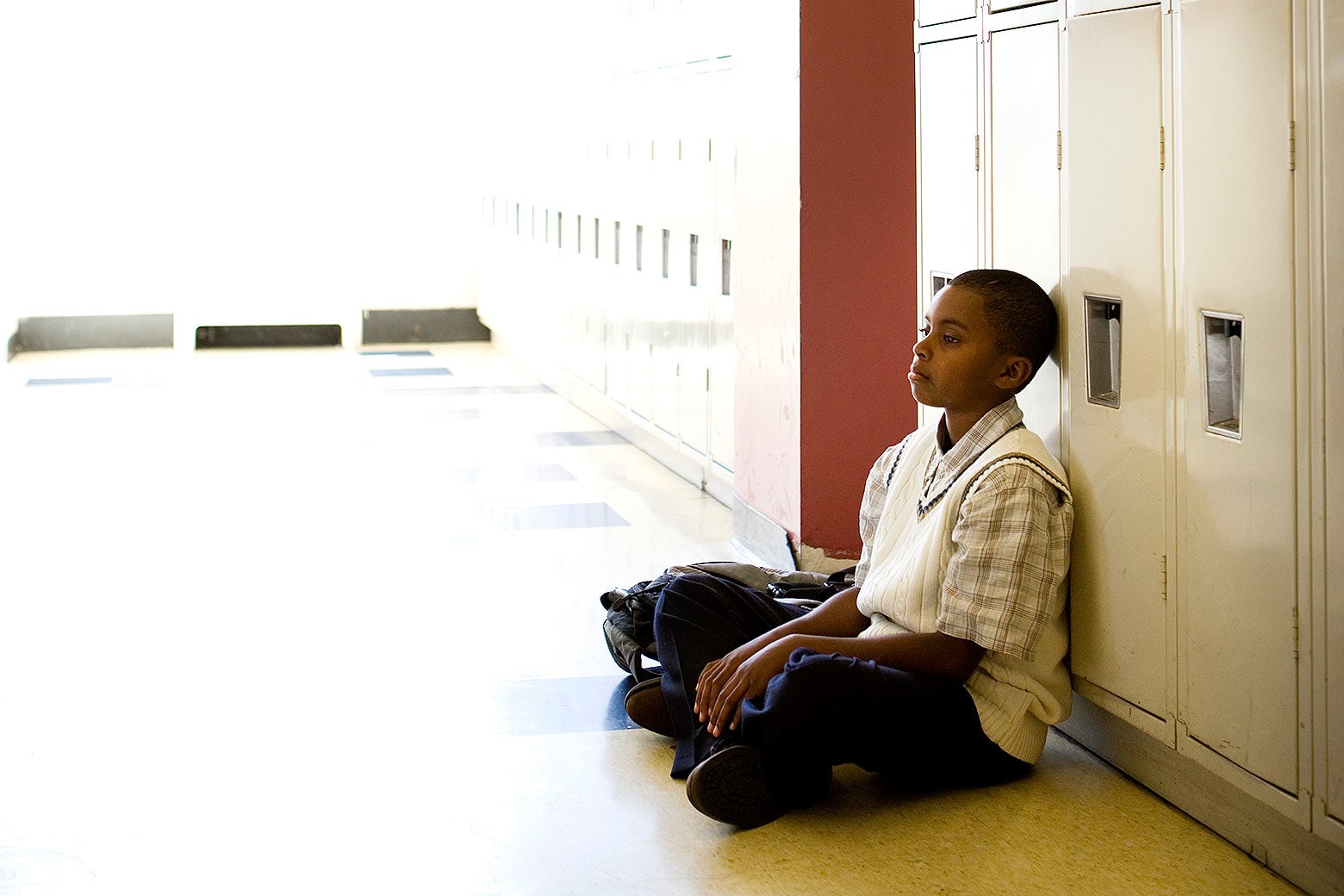
School How to Destroy a School We know exactly what happens when voucher programs come to school districts. Thirty-one states have decided to take that risk—and 15 more are still on the fence. John M. Lund Photography Inc./DigitalVision Sign up for the Slatest to get the most insightful analysis, criticism, and advice out there, delivered to your inbox daily. By the end of the year, 15 states and D.C. will need to make a decision that could have grave consequences for kids and schools. That’s when governors must decide whether to opt in to the Federal Scholarship Tax Credit, a school voucher scheme tucked into Donald Trump’s ever-haunting One Big Beautiful Bill Act. We’ve already seen how this plays out, thanks to the perennially unpopular, dark money–fueled school privatization schemes that are roiling more than 30 mostly red states. But if you’re in a blue state that hasn’t rolled out its own voucher program, you may not be aware of how this story ends. And because news of the tax credit has been both scant and misleading, my fellow Massachusetts soccer moms, for example, may not realize that our liberal governor is weighing enrollment in this quintessentially Trumpy program, which is slated to send a breathtaking share of public money into private hands—all the while draining resources from our kids’ public schools. The FSTC allows individual taxpayers to reroute an annual $1,700 of their federal tax dollars to third-party scholarship-granting organizations. With very few accountability measures in place to protect children and taxpayers, these SGOs will then determine where the funds flow—after helping themselves to a generous, federally sanctioned 10 percent off the top. The open invitation for grift and abuse is shocking. Thirty-one states have already opted in—not including Virginia, whose Democratic governor has said she will reverse her Republican predecessor’s decision. She’s using a loophole to do so—refusing to complete Virginia’s enrollment by submitting a list of the state’s SGOs (a choice that Treasury Secretary Scott Bessent claims is illegal). There’s disagreement about whether Democratic governors-elect might get an opening to follow Abigail Spanberger’s lead, since the deadline to certify SGOs was extended into February just for 2027. Meanwhile, 15 states are still on the fence. Those undecided governors should consider the stories that have shocked states with similar programs. Take the Arkansas private school for kids with disabilities that’s still collecting taxpayer money through Arkansas’ Education Freedom Accounts after its owner pleaded guilty to permitting child abuse for running what the prosecutor described as a “makeshift fight club.” Video footage obtained in the investigation shows Mary “Tracy” Morrison berating and repeatedly hitting a 13-year-old student with a footlong plastic cylinder, instructing his peers to “put your hands on him however you want.” At one point she high-fives a student after he steps into the ring and chokes the victim. Three other staff members were present but did not intervene during the nearly 40-minute abuse session. After completing her pretrial diversion program, one of those staff members now serves as the school’s director of education. ProPublica has assiduously reported on this and other examples of the dodgy private schools that have proliferated in the wake of state voucher programs. There’s the private school in Crystal Rivers, Florida, operated by a woman who lost her teaching license and served probation for child abuse at age 40, after drinking and having sex with her son’s 16-year-old friend. Or the Tampa outfit catering to homeschoolers, opened by a woman who lost her Ohio educator’s license after being indicted on 26 felony counts of theft for misusing charter school funds in what the Ohio auditor at the time described as “a looting that would make even a pirate blush.” The scandals associated with this sort of unregulated private use of public education dollars have become a familiar topic in voucher states. If you live in Arizona, you’ve probably heard about how parents have used that state’s Empowerment Scholarship Accounts to purchase diamond rings, luxury hotels, and condoms, misspending $10.3 million in less than a year. Floridians may know that, two years ago, their state’s Department of Education lost track of 30,000 voucher students and could not account for how the $270 million in taxpayer money intended to support them was being spent. If blue states say yes to the federal program, they can expect sensational headlines of their own. And given that midterm voters just delivered a stunning rebuke to vouchers—and to the billionaires who keep pushing them—in states like Texas, Iowa, and Indiana, governors who are thinking of hopping on the K–12 privatization train would do well to pause and read the room. Editorial boards and liberal school choice advocates have characterized the FSTC as “free” money that only foolish governors would forfeit. Because scholarships will theoretically be available to public school students for supplementary programs, there’s even an effort to pitch it as the lifeline our underfunded public schools desperately need. But neither the Project 2025–inspired law nor the existing SGO infrastructure leaves much room for scholarships to actually support public school kids. Instead, all indicators suggest that the funds will be captured mainly by well-off families who do not need them. SGOs’ extraordinary spending discretion opens the door to fraud, as well as legal waste and abuse. Large, multistate SGOs, like the one co-operated by Betsy DeVos’ school privatization organization, are given additional opportunities to skim off federal money for themselves, to the tune of many billions. The entire program is projected to cost the U.S. Treasury upward of $26 billion annually by 2030, dwarfing the needs-based funding streams historically operated by the DOE. (The Education Department has, of course, been more or less stripped and sold for parts under Trump; Education Secretary Linda McMahon now plans to shell out $43,000 from the public coffers on furniture for her downsized office space.) “I think it’s important that state leaders understand how little they can do to prevent abuses,” Jon Valant, director of the Brown Center on Education Policy at Brookings, told Slate. Governors have an all-or-nothing decision—whether to opt in—but they can’t restrict which SGOs operate in their states, or what they do. Valant put it like this: “If an SGO in Massachusetts wants to give $50,000 scholarships to families in the wealthiest part of the state to pay for private school tuition or a few tutoring sessions, well, there’s hardly anything the governor can do to prevent that,” he said. “Once a state is in, almost anything goes. And there’s no accountability at all for producing good student outcomes—or even collecting and reporting any information at all about student learning.” Nationwide, over 90 percent of vouchers are used by students who were already enrolled in private school. Rather than making high-quality private education more accessible to working families, these programs often function as coupons for the wealthy, prompting private schools to hike up their tuition. But the data has shown that when kids do use vouchers to leave public school, their learning takes a hit. That’s likely because, compared with public schools, which are beholden to all sorts of curricular mandates and transparency requirements, private schools are largely unregulated. Thanks to ballooning state subsidies, “subprime” private schools that pop up in barns, shopping malls, and church basements now enjoy a viable business model. In most states, you can open up a private school with no experience or educator’s license, and in 21 you can operate one without meeting curricular requirements—anything goes! Even in a more tightly regulated state like Massachusetts, a religious school can’t be rejected simply because that school intends to replace science lessons with Scripture, practice biblical counseling, or expel students for their gender expression. More than half of states don’t make private school staff undergo criminal background checks, and 11 don’t even require private school buildings to be inspected for health and fire safety. But regardless of what’s required, it’s much harder for the public to know what goes on inside private schools because they simply aren’t monitored like public schools are. The only Democratic governors to opt in to the FSTC so far are Colorado’s, New York’s, and New Mexico’s. (Three more were opted in by legislative override.) These moves have been controversial, to say the least: Congressional Democrats filed bills to repeal the program, but even if they try again with their new majorities, they won’t have the votes to get past Trump’s veto. Kathy Hochul’s divisive opt-in made good on a promise to the ultra-Orthodox lobby, which seeks additional taxpayer funding for yeshiva schools—including the dubious yeshivas documented by New York Times reporters in which students have been deprived of basic math and English instruction. Immediately following her announcement, Catholic and Jewish SGOs unveiled websites and began advertising for donations. Religious SGOs in Pennsylvania are behaving as though they expect Josh Shapiro, that state’s voucher-fluid Democratic governor, to opt in any day now. Religious schools, which make up about three-quarters of all U.S. private schools, are unencumbered by many of the civil rights protections that guard students in public schools. Private schools turn kids away for all kinds of reasons, including disability status. And faith-based schools in particular are free to discriminate—in admissions, provision of services, and the doling out of discipline—against various categories of students. If my governor, Maura Healey, opts Massachusetts into the federal plan, she could be signing off on publicly subsidized religious schools where the kids she’s raising with her same-sex partner would be categorically unwelcome. Last month, well over a year after the law was passed, the treasury finally released its proposal of still-incomplete rules for the program. The 181-page document largely skips over the topic of children and their education, focusing instead on complex tax matters. Five blue-state governors, including Healey, wrote to the treasury secretary on Oct. 22 to request clarification on various points, including the protection of student data. They have yet to hear back. Department of Education Education Taxes School Vouchers
My Fellow Massachusetts Soccer Moms Have No Clue What Could Happen to Our Public Schools
Full Article
Original Source
Read the full article at Slate →KhanList aggregates and links to publicly available news content. We do not host full articles from third-party sources. Always verify important information with original sources.