
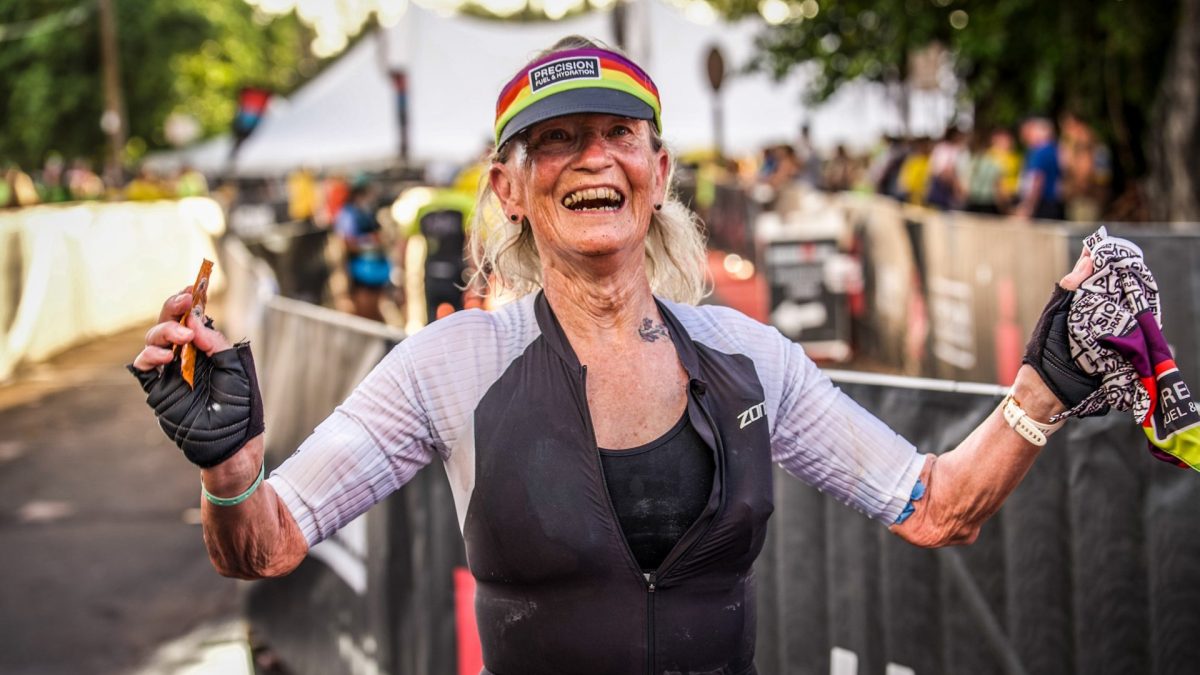
Staying active is one of the best ways to maintain health, especially as we age – but doing so can bring a different set of challenges. Getting older can mean changes to bone density, balance, muscle mass and flexibility, while health conditions or previous injuries may limit what we feel able to comfortably achieve. But while energy levels may change, it is never too late to benefit from exercise – and Linda Ashmore, who has just turned 80, is all the proof you could need. A breast cancer survivor and grandmother of eight, she set the record as the oldest woman to swim the English Channel at 60, conquering the challenge again at 71. She also took up triathlon in her late sixties – and is now the oldest British woman to complete an Ironman – a long-distance triathlon involving a 2.4-mile swim, 112-mile bike ride and 26.2-mile run. Here, she shares her fitness tips for over-sixties to help maintain independence, well-being and quality of life… Shorts Build a base with consistency “Ageing isn’t about living longer, it’s about functioning longer – and it starts with everyday habits. Walk up those stairs more often, rather than putting it off when it begins to feel difficult. Don’t pull yourself up on the banister – use those legs and be conscious of the effort you are making. Brushing your teeth? Try standing on one leg. Hold on to the basin until you can do it without support. “Your feet are even more important – they’re your foundation. Work your feet, toes and ankles before they seize up.” Prioritise functional strength training “Make sure you walk every day – even once around the block is better than nothing. Try walking faster up a small hill to work your body harder. “Think about what you do daily. If it gets easier to sit rather than stand to put your shoes on, don’t give in, otherwise you’ll lose the ability to do it. Carry your own shopping if you can. You don’t lose ability overnight; it creeps up on you. “Swimming and cycling are great as you age, while resistance exercises help to slow bone loss. I do daily mobility work, adding weights twice a week. These little daily habits are the secret to prolonging your strength.” Master the art of micro-goals “I entered triathlons at 68 after a diagnosis of osteoporosis, when it was recommended that I begin impact exercises. My swimming coach talked me into doing an Ironman. I started with very ‘small steps’ to get where I am now. It takes time for your body to adapt to the new demands. “I’ve built up to running weekly, with a local club, and cycling. I’ll also do a harder and longer run, alternating between walking and running, and take my dog out into the countryside. Micro-goals stack up and mean I’ve just completed my 13th Ironman.” Linda competing in an Ironman race Protect your mobility and flexibility “We get stiffer as we age – joints don’t move as they did unless you use them. Yoga and Pilates are excellent, as is swimming. In Singapore, they have introduced ‘geriatric parkour’ for their ageing population to reduce falls that can cause severe physical injuries, a permanent loss of independence or even significantly reduced life expectancy. It’s a brilliant idea with the potential to have a profound impact in one of the world’s fastest-ageing countries.” Fuel your body with purpose “I was always conscious of needing carbohydrates, from when I first swam the Channel. I usually train on a full breakfast, or if it’s an early start, I won’t leave the house without hydrating and eating a banana. On long sessions, I ensure I have both water and fuel. “Nowadays, I also aim to consume enough protein to fuel my Ironman training. I try to eat ‘real’ high-protein food rather than processed shop-bought alternatives. I also eat fruit and vegetables in abundance.” Treat active recovery as part of the workout “After a hard week training, my body needs at least two days to recover and adapt. Although rest is essential, my body feels like it’s closing down. But once I get moving, I feel great again. So during this time, I keep active around the house, never sitting for long, walking the dog. “I also often have an afternoon nap of one to two hours, in addition to at least eight hours of sleep every night. Linda found a community by competing in Ironman (Photo: Linda Ashmore/Ironman) Find your ‘why’ “I thought I was too old to find a new sport. But the Ironman community opened my heart and mind to realise there is more to life than daily routine. I love the atmosphere and camaraderie of the events, and the journey to get there in between. I feel fitter, stronger and more energised than ever. “Inspiring my eight grandchildren that anything is possible is perhaps my real ‘why’.” Work out with others “I often train with others, such as going on a social ride through the hills of Dorset, or a short ride to my favourite café. I have met people through Ironman who I can now call friends, with whom I socialise, train or do events. We all inspire each other, and I really can’t stress enough the importance of having a community and connection as you age.”
My eight rules for staying fit after 60 – by an Ironman record-breaker
Full Article
Original Source
Read the full article at Inews →KhanList aggregates and links to publicly available news content. We do not host full articles from third-party sources. Always verify important information with original sources.