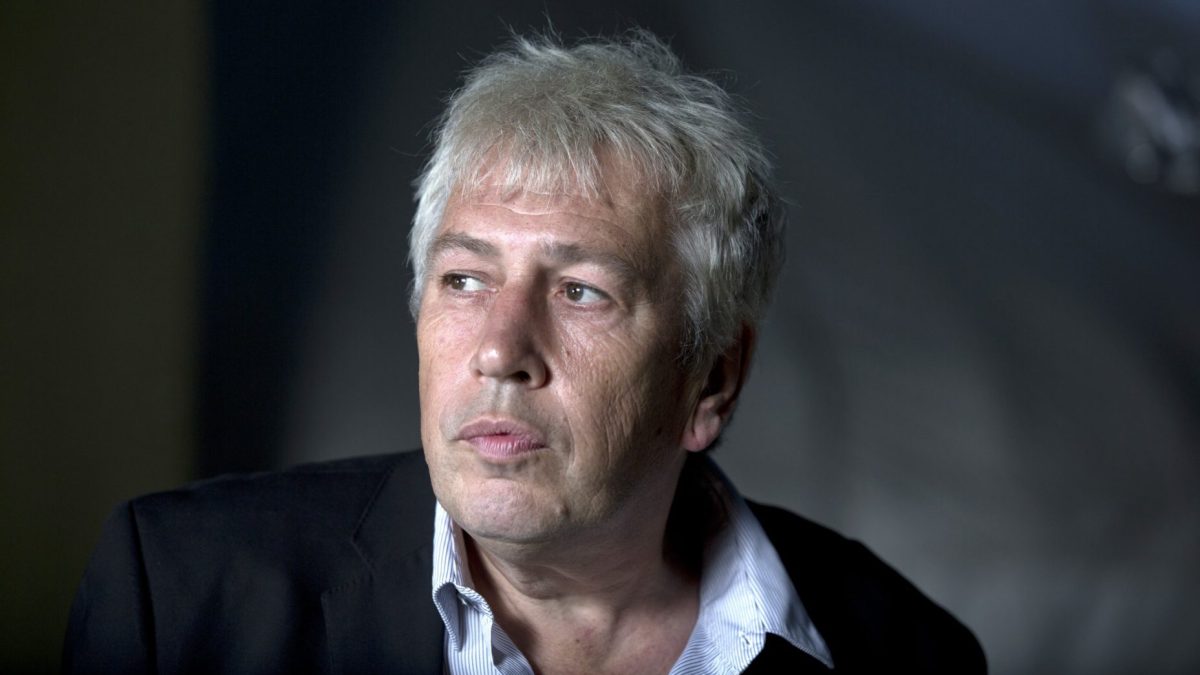
Of all the characteristics that defined Rod Liddle, none was as befitting as his devoted support of Millwall FC, whose anthem, sung loudly and proudly, is: “No one likes us/We don’t care”. As a journalist, commentator, and person about town, Rod was equally unworried whether he was popular or even palatable. Throughout his life, which ended at the age of 66 on Sunday, he spoke what he deemed to be the truth, was uncompromising in his demeanour and simply didn’t care whether people liked it or not. He would stare political consensus and social norms in the face, and would usually run in the opposite direction. He and I inhabited very different points of the political spectrum, and certainly his views on multiculturalism and immigration (particularly as he got older), and Brexit, were not to the taste of anyone with a liberal bent. But he was a truly original thinker, and a brilliant journalist, who could find humour (often of the dark variety) in the most unpromising of subjects. Rod was an independent spirit, and it was this quality that drew us together for one of the most bizarre days of my life. It was back in 2009, when I was editor in chief of The Independent and journalism was a very much more analogue occupation. The proprietor of the paper, Evgeny Lebedev, asked me to find him a new editor, someone of experience who would make waves, who would challenge orthodoxies and who would get The Independent talked about again. This took me to Rod Liddle, whose four-year stint as editor of Radio 4’s agenda-setting Today programme had been successful and noteworthy. It ended in controversy in 2002 when he wrote a column in The Guardian attacking the Countryside Alliance demonstrators, saying they looked like “extras from a Channel 5 presentation of Mill on the Floss”, and that they reminded everyone why they had voted Labour in 1997. This was deemed to be a breach of his responsibility to impartiality as a BBC staffer, and Rod was forced to stand down. Anyway, Evgeny invited Rod and I to lunch with him and his father, Alexander. The lunch, however, was to be at the Gritti Palace in Venice, where Alexander was staying at the time. Those who had first-hand knowledge of Rod in social situations will understand the panic this generated for me. My lunch companion, a heavy smoker, drinker and user of salty language, was barely house-trained and I needed to give him very strict instructions on how to dress, what to say, what not to say, and how to navigate the inscrutable Russian father and son. And so we got on a private jet and set off to have a bowl of pasta by the side of the Grand Canal in Venice. So successful had my instructions been that the lunch took place in almost total silence. Rod was unfailingly polite, and was (almost visibly) straining every sinew not to say anything off-colour or controversial, and, in return, the Lebedevs were taciturn and reticent. I behaved like the mediator in a discussion between a Venutian and a Martian. It was a disaster, largely of my own making: Rod Liddle needed to be off the leash, and to let others decide take him or leave him. Who knows what would have happened had he got the editor’s job. And with his passing goes another bulwark against the homogenisation of public life. I’m not talking about the ability to cause a media storm – anyone with a smartphone and an opinion can do that. And we have an abundance of people eager to take offence. What we have in diminishing numbers are writers whose first loyalty is not to a political tribe, or to an online constituency, or to a social orthodoxy, but to their own curiosity. Rod never operated in the echo chamber which many of today’s opinion-makers inhabit. You couldn’t nail him to a specific point on the political map, and he would take risks with his writing, sometimes to a fault. It was the quality of his writing that often got him out of trouble. In an age of confected outrage, such adventure is a rare thing, even rarer now he’s gone. Younger journalists, seeing careers destroyed by one ill-judged sentence, have naturally become more cautious. And editors, fearful of organised campaigns online, commission fewer genuinely contentious voices. Rod Liddle was definitely that. He would be amused by the vast number of tributes he has been paid on social media since his death was announced. Friends, colleagues, even political foes, were united in recognising that our media landscape is today a little less colourful. We may not have liked him, and he may not have cared, but he would be pleased to know that he made his mark.
My disastrous lunch in Venice with Rod Liddle
Full Article
Original Source
Read the full article at Inews →KhanList aggregates and links to publicly available news content. We do not host full articles from third-party sources. Always verify important information with original sources.